
What Is Rayon Fabric?
Rayon shows up on more care labels than almost any fabric we work with — and just as often, brand founders ask us about it under the wrong name. Here's a straight answer to what it actually is, plus what matters once you're sourcing it for a real production run.
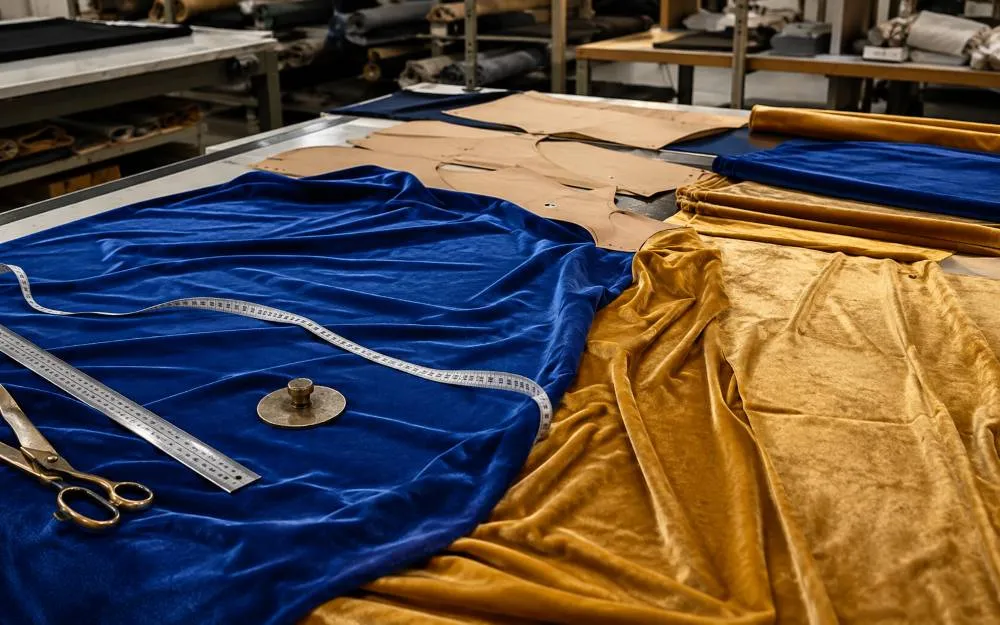
- Rayon and viscose are the same fiber family — "rayon" is the required US label term, "viscose" is the international one.
- Rayon almost never runs alone in production. It's blended with spandex for stretch, cotton for structure, or polyester for stability.
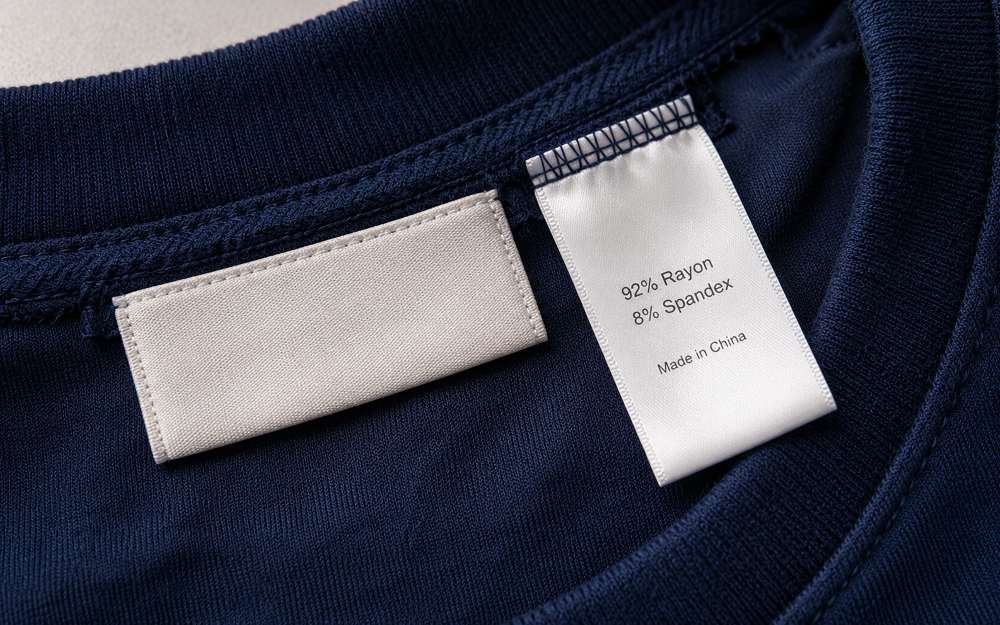
- 92–97% rayon / 3–8% spandex is standard for fitted loungewear and leggings; tracksuits and joggers usually lean on a rayon-polyester-spandex tri-blend instead.
- Untreated rayon can shrink 3–5% in the first wash, so pre-shrink testing belongs at the sample stage — not discovered after bulk.
- US care labels must read "rayon," not "viscose" — an easy compliance miss on a first private label order.
- Want the full technical breakdown — every rayon-family type, the full production process, and lab-style property comparisons? See our Viscose Fabric Guide.
What Is Rayon Fabric? The Quick Answer
Rayon is a semi-synthetic fiber — natural cellulose, almost always wood pulp, that's chemically dissolved and re-spun into fiber form. That puts it in its own middle category: not a natural fiber like cotton, not a fully synthetic one like polyester. On a hang tag, "rayon" always means the fiber started as processed plant cellulose, never petroleum.
That's the short version, on purpose. We've already written the long one — the full manufacturing process, every rayon-family type (modal, lyocell, cupro and more), and complete property comparisons against cotton, polyester, silk and linen — in our Viscose Fabric Guide. This page picks up where that one stops: what rayon means for the garments we actually build — tracksuits, loungewear, crop tops — and what to confirm before you commit to a bulk order.
Rayon vs. Viscose
If you've seen a garment tagged "viscose" in one country and "rayon" in another, nobody made a mistake. US textile labeling rules require "rayon" as the generic fiber name on US care labels; the international standard uses "viscose" for the identical fiber. Same chemistry, same fiber — two names, depending on which market the label is printed for.
For a US-bound private label order, that has one practical consequence: your care labels need to say "rayon," even if your mill's spec sheet, invoice, or fabric ticket calls it viscose. The FTC apparel labeling guide explains the US fiber-name requirement. It's a small detail — and exactly the kind our private label team sets correctly by default.
Rayon Blend for Tracksuits: Where Rayon Earns Its Place
Rayon isn't a fabric you reach for everywhere. It earns its spot in specific categories, largely because of two traits pulling in opposite directions: an exceptionally soft, silk-like drape, and a fiber that loses strength when it's wet.
✓ Works Well For
- Velour & French terry tracksuits — drape and softness at rest
- Loungewear and sleep sets
- Crop tops and fitted fashion tops
- Dress and jacket linings
✕ Skip It For
- Performance or gym wear — weak wet-strength, poor moisture-wicking
- Heavyweight streetwear that needs structure
- Anything needing frequent hot-wash or tumble-dry
- High-abrasion or workwear pieces
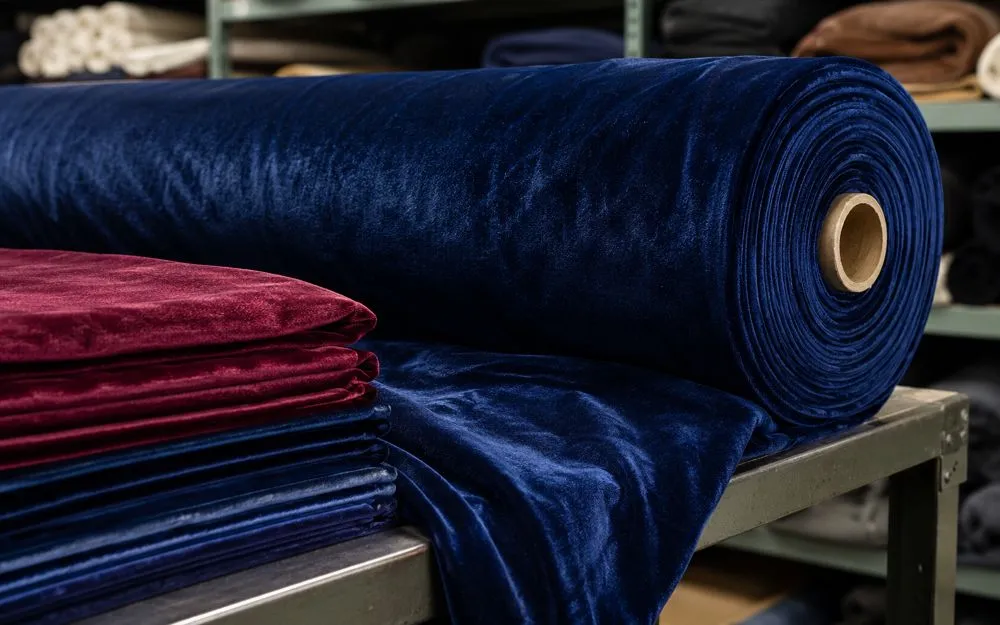
If you're building a velour tracksuit or loungewear-adjacent line, this is usually where rayon blends show up first — not in a hoodie or activewear SKU.
Rayon Blends: Which Ratio Solves Which Problem
In real production, "rayon" almost never means 100% rayon. It's blended specifically to correct its two weaknesses — low wet-strength and shrinkage — while keeping the drape that makes it worth using in the first place.
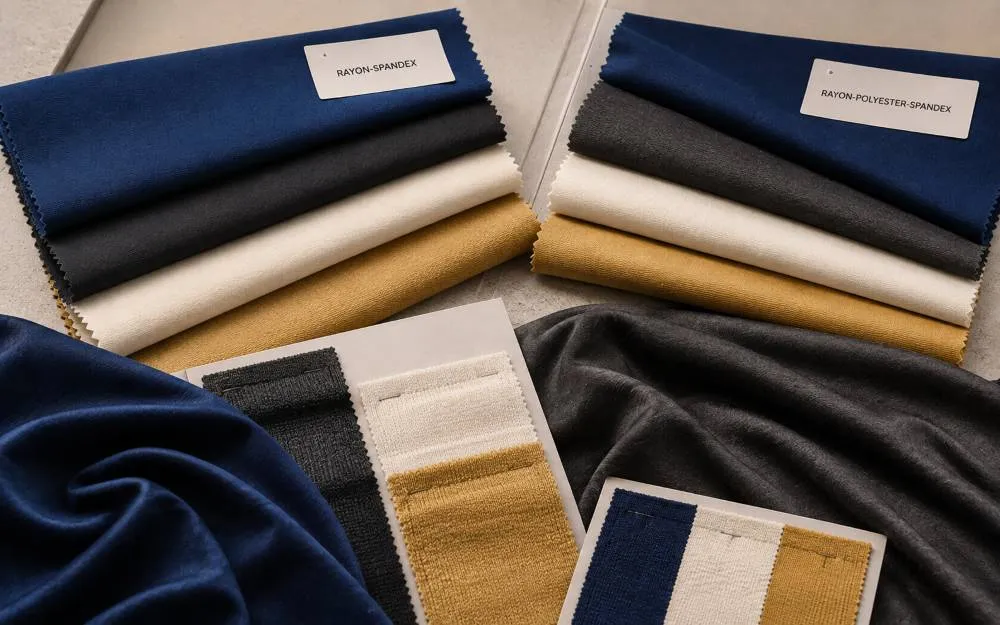
The ratio isn't just a feel decision — it's a shrinkage and durability decision. More rayon drapes softer and moves better; more polyester or cotton holds its shape wash after wash. Neither ratio is "correct" on its own — it depends on what the finished garment has to survive.
Private Label Rayon: Cost, MOQ & Timeline
Rayon and rayon-blend fabrics don't change our baseline numbers — MOQ still starts at 10 units per style, per colour, and samples still ship in 7–10 business days. They do add two things worth planning for:
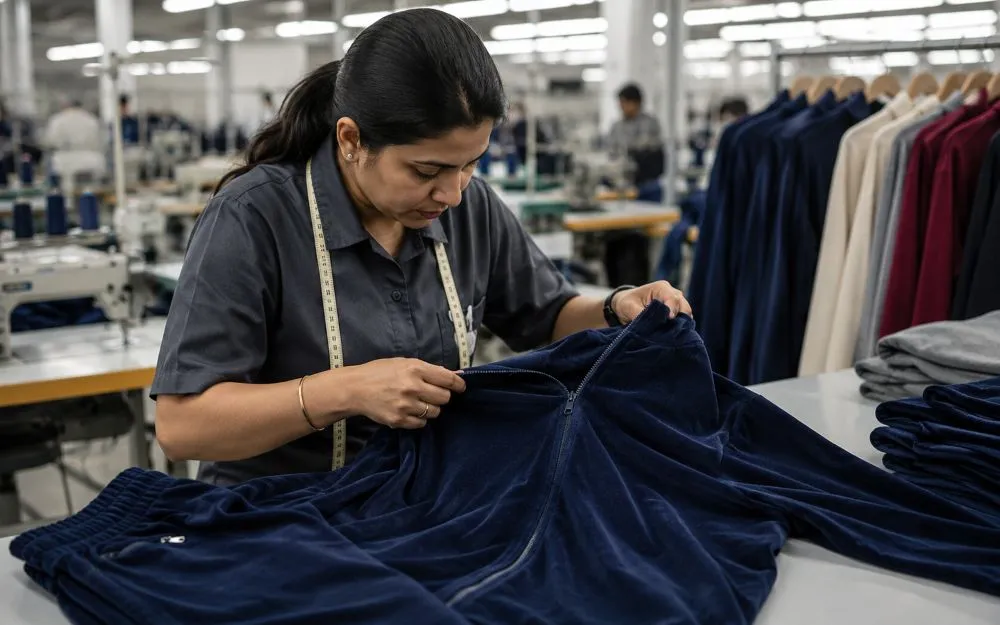
Neither of these meaningfully extends your timeline — it just means your pre-production sample is doing a bit more work before you sign off on bulk.
Rayon Fabric Manufacturer Sourcing Checklist
Before you approve a rayon or rayon-blend order, run through this with your manufacturer:
- Ask for the exact blend ratio — "92/8 rayon-spandex," not just "rayon." The ratio determines stretch, drape and shrink behavior.
- Confirm pre-shrinking is standard on your sample, not an extra step you have to request.
- Check the cutting direction. Rayon has a visible nap/sheen direction, like velvet, so every pattern piece should be cut the same way for consistent color.
- Confirm your care labels will read "rayon" for US sales — handled by default, not left for you to catch.
- Ask what wet-strength grade you're getting if the piece will be worn actively rather than just lounged in.
Frequently Asked Questions
What is rayon fabric best used for?
Can I order rayon or rayon-blend fabric at your 10-unit MOQ?
Does rayon cost more to manufacture than cotton or polyester?
What's the best rayon blend for a tracksuit or loungewear line?
Do private label rayon garments need special care labels?
How long do samples take for a rayon or rayon-blend order?
Can rayon be blended with spandex for stretch in tracksuits?
Need Rayon-Blend Tracksuits or Loungewear?
We work with rayon-spandex, rayon-poly-spandex and rayon-cotton blends across our tracksuit, velour tracksuit and crop top lines — private label, 10-unit MOQ, factory-direct.
WhatsApp +1 (640) 203-5335 · info@clothingmanufacturer.us