

Construction
Single jersey, interlock, French Terry, fleece, piqué and woven fabrics build structure in different ways. Construction changes how weight is distributed and how the fabric behaves on the body.
What is GSM in fabric? For a clothing brand, it is one of the first specifications you will see when comparing fabric swatches, reviewing a supplier quote or writing a tech pack. Understanding what is GSM in fabric helps you interpret the number correctly instead of treating it as a shortcut for quality.

What is GSM in fabric? It is the weight, in grams, of one square metre of that fabric. If you are also asking what is GSM in textiles or what does GSM mean in clothing, the idea is the same: GSM gives the textile industry a common language for fabric weight.
Once you understand what is GSM in fabric, the important part is what GSM does not tell you. It does not identify the fiber, the knit or weave, the finish, the thickness, the warmth, the stretch or the overall quality. Those characteristics can change dramatically even when two fabrics carry the same GSM number.
For a clothing brand asking what is GSM in fabric, the most useful answer is that GSM is one line in a complete fabric specification. It helps you avoid vague requests such as “make it heavy” or “use premium cotton” and gives the factory something measurable to match during sampling and repeat production.
When buyers ask what is GSM in fabric, the practical answer is mass per unit area. Textile laboratories use standardized methods to make that measurement more repeatable. ISO 3801 covers determination of mass per unit length and mass per unit area for woven fabrics, while ASTM D3776/D3776M covers mass per unit area for most fabrics.
These standards help define measurement procedure; they do not turn GSM into a quality grade. A brand should still approve the actual construction, composition, finish, performance and physical sample.
The same number can produce very different garments. Knowing what is GSM in fabric only becomes useful when you read the number in context. Before deciding whether a fabric feels right for your brand, read GSM through these four lenses.
Single jersey, interlock, French Terry, fleece, piqué and woven fabrics build structure in different ways. Construction changes how weight is distributed and how the fabric behaves on the body.
Cotton, polyester, viscose, modal, wool and elastane blends can have different density, recovery, moisture behavior and surface character at a similar GSM.
Brushing, peaching, garment washing, compacting, dyeing and other finishes can change softness, loft, appearance and perceived thickness without turning GSM into a quality score.
The “right” GSM depends on what you are making, who will wear it, the climate, desired silhouette, decoration method, price point and how the garment should feel in hand.
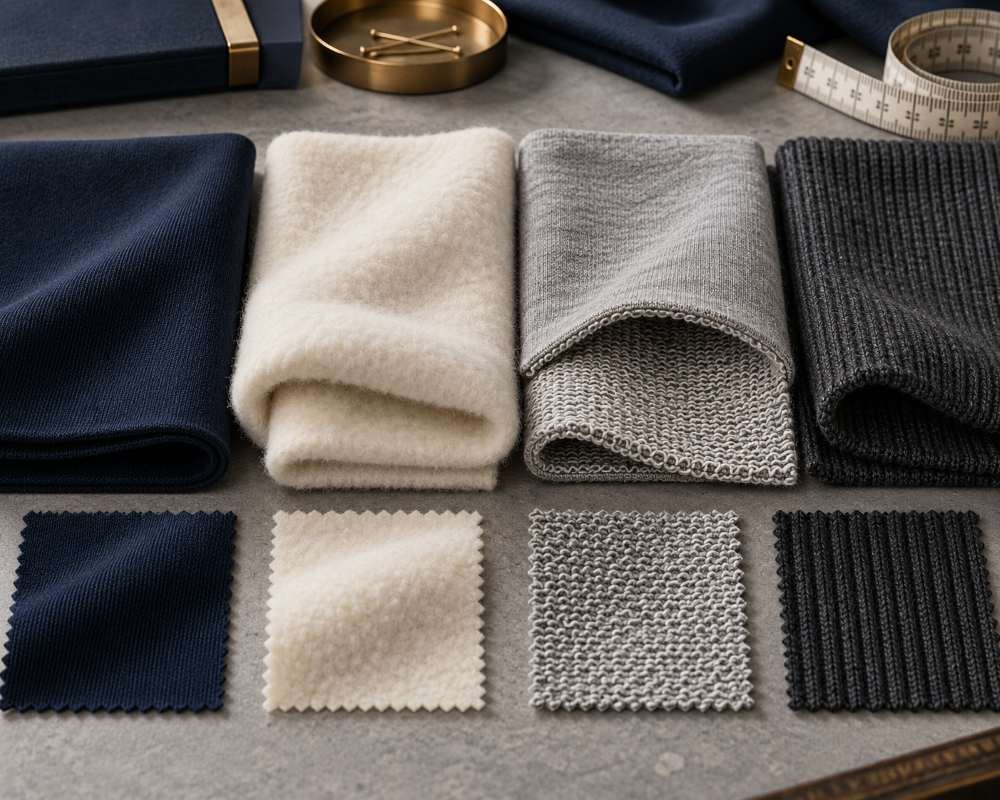
This is one of the most important ideas for anyone learning what is GSM in fabric or trying to understand GSM fabric meaning.
If someone asks what is GSM in fabric and expects the number to predict hand-feel, this comparison explains why that is incomplete. A dense compact knit can feel firm and smooth. A loopback construction can feel more open and flexible. A brushed surface can feel fuller and warmer because raised fibers trap more air. A stretch blend can recover differently from a rigid cotton fabric even when the weight figure looks similar on paper.
What is GSM in fabric from a product-development perspective? It is a measurable fabric-weight reference that influences several practical decisions during product development. It should guide the conversation, not replace sampling.
A GSM figure should be interpreted inside the product category. That is why the answer to what is GSM in fabric changes from a sourcing decision into a garment decision once the product category is defined. Comparing a T-shirt jersey directly with a hoodie fleece by weight alone can lead to poor sourcing decisions.
Think about opacity, neck-rib balance, drape, print surface, shrinkage, intended climate and whether the silhouette should feel light, classic, compact or deliberately structured.
Construction is especially important. French Terry and brushed fleece can behave very differently even when a specification looks similar. Hood shape, rib recovery and overall garment bulk should be approved together with the fabric.
A fabric that works for one product may not work for your fit, finishing, customer, print method or selling price. Use competitor garments as references, then approve your own material.
The meaning of the number stays the same, but the way a brand should use it changes as the product moves from concept to sampling, approval and repeat production.
At the beginning, what is GSM in fabric is mainly a way to narrow the material direction. Use a sensible weight range together with garment type, climate, fit and target retail position. Do not lock a number before you have compared real constructions.
During sampling, what is GSM in fabric becomes a comparison point. Touch the sample, check drape and opacity, test decoration, wash the garment and compare the result with the intended silhouette. The approved sample matters more than an isolated number on a quote.
Before bulk, record the finished target GSM with the construction, composition, finish and agreed tolerance. At this stage, what is GSM in fabric becomes part of quality control because the factory and buyer can compare bulk fabric against the approved specification.
For reorders, the value helps protect consistency. Keep the approved swatch or garment, record the fabric details and compare new lots with the original reference. This is where a clear answer to what is GSM in fabric supports repeatable manufacturing rather than just education.

Knowing what is GSM in fabric does not mean that “300 GSM cotton” is a complete specification. A manufacturer needs the complete fabric brief so the approved sample can be repeated. A manufacturer needs the complete fabric brief so the approved sample can be repeated.
Use GSM as one controlled value inside a broader specification. When the fabric is finally approved, keep the physical reference and record the final details in your tech pack or development notes.
If you are still building the product specification, you can also use our Tech Pack Generator to organize garment details before sampling.

Most GSM problems are not caused by the number itself. They happen when a brand learns what is GSM in fabric but uses the number without enough context.
Premium quality can come from better fiber, yarn, knitting, finishing, fit, construction and consistency. Extra weight can add cost without improving the product for your customer.
A jersey, interlock, French Terry and fleece can behave very differently at a similar weight. Always compare like with like.
Brushing, washing, dyeing and compacting can alter hand-feel, appearance and dimensional behavior. Approve the fabric in the state you actually plan to produce.
Start with the garment, customer, climate, fit and price position. Then choose a fabric platform that supports those goals.
Photos help communicate visual direction, but they cannot show hand-feel, density, stretch or true weight. Request a physical swatch or sample.
Shrinkage, twisting, pilling and surface change may only appear after laundering. Final approval should consider the garment after the care process you intend to recommend.
Record the construction, composition, finished GSM, finish, color and approved reference so future production can be compared against the same standard.
These questions help turn an abstract number into a controlled production requirement after you understand what is GSM in fabric and what the number cannot prove by itself.
This guide explains what is GSM in fabric and how to interpret it for clothing development. When you need to convert units, work from a measured fabric sample, or estimate fabric roll information, use the dedicated interactive tool instead of doing the math manually.
These answers reinforce what is GSM in fabric, GSM meaning and product decisions. Calculation and conversion tasks are intentionally handled by the separate GSM tool.
GSM means grams per square metre. It describes the weight of one square metre of fabric and gives brands, mills and manufacturers a common way to communicate fabric mass.
In textiles, GSM is a mass-per-area measurement used for fabrics and other sheet materials. In clothing development, it is normally considered together with construction, composition, finish and intended garment use.
For clothing, GSM helps describe how substantial the fabric platform is, but it does not directly define quality, warmth or thickness. The finished garment depends on the entire fabric and construction specification.
No. If you understand what is GSM in fabric, higher GSM only means more fabric mass per square metre. Premium quality can also come from better fiber, cleaner yarn, stable knitting, strong finishing, controlled shrinkage, accurate sewing and consistent production.
Yes. This is a key part of understanding what is GSM in fabric. Construction, fiber, yarn, brushing, washing, stretch and surface finish can make two fabrics at a similar GSM feel very different in thickness, softness, warmth and drape.
No. When someone asks what is GSM in fabric, remember that GSM measures mass per area, not thickness. GSM measures mass per area, while thickness is a physical dimension. A lofty brushed fabric can feel thicker than a dense compact fabric even if their GSM figures are similar.
Usually not. Different products have different functional needs. A T-shirt, hoodie, polo and active top may require different fabric constructions and weights even when they belong to the same brand.
After learning what is GSM in fabric, include fabric construction, fiber composition, finish, color reference, target finished GSM and tolerance, relevant performance expectations and an approved physical reference when possible.
Fabric body and stability can influence decoration, but surface finish, stretch and fiber are also important. Test the actual printing or embroidery method on the approved fabric rather than choosing decoration based on GSM alone.
It can. Dimensional change, moisture and finishing can affect the relationship between fabric area and mass. For production, agree whether your target refers to the finished fabric and confirm testing conditions with the manufacturer.
Understanding what is GSM in fabric is only the first step. Start with the customer, climate, garment category, fit and price position. Then compare a small number of suitable fabric constructions and approve a physical sample instead of simply choosing the heaviest number available.
Use the dedicated ClothingManufacturer.US GSM Calculator for conversion, measured swatch input and fabric roll planning. This article is intended to explain the meaning and decision-making context.
This manufacturer-written resource explains what is GSM in fabric for startups and established brands developing custom apparel. ClothingManufacturer.US supports product development, fabric specification, sampling and private-label clothing manufacturing.