The total-order minimum
A supplier may allow different products and colours to reach one overall garment minimum; always ask for the written counting rule.
Understand what MOQ really means, how factories count styles, colours and sizes, and what a 10-, 30-, 50- or 100-piece order costs. Use our free clothing MOQ planner and learn the difference between small-batch cut-and-sew and decorating ready-made blanks.
MOQ stands for minimum order quantity. It is the smallest production quantity a manufacturer will accept for an agreed product and set of conditions. In apparel, the critical question is whether that quantity applies per order, per design, per fabric colour or per size.
A supplier may allow different products and colours to reach one overall garment minimum; always ask for the written counting rule.
A manufacturer may count black hoodies and cream hoodies as two separate production runs, even when the pattern is the same.
Some suppliers demand a minimum for each size. Our normal 10-piece run uses three sizes, with the agreed distribution specified in the quote.
Useful distinction: the garment manufacturing MOQ, the free-branding threshold and eligibility for a later sample-credit adjustment are not the same rule.
A headline such as “MOQ 20” is incomplete without its counting basis. Two factories can quote the same minimum and require very different quantities for the same collection.
| Counting basis | Meaning | Example | Question to ask |
|---|---|---|---|
| Per order | One total minimum for the purchase order | 20 garments can potentially span multiple styles | Which designs and colours may be combined? |
| Per design / style | Minimum applies separately to every garment design | 20 tees + 20 hoodies = 40 pieces | Are all colours combined for a style? |
| Per style and colour | Each style/colour combination needs its own minimum | 10 black tees + 10 cream tees = 20 | Can sizes be mixed within each colour? |
| Per size | A separate minimum for each size of a style | 10 small + 10 medium + 10 large = 30 | Is the minimum really per size? |
| Fabric or trim minimum | Material supplier has an upstream purchase minimum | Custom-dyed fabric or molded hardware | Does the material minimum override garment MOQ? |
Estimate the number of garments required for a collection using a style-and-colour counting model. The tool distinguishes standard factory minimums from total-order branding eligibility—a common source of confusion.
total garments across all requested styles and colourways
Free branding accessories: threshold not reached (30 pieces total).
Possible sample credit: threshold not reached (more than 30 pieces).
Size split: standard 3-size setup.
Rather than relying on unverified “industry averages,” these are the indicative quantities and manufacturing prices supplied by our Sialkot factory for defined products. They help brands plan a first order; they are not binding offers for every design.
| Order quantity / MOQ | 100% cotton T-shirt 180–220 GSM | Regular hoodie 250–300 GSM | Wool / PU varsity jacket PU leather sleeves |
|---|---|---|---|
| 10 pieces | $10–$12 | $18–$25 | $40 |
| 20 pieces | $9–$11 | $15–$22 | $30 |
| 30 pieces | $8–$10 | $13–$20 | $25 |
| 50 pieces | $6–$8 | $11–$17 | $20 |
| 100 pieces | $5–$6 | $10–$15 | $17 |
Prices in USD per garment, international shipping excluded. T-shirt and regular hoodie ranges include one basic small DTF or DTG logo print. Larger prints, additional placements, embroidery and specialist garment detailing may increase prices. Varsity jacket estimates assume the discussed wool-body/PU-leather-sleeve construction with chenille, quilted lining and embroidery, subject to the approved specification. Genuine leather sleeves are not included in these varsity figures. Hoodies heavier than the regular 250–300 GSM range (up to around 500 GSM) are quoted separately. Prices may change with fabric and market conditions.
This is an illustrative garment-manufacturing subtotal for 100% cotton 180–220 GSM T-shirts with a small DTF/DTG logo. At 30 pieces total, qualifying standard woven labels, hang tags and zipper polybags are provided at no additional charge. Freight is still separate.
For regular 250–300 GSM hoodies with a basic logo print, the larger run generally spreads setup costs across more garments. Heavier 400–500 GSM fabrics, extensive embroidery or special details require a tailored quote. Freight remains separate.
Our 30-piece total-order policy is different from our standard 10-piece manufacturing minimum. Once an accepted order reaches 30 garments in total, standard custom woven neck labels, hang tags and custom zipper polybags are provided without an additional accessory charge.
| Order | Standard basic logo print* | Woven neck label, hang tag & zipper polybag | Sample-charge adjustment |
|---|---|---|---|
| 10 pieces | Included | Subject to quotation | No |
| 20 pieces | Included | Subject to quotation | No |
| 30 pieces | Included | Included without extra charge | No |
| 31+ pieces | Included | Included without extra charge | May qualify, under written terms |
| 50+ pieces | Included | Included | May qualify, under written terms |
*Basic print inclusion refers to the standard T-shirt and hoodie price examples above, not every garment category. Packaging benefits concern the specified standard accessories; see the accepted quotation for all inclusions.
A small production run is not just a large run with fewer garments. The same pattern, preparation and quality activities have to happen, but fewer units share their cost. That's why an honest low MOQ normally carries a higher unit price.
Preparing approved measurements, production patterns and different sizes takes time before garments are cut.
Small lays, mixed size ratios and extra colours can leave unusable remnants, raising fabric cost per garment.
Thread colours, stitching operations, print positions and embroidery programs require setup even for 10 pieces.
A small DTF/DTG print is comparatively simple; intricate embroidery and specialty finishes add stitch time and preparation.
Custom dyes, knit structures, branded zippers and exclusive packaging may have minimums set by outside suppliers.
Checking size measurements, placement and packing is necessary even when the run is small.
At larger quantities, fabric can be laid and cut more efficiently, decoration changes happen less often per garment, and setup costs are spread further. For some specifications, unit rates improve meaningfully at 50 or 100 pieces, but there is no automatic discount percentage that applies to every fabric and design.
To minimize unnecessary expense, consolidate identical materials, reduce avoidable colour changes, prepare accurate files, and approve the sample before making bulk commitments.
Use these illustrations to separate the manufacturing minimum, free-accessory threshold and potential sample-credit threshold. They are planning examples, not claims about completed client orders.
| Example request | MOQ feasibility | Branding accessories | Sample adjustment |
|---|---|---|---|
| 10 black tees Single design, S/M/L | Standard configuration | Quoted separately if requested | No |
| 20 hoodies 10 black + 10 cream | Two standard colour batches, each with its own setup | Quoted separately if requested | No |
| 30-piece mini collection 10 tees + 10 hoodies + 10 joggers | Three styles, each evaluated separately | Free standard woven labels, tags and zipper bags | No |
| 31-piece collection Mix of feasible styles and colourways | Nonstandard splits reviewed; 31 total alone does not override style MOQ | Free standard accessories | May qualify, by written agreement |
| 50 tees One approved design/colour | Higher volume; ask for a 50-piece tier quote | Free standard accessories | May qualify, by written agreement |
| 100 regular hoodies One approved design/colour | More efficient production tier; confirm fabric and printing | Free standard accessories | May qualify, by written agreement |
“From one piece” and “factory production from ten pieces” are different commercial models. Neither is right for every brand: the appropriate choice depends on your control over fabric, fit, cost and inventory.
| Production model | Best used for | Design control | MOQ / inventory implications |
|---|---|---|---|
| Print-on-demand (POD) | Testing artwork and one-off fulfilment | Usually existing blank garment shape and fabric | Very small quantities may be possible, often at a higher item cost |
| Wholesale blanks + decoration | Simple logo-branded collections and events | Predefined fit and available stock materials | Minimum varies by blank supplier, printer and decoration type |
| Small-batch custom cut-and-sew | Brand-owned fit, pattern and product details | Fabric, size chart, construction and branding agreed in development | Defined manufacturing minimum; our standard begins at 10 pieces per design/colour |
| Higher-volume OEM production | Proven sellers and more predictable reorders | Broad specification control, subject to supplier capability | Generally better unit economics, higher cash and inventory commitment |
MOQ tells you how many garments can be manufactured. It does not tell you your full cash commitment or your final cost delivered to the USA, UK, Canada, Australia or another market.
Use this checklist before paying for samples or committing to stock. It also helps you compare factories on equivalent specifications instead of headline MOQ alone.
Define the intended customer, style, main colour and fit. A smaller first capsule makes sizing and customer feedback easier to interpret.
Write down fibre composition, GSM, stitch details, trims, finish, artwork size and any wash or shrinkage requirements.
List quantities for each configuration. Use the calculator above to distinguish the production minimum from total-order thresholds.
Review measurements, construction and branding before proceeding. Confirm revision terms and sample shipping in writing.
Request the same product specification at 10, 20, 30, 50 and 100 units, including branding and the shipping basis.
Monitor sell-through by size and colour. Increase quantities only where demand and cash flow support larger batches.
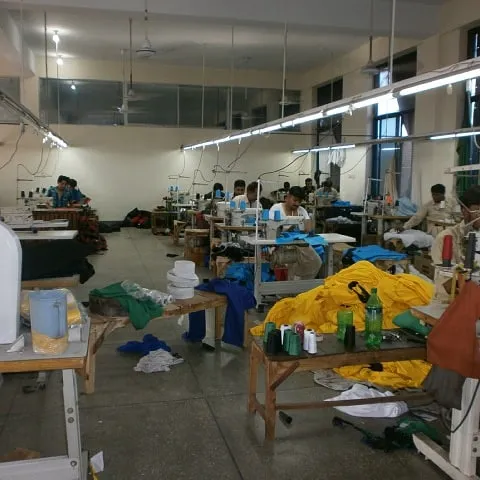
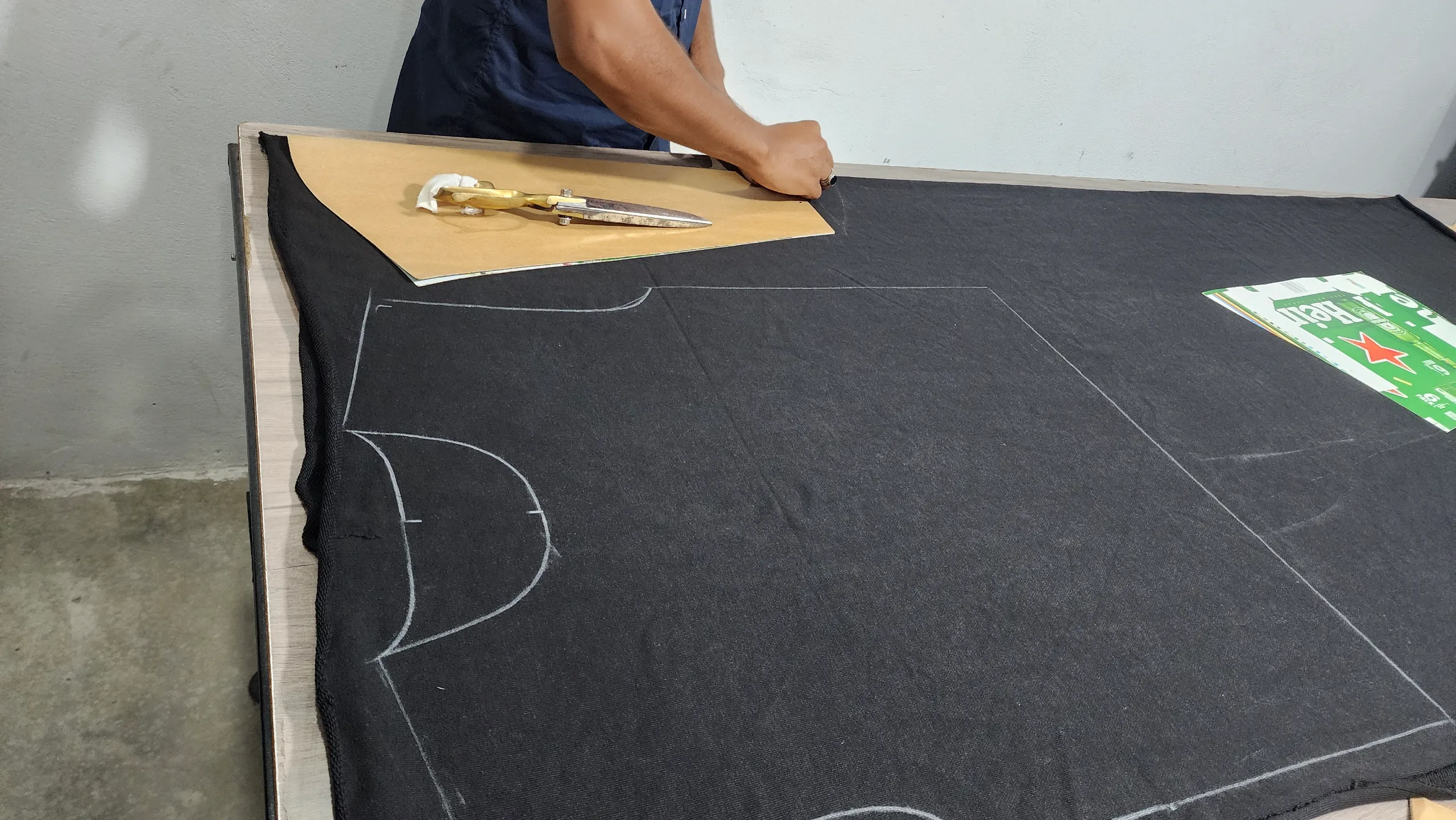
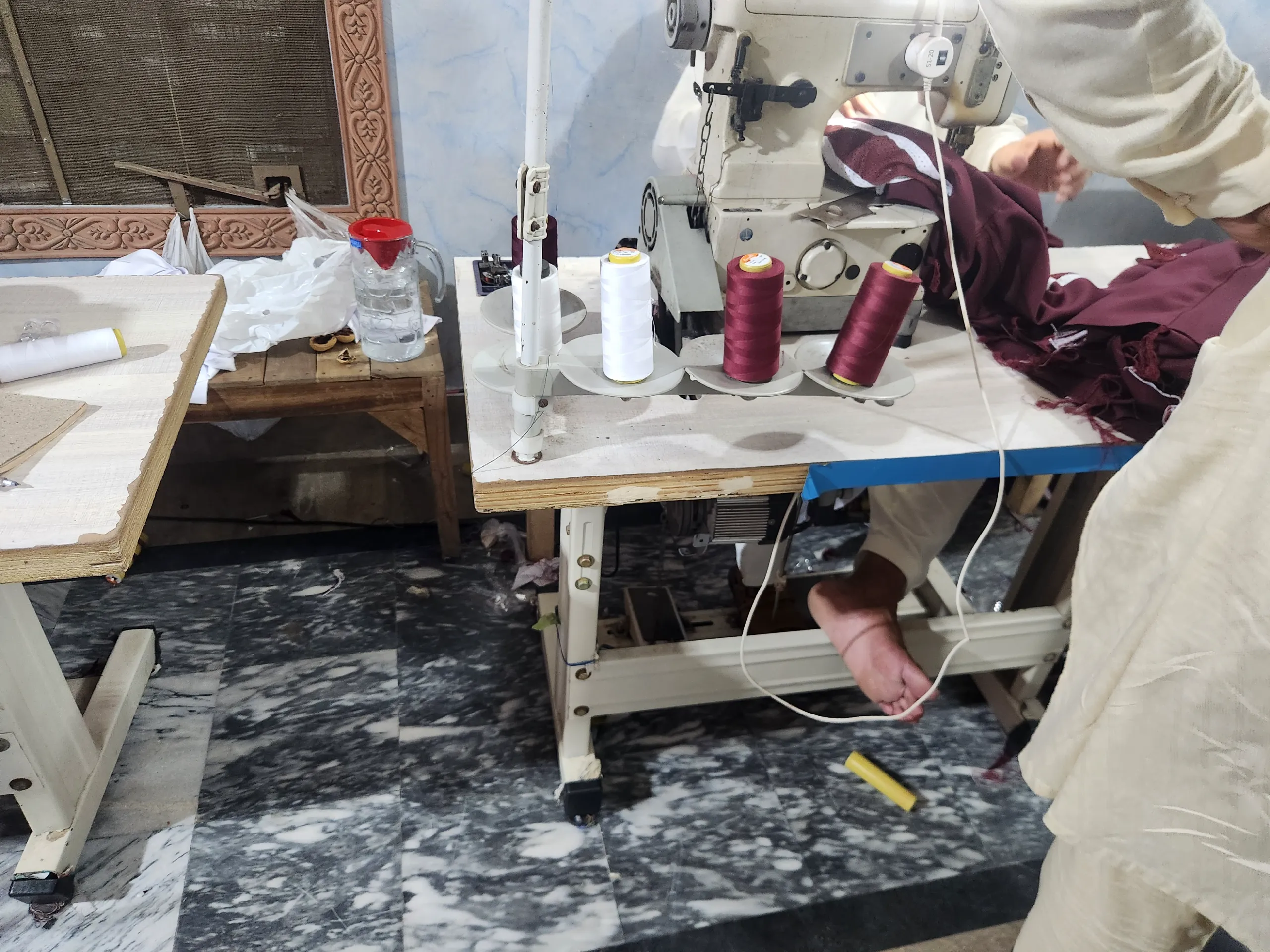
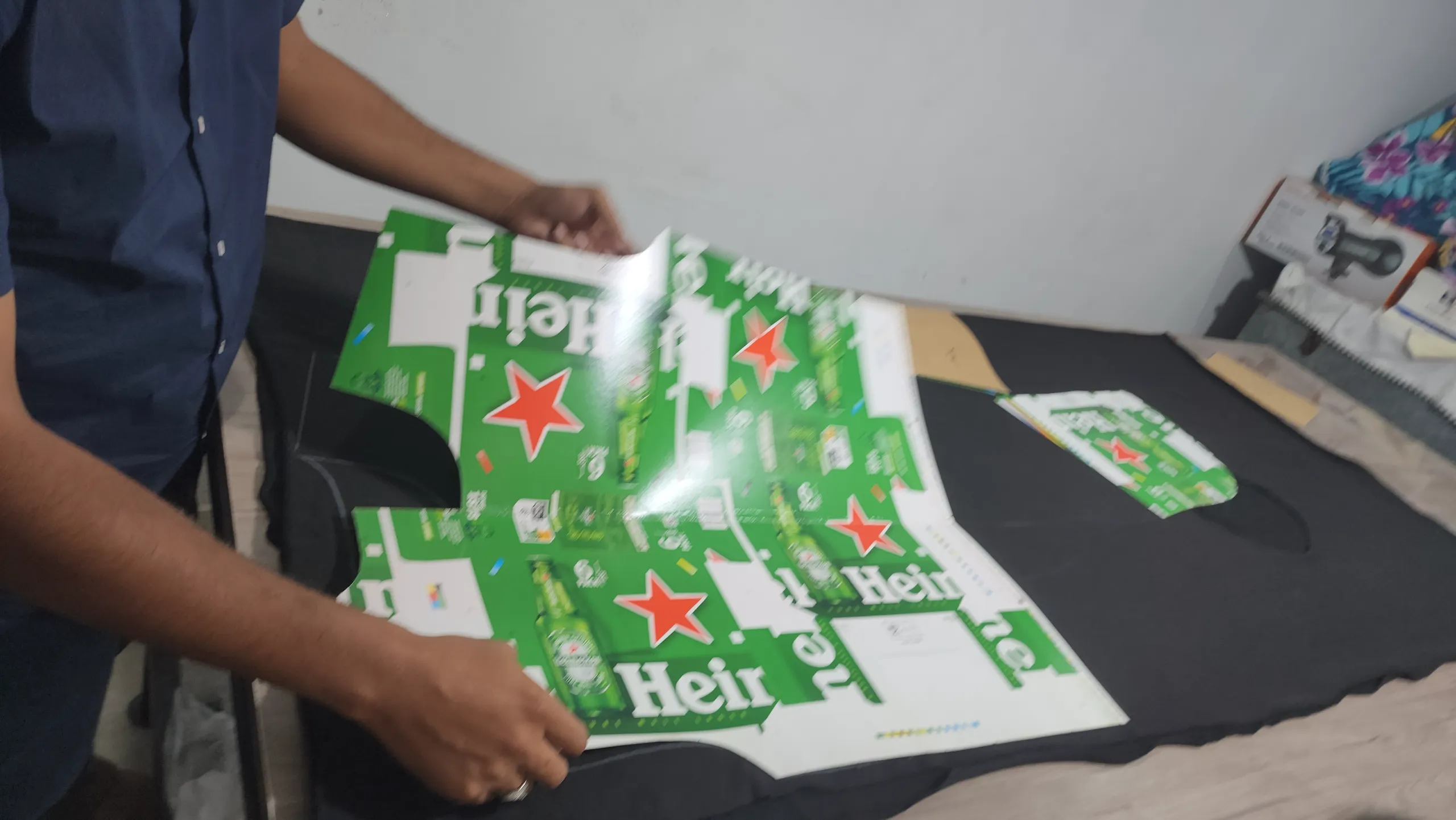
Real production work is more useful than generic claims. Review fabric preparation, garment stitching and finished-order inspection alongside your approved sample and quotation.
Concise answers to common questions about a clothing manufacturer's minimum, per-colour rules, logo printing, free branding, samples and international shipping. For a broader question library, visit our manufacturer FAQs.
Different factories sometimes use the same abbreviation differently. Include explicit definitions in the production quote rather than depending on unexplained shorthand.
The smallest accepted garment or supplier order under a specific counting rule.
Can refer to minimum colour quantity, contract quantity or another term; ask the factory which it means.
The standard quantity grouped into a package or carton, distinct from the order quantity.
Measures fabric weight, not a production minimum. Fibre type and construction also influence performance.
A production arrangement centred on garment cutting, sewing and finishing; included materials and responsibilities vary.
An Incoterms delivery rule with seller import responsibilities as defined by the agreement; only applies when expressly quoted.
Tell us what you want to manufacture, not just “MOQ 10.” We can review each style/colour, fabric and decoration method, provide quantity-based garment pricing, and quote shipping for your destination.
Factory-direct cut-and-sew clothing production • Sialkot, Pakistan