Factory-Direct MOQ from 10 Samples in 7–10 Days Worldwide DDP Shipping
Get a Quote →

Trim Structure · Stretch & Recovery

Rib Knit Fabric: 1×1 vs 2×2, Cuffs, Collars & Manufacturing

Rib knit fabric is a vertically ridged knit used wherever a garment must stretch and return—neckbands, polo collars, hoodie cuffs, sweatshirt waistbands and fitted rib tops. Good rib is judged less by appearance alone and more by recovery, density and how it behaves against the body fabric.

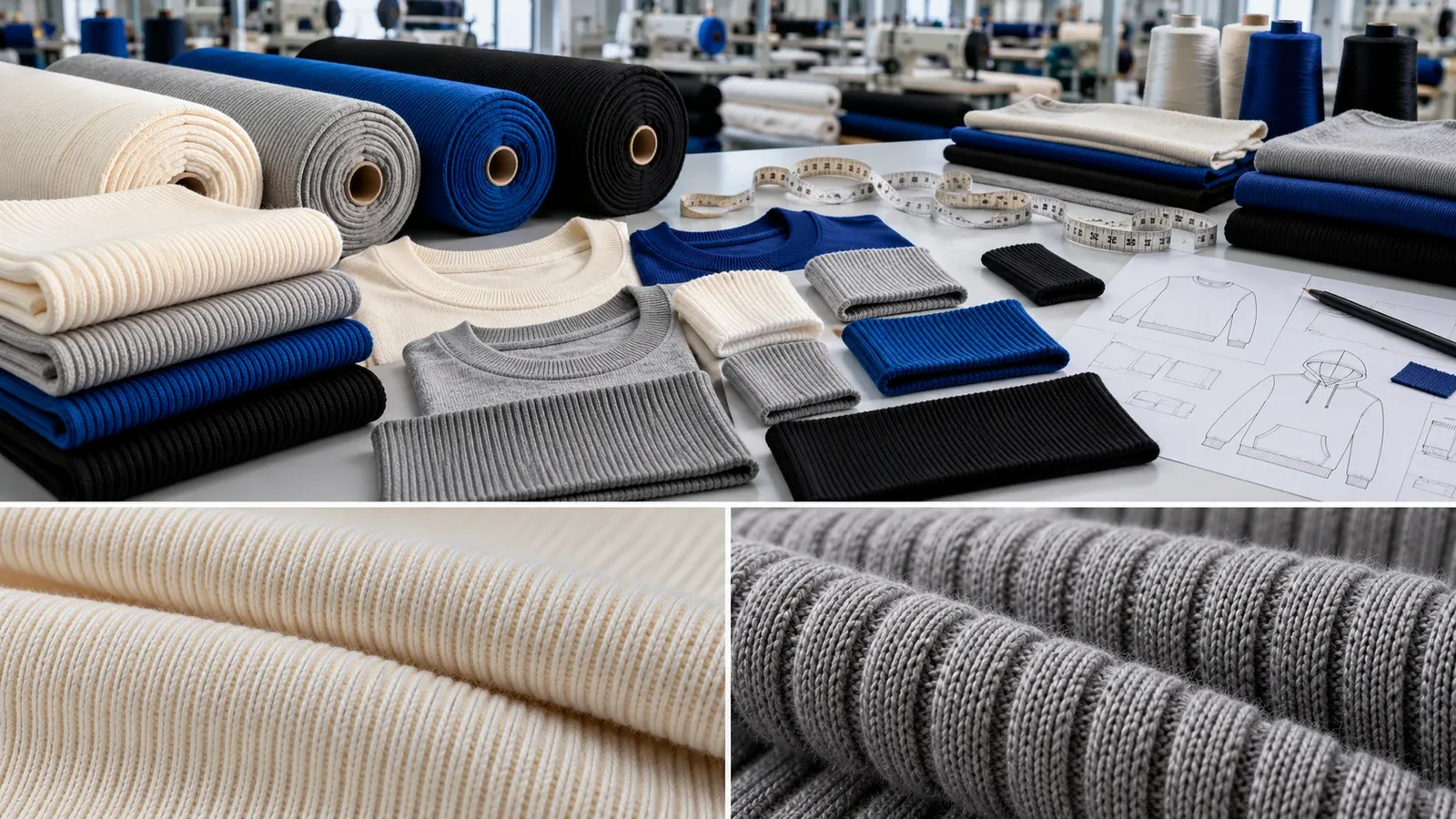
Rib knit fabric for clothing manufacturing with cuffs, collars, waistbands and fabric rolls
Core structures1×1 · 2×2 · wide rib
Typical useNeckbands · Cuffs · Collars · Waistbands
Key propertyCrosswise stretch & recovery
Key factory checksRecovery · Torque · Colour · Seam bulk

Direct answer

What Is Rib Knit Fabric?

Rib knit fabric is a knit structure formed with alternating columns of knit and purl stitches, creating visible vertical ribs and strong crosswise stretch. Because the structure can expand and contract, it is one of the most important trim fabrics in T-shirts, hoodies, sweatshirts, bombers and polo shirts.

The notation describes the repeat: 1×1 rib alternates one knit and one purl wale; 2×2 rib alternates two and two. The visual width of each ridge, bulk, stretch and recovery are also influenced by yarn, gauge, fibre content, elastane and finishing.

In manufacturing, the rib should be specified as its own component. A hoodie tech pack that says only “rib cuffs” leaves too much open. State structure, composition, target weight or density, elastane if used, finished width, colour match, stretch/recovery and finished dimensions.
Factory rule: Never approve a fabric by fibre name and GSM alone. Record construction, finished weight, colour, finish, performance requirements and an approved physical swatch.
Material options

Types & Constructions Brands Should Know

The same search term can describe several different commercial fabrics. Choose the version that matches the garment, decoration and wear conditions.

1×1 rib

Fine, classic rib used for T-shirt neckbands, fitted tops, cuffs and lighter trims. It can stretch substantially and sits cleanly when the gauge is matched to the garment.

2×2 rib

A wider, more pronounced rib often used on hoodies, sweatshirts, varsity jackets and heavier cuffs/waistbands.

Rib with elastane

A small elastane content improves snap-back and recovery, useful for neckbands, cuffs and fitted rib garments.

Cotton rib

Natural hand and good dye compatibility with cotton bodies. Recovery depends strongly on construction and may be improved with elastane.

Cotton/poly rib

Can offer durability and dimensional stability for fleece and uniform programs.

Fashion wide rib

Used as the main fabric in tanks, dresses and fitted tops; here the rib is not merely trim and GSM/drape become major design variables.

Weight planning

GSM Guide for Rib Knit Fabric

GSM is a useful control point, not a quality grade. Compare it with fibre, yarn, structure and finish. Learn more in our GSM fabric guide or use the GSM Calculator.

Finished GSMTypical positionCommon product direction
160–220 GSMLight 1×1 ribT-shirt neckbands, lightweight fitted tops
220–300 GSMCore trim ribSweatshirt cuffs, collars, neckbands, fashion ribs
300–400 GSMHeavy ribHeavy hoodie cuffs, waistbands, outerwear trims
400 GSM+Specialty dense ribHeavy outerwear or intentionally bulky streetwear trims; test seam bulk and recovery

Ranges are practical development guides, not universal standards. Mill construction, yarn, gauge, finishing and end use can move the appropriate weight.

Product development

What Can Be Manufactured in This Fabric?

Fabric selection should start from the finished product. The cards below connect material decisions with the garment programs buyers actually order.

T-shirt neckbands

1×1 rib is a common choice. Neckband length and stretch ratio must be engineered so the neckline lies flat without waving or choking.

Hoodie cuffs & hems

1×1 or 2×2 rib is used to close heavy fleece sleeves and hems. Recovery must balance the body weight.

Sweatshirt necks

Rib gives stretch for dressing and helps the neckline return to shape through washing.

Polo collars & cuffs

Flat-knit collars are common, but rib-knit options and tipped ribs are also used depending on design.

Bomber / varsity trims

Striped 1×1 or 2×2 ribs can combine colour bands with strong recovery for cuffs, hem and collar.

Fitted rib garments

Rib may be the body fabric for tanks, tees, dresses and loungewear, often with elastane for shape retention.

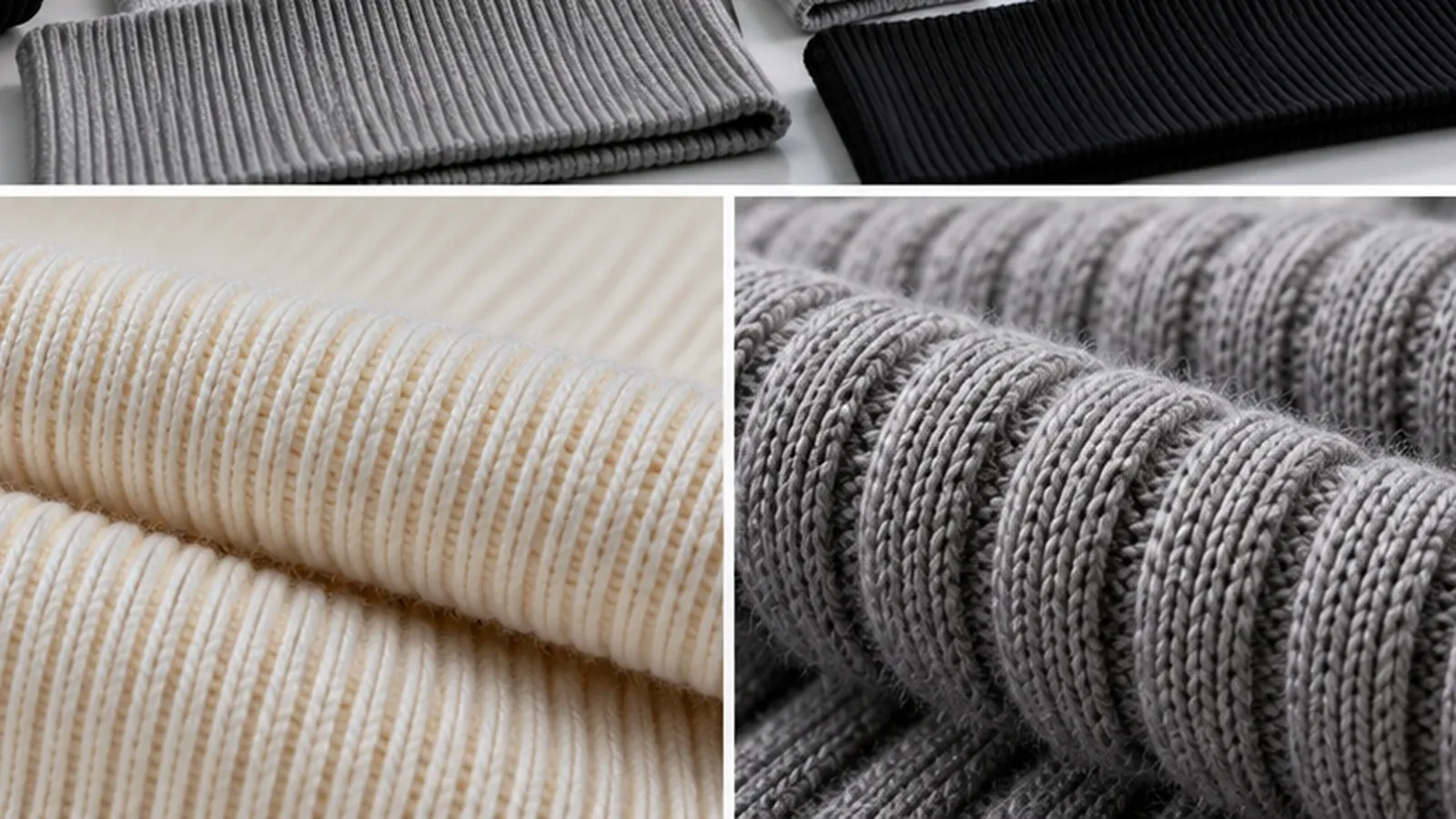
Rib knit fabric texture showing 1x1 and 2x2 vertical rib structures
Macro material view for structure, surface and trim planning.
Factory specification

How to Brief a Manufacturer

A useful fabric brief makes the material repeatable. Reference swatches help, but the factory also needs measurable information that can survive a reorder months later.

Start with fibre content and construction. Then lock finished GSM, colour standard, width, surface/finish, stretch if relevant, dimensional-stability expectations and the intended decoration method. If the garment will be washed after sewing, approve measurements after the actual wash process.

Also state which properties are critical to the product: opacity for white uniforms, pilling for fleece, recovery for rib, dye migration for polyester, collar stability for piqué or spirality for single jersey. This turns a visual idea into a production specification.

Example tech-pack wording

Write the Fabric Line Like This

2×2 rib knit · 95% cotton / 5% elastane · target 320 GSM or approved density · dyed to match body fleece after finishing · finished width specified · stretch/recovery target approved · cuff / waistband finished dimensions stated · shrinkage tested together with body fabric.

Decoration compatibility

Printing, Embroidery & Finishing

Decoration must be sampled on production-equivalent fabric. Surface texture, fibre chemistry, stretch and heat history can change print and embroidery results.

Embroidery

Rib can distort under dense embroidery; stabilisation and test sew-outs are important, especially on collars.

Screen / transfer

Possible on wider fashion rib but the ridged surface can interrupt fine artwork. Test the intended print on stretched and relaxed fabric.

Tipping / engineered stripes

Polo and varsity ribs can be knitted with coloured stripes. Stripe position must be engineered to the finished trim width.

Garment dye

Cotton ribs can be garment-dyed with matching body fabrics, but differential shrinkage or elastane heat sensitivity must be tested.

Colour matching

Body fabric and rib may be different constructions and fibre blends, so an identical dye formula may not look identical. Approve them together under consistent lighting.

See our clothing printing hub for screen printing, DTF, DTG, sublimation, puff, water-based and reflective methods.

Bulk control

Quality Checks Before Cutting

Approve fabric before it becomes hundreds of garments. These checks reduce shade, fit, wash and decoration surprises in bulk production.

Stretch recoveryStretch the rib to the garment requirement and measure return; permanent growth causes loose cuffs and necklines.
Width consistencyFinished tubular or open width affects cut dimensions and seam alignment.
Colour matchEvaluate rib next to the body fabric after final finishing/wash.
ShrinkageRib and body should be tested together because differential shrinkage distorts seams.
Elastane heat responseIf elastane is present, pressing, dyeing and transfer temperatures must stay within safe limits.
Seam bulkHeavy 2×2 rib joined to heavyweight fleece can create thick seam stacks; sample the real combination.
Material decisions

How It Compares With Other Fabrics

Comparison queries are useful because brands rarely choose a fabric in isolation. The correct answer depends on product, climate, fit, decoration and target price.

ComparisonManufacturing takeaway
1×1 vs 2×2 rib1×1 usually looks finer and is common for neckbands; 2×2 gives a broader ridge and is popular for heavyweight cuffs and hems.
Rib vs interlockRib is engineered for crosswise stretch and recovery; interlock is a smoother, more stable double knit.
Rib vs jerseyRib has pronounced vertical ridges and more crosswise expansion; jersey has a flatter face and is commonly used as the main T-shirt body.
Cotton rib vs cotton/elastane ribElastane improves recovery and shape retention, but changes dyeing, heat and stretch behaviour.
Commercial planning

Sourcing, MOQ & Cost Factors

Fabric cost is part of garment cost, but it is also one of the biggest quality levers. Approve the material system before chasing the lowest per-piece quote.

Rib is often a small percentage of garment consumption but a major source of quality complaints. Loose cuffs, stretched necklines and mismatched colour can make an otherwise premium hoodie look cheap. Treat rib development as part of the main sample approval, not as a trim selected at the end.

For low-volume custom colours, rib availability can affect MOQ because the factory may need to dye or knit matching rib separately. Stock rib can reduce cost and lead time, but only if colour, composition, recovery and hand are acceptable.

For clothingmanufacturer.us/ orders: our standing production MOQ is 10 MOQ per color per style and up to 3 sizes. Fabric availability, custom dyeing, custom knitting and special trims can create separate material minimums, so we confirm them during quotation and sampling.
Claims & responsibility

Sustainability, Certification & Material Claims

Only claim what the order can document. Fibre composition, recycled content and certified sourcing are separate from the visual name of a fabric.

If recycled polyester or organic cotton is required in rib, verify the actual trim material as part of the certified or documented bill of materials. A certified body fabric does not automatically make every trim certified.

Durable recovery is also a sustainability issue in practical terms: cuffs and neckbands are high-stress areas, and a garment with failed rib is often discarded even when the body fabric remains usable.

For industry testing concepts and textile methods, see AATCC. Certification availability should always be verified for the specific fabric/order before marketing a claim.

Buyer questions

Frequently Asked Questions

Short answers for product developers, sourcing teams and clothing brands comparing fabric options.

What is rib knit fabric?

Rib knit is a vertically ridged knit structure with strong crosswise stretch and recovery, commonly used for neckbands, cuffs and waistbands.

What is 1×1 rib fabric?

1×1 rib alternates one knit wale and one purl wale, producing a fine rib commonly used for T-shirt neckbands and fitted garments.

What is 2×2 rib fabric?

2×2 rib alternates two knit and two purl wales, giving a wider rib often used for hoodie cuffs, hems and heavier trims.

Should rib contain elastane?

Not always, but a small elastane percentage can improve recovery where the trim must repeatedly stretch and return.

What GSM should hoodie rib be?

There is no single correct weight. Heavy hoodie ribs may be around 280–400+ GSM, but density and recovery should be matched to the fleece.

Why do T-shirt neckbands wave?

Common causes include the wrong neckband length/stretch ratio, poor recovery, differential shrinkage, sewing tension or pressing.

Can rib fabric be used as a main garment fabric?

Yes. Rib is widely used for fitted tanks, tees, dresses, loungewear and fashion basics.

Can clothingmanufacturer.us/ develop custom rib trims?

Yes. Rib structure, colour, stripe pattern, composition, stretch and finished dimensions can be developed with the garment sample.

Continue researching

Related Fabric Resources

Use the fabric hub to compare neighbouring materials before you lock a production specification.

Develop your product

Turn the Fabric Specification Into a Finished Garment.

Send your tech pack, reference garment or product idea. We can help confirm a practical fabric construction, GSM, fit, decoration route, labels and packaging before bulk production.