
Temperature regulation
Merino can trap insulating air in cool conditions while helping move heat and moisture vapour away from the body when activity increases.
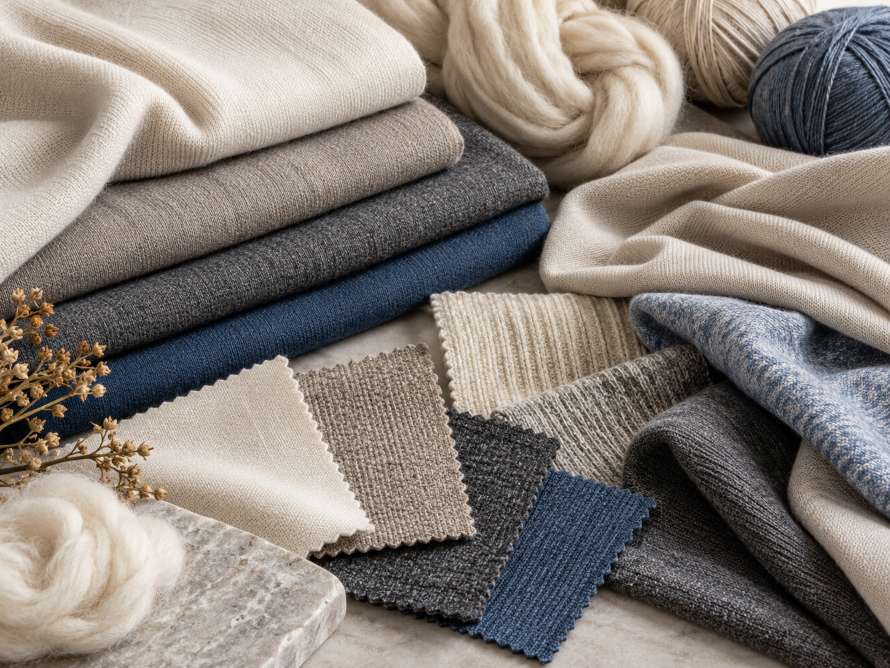
Merino wool is a fine natural animal fibre grown by Merino sheep. It is valued in apparel because it can feel softer than many traditional wools, regulate temperature, manage moisture vapour, resist odour buildup, and perform across lightweight base layers, T-shirts, knitwear, socks, sweaters and cold-weather garments.
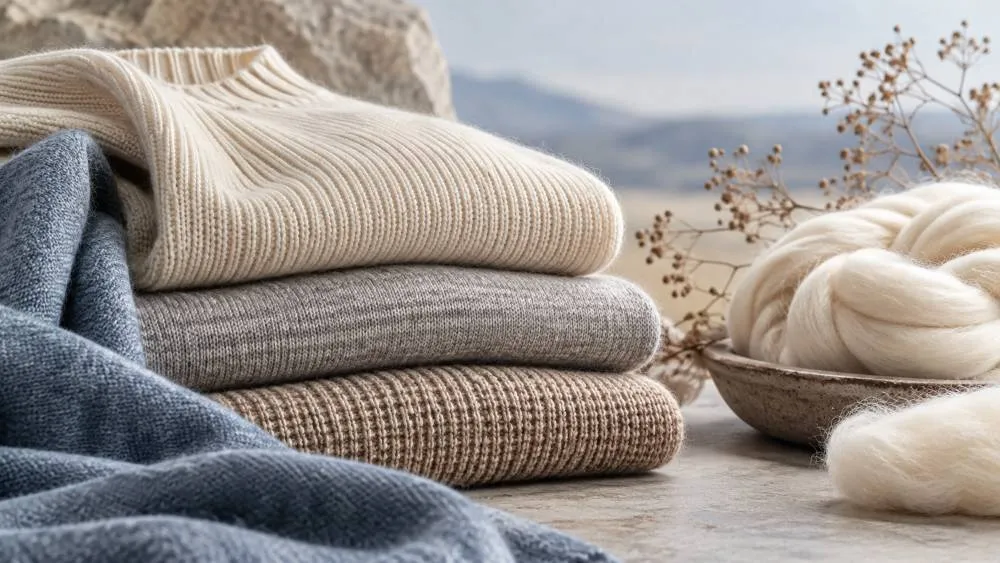
If you are searching for what is merino wool, the simplest answer is that Merino is real wool—but the quality of the finished fabric depends on much more than the sheep breed alone. Fibre diameter, staple length, yarn count, twist, knitting or weaving structure, fabric GSM, finishing, and whether the yarn is blended with another fibre all influence the final garment.
That is why two garments labelled “100% Merino wool” can feel noticeably different. One may be a lightweight jersey intended for base layers, while another may be a denser knitted sweater with more loft, warmth and structure. Fibre content tells you what the material is made from; construction tells you how it will behave.
For clothing brands, the practical question is not only “Is this Merino?” but also “What micron, what yarn, what GSM, what construction and what end use?” Those specifications work together.
Merino wool comes from Merino sheep, a breed historically associated with Spain and later developed extensively in major wool-producing regions, especially Australia and New Zealand. Today, Merino wool used for apparel can come from several countries depending on the supplier, certification program and mill.
The fibre itself is made primarily from keratin, the same broad family of structural proteins found in hair and other animal fibres. The surface of wool is covered with microscopic scales, while the fibre has natural crimp. Together with yarn and fabric construction, these characteristics help wool fabrics retain air, absorb moisture vapour and recover from compression.
Merino is therefore not a synthetic “performance fibre.” Its performance comes from a natural fibre structure that textile engineers can tune through yarn design, knitting, weaving, finishing and blending.
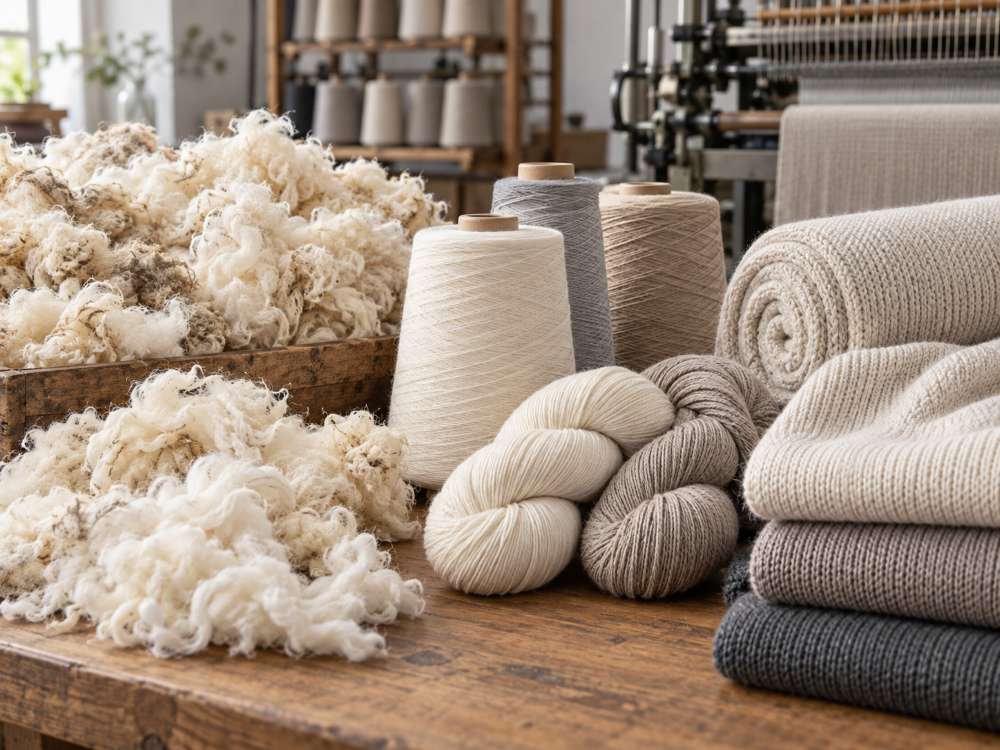
The exact process varies by mill and product, but most Merino apparel follows the same broad route: fibre selection, cleaning, preparation, spinning, fabric formation and finishing before moving through the wider clothing manufacturing process. Each stage can change softness, durability, stretch, drape and shrinkage performance.
Fleece is removed, graded and sorted according to quality characteristics such as fineness, length and cleanliness.
Raw wool is washed to remove grease, dirt and other natural contaminants before fibre preparation.
Fibres are opened, aligned and prepared. Combed worsted yarns usually create smoother, cleaner apparel fabrics.
Prepared fibres are spun into yarn. Yarn count, twist and ply affect hand feel, strength and fabric appearance.
Yarn becomes jersey, rib, interlock, knitwear or woven fabric, then receives dyeing and finishing treatments.
A micron, or micrometre, is one-thousandth of a millimetre. In wool, micron measurement describes fibre diameter. In general, a lower micron number means a finer fibre, and finer fibres usually feel softer against the skin because they bend more easily when they contact the body.
This is one of the most important differences between fine Merino and many traditional coarse wools. It also explains why premium next-to-skin Merino products often specify fibre fineness rather than only listing “100% wool.”
Merino wool is popular because one fibre can contribute softness, insulation, breathability, moisture management and odour control. The exact performance still depends on fabric weight and construction.
Merino can trap insulating air in cool conditions while helping move heat and moisture vapour away from the body when activity increases.
Wool can absorb moisture vapour within the fibre before the surface feels saturated, which is useful in base layers and travel apparel.
Merino commonly develops odour more slowly than many synthetic base-layer fabrics, which is why it is popular for repeated wear and travel.
Fine fibres bend more easily against the skin, reducing the prickly sensation often associated with coarser wool.
Wool’s crimp helps the fibre recover from bending. Fabric recovery also depends on knit structure and whether elastane is added.
Resilient fibres and knit structures can help Merino garments recover from creasing better than many flat, non-elastic fabrics.
Fine Merino fabrics can provide useful insulation without the bulk of heavy traditional wool, especially when layered.
Wool is naturally renewable because sheep regrow fleece. Environmental performance still depends on farming, processing and product lifespan.
Pure wool can biodegrade under suitable conditions. Blends, coatings, elastane and trims can change end-of-life behaviour.
GSM means grams per square metre. It describes fabric weight, not fibre quality. A lower-GSM Merino jersey can be ideal for summer layering or activewear, while a higher-GSM construction can provide more warmth and structure for winter garments.
These ranges are practical development guides rather than universal rules. Knit density, yarn count, fibre micron and finishing can make two fabrics with the same GSM feel very different.
T-shirts, summer base layers, lightweight travel tops.
Priorities: breathability, quick drying, low bulk.All-season tops, long sleeves, base layers and activewear.
Balanced warmth and mobility.Cool-weather tops, heavier base layers, jerseys and knitwear.
More coverage and insulation.Sweaters, overshirts, winter layers and dense knit structures.
Warmth, body and durability.Fibre content and GSM do not fully describe a Merino fabric. The construction determines how the yarns are arranged, and that changes stretch, opacity, warmth, recovery, surface appearance and sewing behaviour. For clothing development, construction should be specified alongside fibre content and weight.
Single jersey is common for Merino T-shirts and base layers. It can be light, flexible and comfortable against the skin, but very fine versions may curl at cut edges and can be more vulnerable to abrasion. Yarn quality and stitch density are important when the target garment needs a clean premium surface.
Interlock is generally thicker, more stable and more balanced than single jersey. It can provide greater opacity and a smoother face on both sides, making it useful for premium tops, cold-weather base layers and garments that need more body without moving into sweater-weight fabric.
Rib structures provide natural widthwise stretch and recovery. Merino rib is useful for cuffs, neckbands, fitted tops and body-skimming garments. A small amount of elastane may be added when the design requires stronger recovery after repeated wear.
Sweaters and cardigans are often engineered directly from yarn rather than cut from a conventional roll of jersey. Gauge, yarn count, stitch structure and panel shape determine warmth, drape and visual texture. This production route requires a different development process from cut-and-sew T-shirts.
Merino can also be woven for shirts, trousers, tailored products and lightweight woolens. Woven constructions provide less natural stretch than jersey unless mechanical stretch, special yarns or elastane are introduced, but they can deliver a refined, structured appearance.
Brushing can increase loft and perceived warmth, but it also changes the surface and can influence pilling. Any raised finish should be evaluated after abrasion and laundering because a soft first touch does not automatically mean strong long-term performance.
Because Merino can be made into very light or relatively heavy fabrics, it works across a broad clothing range. The best result comes from matching the fibre specification and GSM to the expected wear conditions.
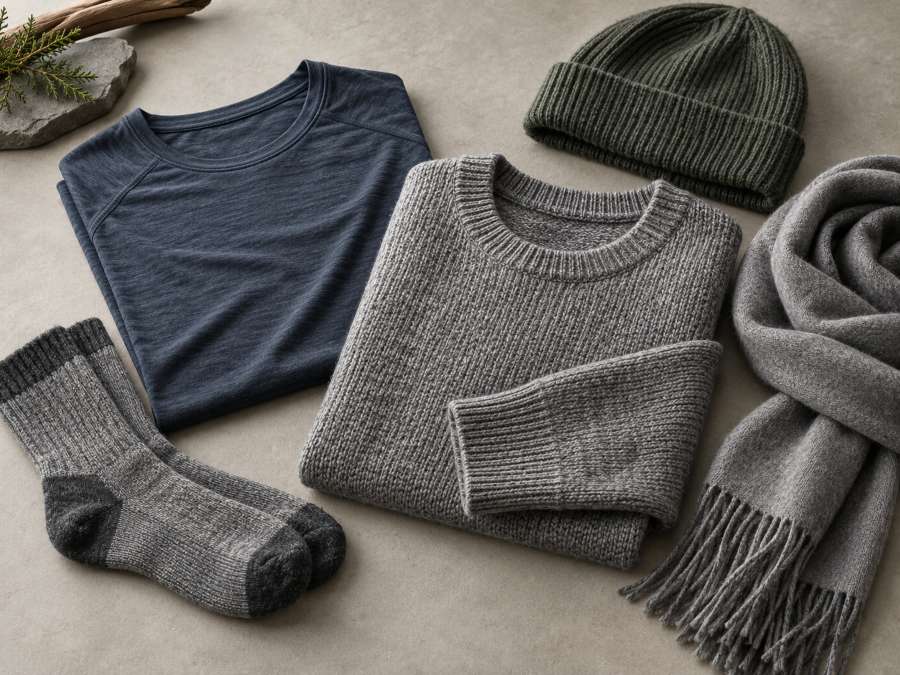
A blend is not automatically lower quality. Brands often blend Merino intentionally to improve strength, stretch, drying time, abrasion resistance, price or shape retention.
This blend can improve drying speed, abrasion resistance and price control. It is used when a brand wants a hybrid between natural-fibre comfort and synthetic performance.
Cellulosic fibres can add smoothness, drape and a cool touch. They are useful for lifestyle tops and lighter fashion fabrics where softness matters. If you are comparing fibre families, our guide to viscose fabric explains how a regenerated cellulose fibre differs from animal-derived Merino wool.
Cotton can change the hand feel, cost and warm-weather character of the fabric. However, the blend behaves differently from 100% Merino in moisture handling and drying.
For private-label production, define the blend percentage in the tech pack and confirm it with the fabric supplier before bulk cutting.
Merino is still wool, but its fibre fineness and common apparel applications make it behave differently from many coarser wool fabrics. It also offers a different balance of properties than cotton and cashmere.
| Property | Merino wool | Regular/coarser wool | Cotton | Cashmere |
|---|---|---|---|---|
| Typical skin feel | Soft when fine micron is used | Can feel coarser or pricklier | Soft, familiar and smooth | Very soft and luxurious |
| Warmth | Good warmth-to-weight | Often very warm, sometimes bulkier | Moderate; loses warmth when wet | Excellent warmth-to-weight |
| Warm-weather use | Good in lightweight GSM | Usually less suitable next to skin | Very common in warm climates | Usually cool-weather focused |
| Odour resistance | Strong natural advantage | Strong natural advantage | Moderate | Good |
| Moisture behaviour | Absorbs moisture vapour; good regulation | Similar wool behaviour | Absorbs liquid moisture and can dry slowly | Good insulation; delicate care |
| Cost | Usually premium | Varies widely | Broad range from low to premium | Usually very high |
| Best use | Base layers, travel, active, sweaters | Outer knitwear, coats, structured woolens | T-shirts, shirts, fleece, everyday wear | Luxury knitwear and accessories |
Yes, lightweight Merino wool can work well in summer. A fine 150–180 GSM jersey can move moisture vapour, dry reasonably quickly and reduce the clammy feel that sometimes occurs with heavier fabrics.
The key is weight and construction. A dense 300 GSM Merino knit is not a summer fabric simply because it is Merino.
Yes. Merino’s crimp and fabric structure help trap insulating air, especially in midweight and heavyweight knits. It is often used as a base or mid layer because it can provide warmth without excessive bulk.
For severe cold, layering strategy still matters. Merino is not a substitute for windproof or weatherproof outerwear.
Merino is useful, but it is not automatically the best fibre for every garment. Understanding its limitations helps brands choose better specifications instead of using Merino only as a marketing claim.
Fine Merino usually costs more than mass-market cotton and many synthetics because of fibre supply, grading, processing and quality control.
Fine fibres can pill under friction. Yarn twist, fibre length, fabric construction and finishing influence how much pilling appears.
Very lightweight pure Merino can wear faster in high-friction areas than some synthetic blends, especially in active products.
Heat, agitation and inappropriate washing can cause dimensional change, especially if the fabric is not designed for machine care.
Consumers may need gentler wash routines and lower heat than they use for standard cotton T-shirts.
Animal welfare, traceability and environmental standards vary, so responsible brands should verify the supply chain instead of assuming all wool is equivalent.
It can. Heat, moisture and mechanical agitation can encourage wool fibres to move and interlock, causing felting and shrinkage. Always follow the garment care label. Many modern Merino products are engineered for easier washing, but not all of them are.
Yes, pilling can occur where friction brings loose fibre ends to the fabric surface. Fine, loosely spun or very soft constructions may be more vulnerable. Better yarn selection, tighter constructions, appropriate finishing and blend design can improve resistance.
The fibre has natural elasticity, but garment stretch comes mainly from knit construction and, where required, elastane. A pure Merino jersey can recover well, but it will not behave exactly like a high-stretch synthetic activewear fabric.
No. Merino is not waterproof. It can manage moisture vapour and may resist light surface wetting for a short time, but rainproof garments require additional construction, coatings or membranes.
A dedicated “how to wash Merino wool” guide can cover stain treatment, hand washing, machine washing and sweater care in more detail without overloading this page.
For product development, the most useful specification is not “premium Merino.” It is a measurable combination of fibre, yarn, fabric and performance requirements. Our approach to fabric sourcing and testing also considers GSM, shrinkage, pilling, colourfastness and construction before bulk production.
| Specification | Why it matters | What to confirm with the supplier |
|---|---|---|
| Fibre content | Controls material identity and blend performance | 100% Merino or exact blend percentages |
| Micron | Strong influence on next-to-skin softness | Actual tested fibre diameter, not only “fine” wording |
| Yarn count / construction | Affects density, strength, surface and drape | Yarn specification, ply and twist where relevant |
| Fabric structure | Controls stretch, recovery, warmth and appearance | Jersey, rib, interlock, knitwear, woven etc. |
| GSM | Controls fabric weight and seasonal use | Target GSM with acceptable tolerance |
| Finish | Can affect softness, shrinkage, hand and machine care | Finishing process and care performance |
| Pilling performance | Important for premium positioning | Test method and acceptable grade |
| Shrinkage | Critical for sizing and repeat washing | Length/width shrinkage after specified wash cycles |
| Colourfastness | Protects colour and branding consistency | Wash, rubbing and perspiration performance |
| Traceability / certification | Supports responsible sourcing claims | Current certificates and chain-of-custody evidence |
Merino wool is renewable because sheep regrow fleece, and pure wool is biodegradable under suitable conditions. Those characteristics are valuable, but they do not mean every Merino product has the same environmental or animal-welfare profile.
A more responsible evaluation should consider farm management, land use, animal welfare, chemical inputs, processing energy, dyeing, transport, durability, repairability and how long the garment remains in use.
For brands that make formal responsible-sourcing claims, third-party standards can help provide traceability and defined criteria. One example is the Responsible Wool Standard (RWS). Merino fibre science and wool performance information can also be researched through Woolmark.
Merino wool often costs more than ordinary mass-market fibres because fine fibre production is limited, grading is exacting, processing requires care, and premium yarns or certified supply chains add cost. Extremely fine fibres are also scarcer than broader wool.
Fabric cost then changes again according to yarn count, knitting density, dyeing, finishing, certification, order quantity and whether the material is blended. This is why there is no meaningful single “Merino wool price” without a technical specification.
For a brand, the better question is: What performance do we need, and which Merino specification reaches that performance at the right target cost? When comparing material choices against the rest of a garment specification, our clothing cost calculator can help frame the main production cost variables.
This guide is written from a garment-development perspective. For fibre science, certification and wool-industry information, these external resources are useful starting points.
These answers cover the questions people most often ask before buying, designing or manufacturing Merino clothing.
ClothingManufacturer.US supports custom apparel development from fabric selection and sampling through cutting, stitching, printing, embroidery, finishing and packing. For sampling or production enquiries, share your tech pack, target fabric composition, GSM, sizes and quantity.