Can You Use Acrylic Paint on Fabric? Yes—Here’s How to Make It Last
Can you use acrylic paint on fabric? Yes. Acrylic paint can bond to cotton, canvas, denim, poly-cotton, and many other textiles, but plain acrylic usually dries stiffer than true fabric paint. For clothing that needs to bend, stretch, and survive washing, mix the acrylic with a compatible fabric or textile medium, apply thin coats, let it cure fully, and follow the paint-medium maker’s heat-setting instructions.
This guide explains how to paint fabric with acrylic paint, how to turn acrylic paint into fabric paint, when you can work without medium, how to heat set or seal a design, how to wash painted clothes, and what to do if acrylic paint lands on clothing by accident.
Acrylic paint on fabric: the important facts first
If you only need the practical answer, start here. The rest of the guide explains the “why” behind each point.
Does acrylic paint work on fabric?
Yes. If you are asking can acrylic paint be used on fabric, can you use acrylic paint for fabric, can I use acrylic paint on fabric, or would acrylic paint work on fabric, the practical answer is the same: acrylic can form a durable colored film on textile fibers, especially on absorbent fabrics.
However, “it sticks” and “it behaves like professional fabric paint” are not the same thing. Plain artist acrylic can dry relatively firm. On a wall hanging, canvas shoe panel, tote bag, patch, or rigid fabric craft, that may be completely acceptable. On a T-shirt, hoodie, legging, or other garment that bends and stretches, a fabric medium usually gives a softer and more flexible result.
Simple rule
For a decorative item, plain acrylic may be enough. For a garment you expect to wear and wash repeatedly, use a textile-compatible medium or a purpose-made fabric paint system.
The same applies if you ask can you paint fabric with acrylic paint. People also search can you use acrylic on fabric, can you use acrylics on fabric, can you put acrylic paint on fabric, and even do acrylic paint work on fabric. All of those questions come down to the same four variables: adhesion, flexibility, curing, and laundering.
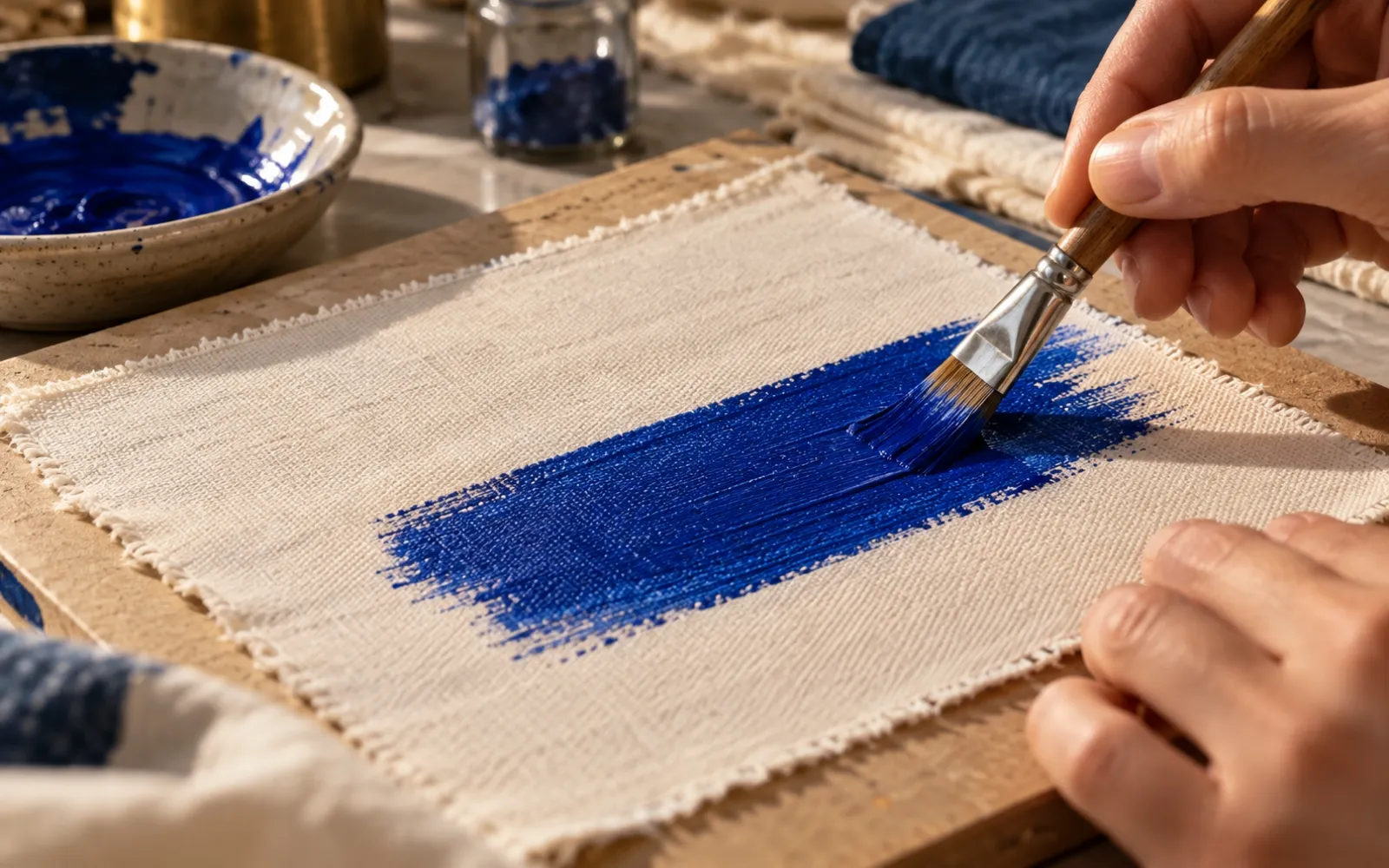
Can you use acrylic paint as fabric paint?
You can, but a fabric-specific formulation is engineered to remain more comfortable and flexible on textiles. Here is the practical comparison.
| Feature | Plain acrylic paint | Acrylic + fabric medium | Purpose-made fabric paint |
|---|---|---|---|
| Adhesion to fabric | Often good on absorbent fabric | Usually improved penetration and adhesion | Designed for textiles |
| Hand feel | Can feel stiff, especially in thick layers | Softer and more flexible | Typically optimized for a softer hand |
| Wash durability | Variable; may crack or flake over repeated washes | Better when mixed, cured, and washed correctly | Usually strongest when directions are followed |
| Heat setting | Depends on paint/system | Depends on the specific medium | Depends on manufacturer instructions |
| Best use | Crafts, rigid textiles, details, low-wash items | Wearable garments and flexible textile art | Wearable and washable fabric projects |
What is fabric paint?
What is fabric paint? It is paint formulated to bond to textile fibers while staying flexible enough for bending, wearing, and washing. Many fabric paints are acrylic-based, but their binders and additives are tuned for textile use.
What fabric is easiest to paint with acrylic?
The more absorbent and dimensionally stable the fabric, the easier it is to get clean adhesion. Always test your exact fabric, paint, and finishing method before committing to a finished garment.
Cotton & canvas
Tightly woven cotton is one of the easiest surfaces. It accepts acrylic well, handles detail, and tolerates many curing methods.
Denim & twill
Denim jackets, jeans, and heavy twills provide a stable surface. Keep paint layers thin at folds and high-flex areas.
Poly-cotton
Blends often work well, but the polyester share can reduce absorption. A fabric medium and swatch test help.
Polyester
Can you paint on polyester fabric? Yes, with compatible acrylic systems, but adhesion and heat-setting need extra care because polyester is less absorbent and can be heat-sensitive.
Knits & stretch fabric
Acrylic can work on jersey, but thick areas may crack as the knit stretches. Keep the design small or use a flexible textile medium.
Silk, nylon & delicate fabric
These can be painted, but choose a suitable system and use conservative heat. Always follow the product maker’s fabric-specific guidance.
If you are asking can you paint fabric, can you paint cloth, can you paint material, or can I paint acrylic on fabric, start with a scrap from the exact textile and run an adhesion, bend, and wash test before painting the final piece. For a broader overview of textile structures, see our clothing fabric guide and jersey fabric guide.
What is fabric medium, and what is textile medium?
What is fabric medium? A fabric medium is an acrylic additive designed to make artist paint behave better on textiles. It can improve flow, fiber penetration, adhesion, flexibility, and the feel of the dry paint. What is a fabric medium and what is textile medium are essentially the same practical question; “fabric medium” and “textile medium” are commonly used for products that modify acrylic paint for textile application.
What is in textile medium? Formulas vary by manufacturer, so there is no single universal recipe. Commercial textile mediums are typically acrylic polymer systems with additives that alter flexibility, flow, penetration, and curing behavior. For that reason, you should not assume that two brands use the same mixing or heat-setting instructions.
Do not use water as a complete substitute
Water can lower viscosity, but it does not add the textile-performance properties of a real fabric medium. Too much water can also reduce color strength and make application harder to control.
Liquitex currently recommends a 1:1 starting ratio of its Professional Fabric Medium with Soft Body Acrylic for many textile applications, while GOLDEN’s GAC 900 system also commonly starts around 1:1 with suitable acrylics. Those instructions are product-specific—follow the label for the medium you actually use.
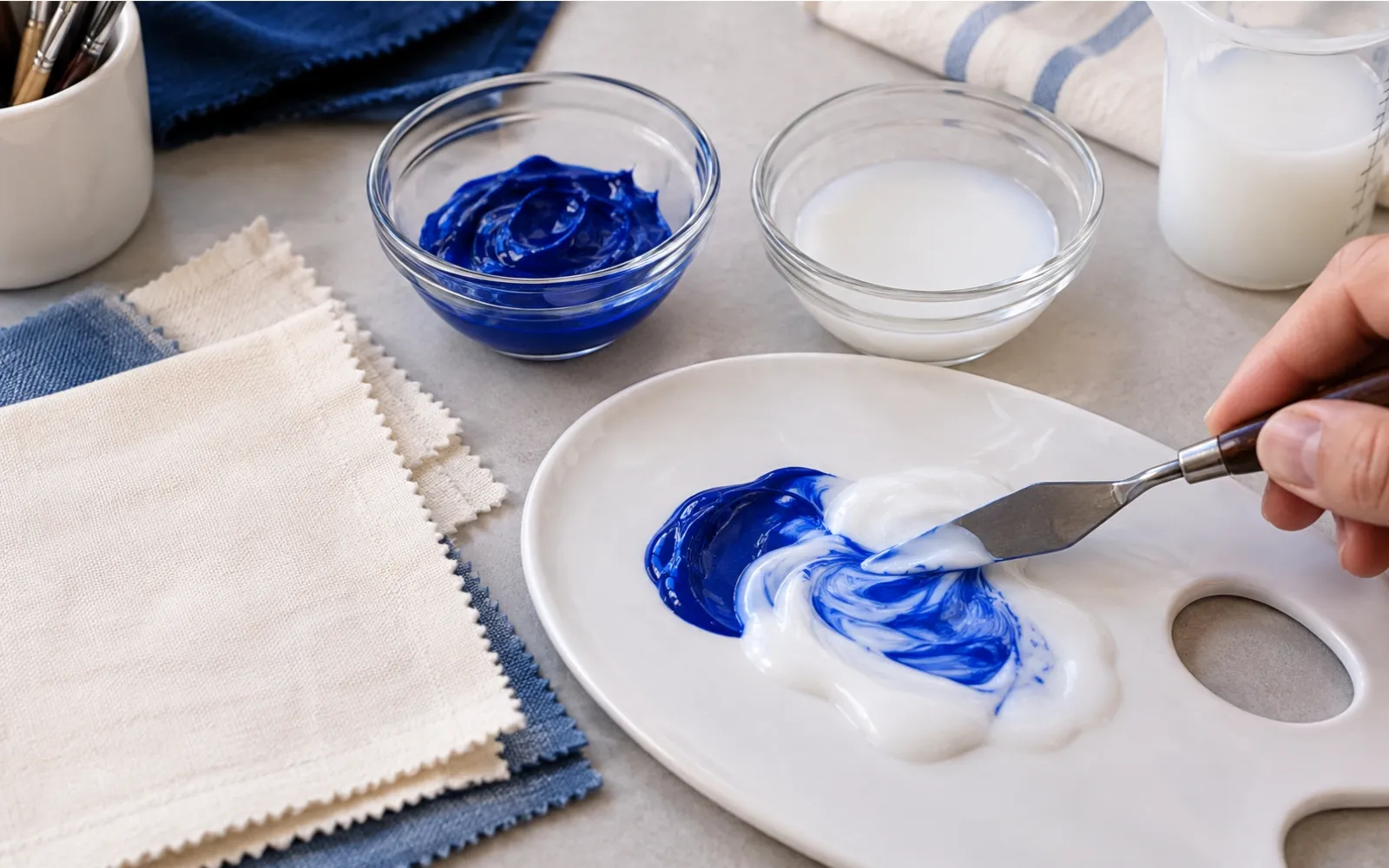
How to make acrylic paint into fabric paint
If your goal is a wearable, washable result, the safest DIY method is not a homemade kitchen additive—it is a compatible commercial textile medium with clear directions.
How to make fabric paint from acrylic paint
- Choose the right acrylic. Soft-body or fluid acrylic is easier to spread into fabric than a very thick paint.
- Add fabric medium. Use the ratio specified on the product label. A common starting point for some professional systems is equal parts medium and acrylic, but brands differ.
- Mix gently. Fold the medium into the paint until the color and consistency are uniform. Avoid whipping air into the mixture.
- Test the mix. Paint a scrap, let it cure, bend it, stretch it if appropriate, and wash it.
- Adjust for the application. For brushing, you want enough body to control edges. For staining, a thinner textile-compatible system may be better.
If you typed how make fabric but meant making paint for fabric, the method below is the relevant process. This is the practical answer to how to make fabric paint, how do you make fabric paint, how to make fabric paint with acrylic paint, how to make acrylic paint into fabric paint, how to make fabric paint from acrylic paint, how to turn acrylic paint into fabric paint, how to make acrylic paint fabric paint, and how to make fabric paint from acrylic.
What about “how to make textile paint”?
The same approach applies: combine a compatible acrylic color with a medium made for textiles, rather than relying on household ingredients whose wash durability and chemistry are unknown.
How can I make paint?
If by how can I make paint or how do you make acrylic paint you mean manufacturing acrylic paint from raw pigment, acrylic polymer, additives, and preservatives, that is a separate formulation process. For fabric crafts, start with a commercial acrylic and modify it with a textile medium rather than trying to manufacture paint from raw chemicals.
How to make acrylic paint from scratch is therefore outside the practical scope of garment painting; the safer and more repeatable route is to use a finished artist acrylic with a tested medium.
How to use acrylic paint on fabric without medium
You can paint directly with acrylic if the item does not need a very soft hand or heavy laundering. The tradeoff is a stiffer film and a greater chance of cracking on flexible areas.
1. Keep the design small
Small motifs, line art, patches, and accent areas flex less than a large solid rectangle across the chest or knee.
2. Use thin coats
Do not build a rubbery layer. Brush paint into the weave and let each thin coat dry before adding another.
3. Choose stable fabric
Cotton canvas, denim, and tightly woven cotton are generally more forgiving than highly elastic knits.
How to turn acrylic paint into fabric paint without medium has no perfect equivalent to a commercial textile additive. You can thin and apply acrylic more carefully, but you are not truly changing the binder into a fabric-optimized system. If the garment matters, use the proper medium.
How to paint on fabric with acrylic paint
This workflow covers how to paint on fabric, how to paint cloth, how to paint fabrics, how to paint a cloth, how to paint a fabric, and how to paint clothes without ending up with a stiff, bleeding design.
Prewash and dry the fabric
For washable fabric, remove factory sizing, starch, oils, and finishes first. Skip fabric softener because it can leave residue.
Insert a barrier
Place cardboard, plastic, or a non-stick board inside a shirt so paint does not bleed through to the back layer.
Secure and lightly tension the area
Keep the surface flat. Do not overstretch knit fabric or the design may distort when the garment relaxes.
Mix paint with textile medium if needed
Follow the exact ratio and curing directions for your product. Test the mix before using it on a finished garment.
Sketch or stencil the design
Use tailor’s chalk, a washable fabric pencil, or a stencil. Avoid heavy graphite that may show through pale colors.
Apply thin layers
Push the first coat into the fibers instead of floating a thick film on top. Let it dry before adding detail.
Cure or heat-set correctly
Some systems air-cure with no heat; others require heat to improve softness and launderability. Follow the label.
Wash gently after full cure
Turn the garment inside out, use cool water and a gentle cycle, and avoid aggressive abrasion whenever possible.
How to paint a shirt
For a T-shirt, prewash, place a barrier inside, keep the knit relaxed, use a fabric-medium mix, and paint in thin layers. Avoid placing a thick solid block across an area that stretches heavily.
How to paint on fabric with paint sounds simple, but the difference between a craft that lasts one day and a wearable design that survives repeated use is usually preparation and film thickness.
How to use fabric paint, how do you use fabric paint, and how to use textile paint follow the same basic workflow, except purpose-made fabric paint may already contain the modifiers you would otherwise add to artist acrylic.
If you are asking how to paint fabric with acrylic paint or how to use acrylic paint on fabric, this eight-step process is the most reliable starting point.
How to heat set acrylic paint on fabric—and when not to
Heat setting is not a universal rule for every acrylic product. Some fabric mediums are designed to cure without ironing; others specifically require heat. That is why how to heat set paint on fabric, how do you heat set fabric paint, how to heat set acrylic paint on fabric, and how to set acrylic paint on fabric should always begin with the product label.
For example, GOLDEN’s GAC 900 is a heat-set medium and publishes temperature/time guidance for different textiles, while Liquitex says its Professional Fabric Medium does not need ironing to set. The correct method therefore depends on the system, not just on the word “acrylic.”
How to set fabric paint safely
- Let the painted area air-dry first.
- Check the fabric’s maximum safe temperature.
- Follow the medium or fabric paint manufacturer’s time and temperature guidance.
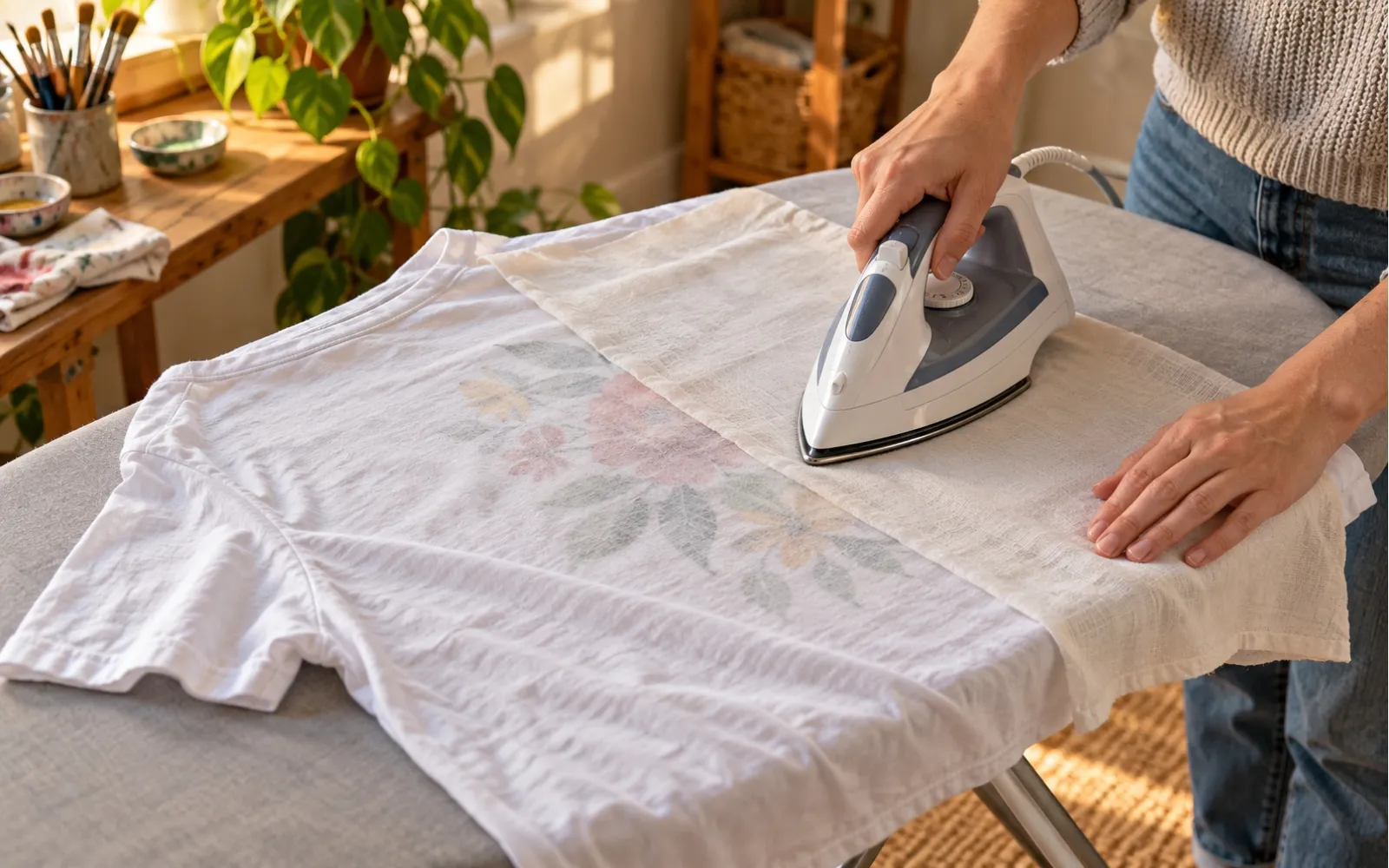
- If ironing is allowed, work from the reverse side or use a protective cloth as directed.
- Ventilate the area when a product’s instructions call for heat-setting.
How to set paint on fabric is therefore a product-specific process. Avoid copying a random temperature from a tutorial when you do not know whether the garment is cotton, polyester, nylon, spandex, or a blend.
How to seal acrylic paint on fabric
For wearable fabric, “sealing” usually means using the correct textile medium and curing system—not applying a hard clear varnish over the design. A rigid topcoat can create a plastic patch that cracks when the fabric bends. The same rule applies when people ask how to seal fabric paint.
Does acrylic paint wash off fabric or clothes?
The answer changes dramatically depending on whether the paint is wet, dry, properly cured, mixed with a fabric medium, or sitting as a thick film on top of the textile.
| Situation | What usually happens | What to do |
|---|---|---|
| Fresh wet acrylic stain | Much easier to rinse and lift before the binder dries. | Flush promptly with cool water and detergent; work from the back of the stain. |
| Dry plain acrylic | Can be very difficult to remove and may behave like a permanent plastic film. | Avoid aggressive solvents without checking fabric safety; dried paint may not fully come out. |
| Acrylic + fabric medium | Designed for improved flexibility and laundering when cured correctly. | Follow the specific medium’s curing and washing instructions. |
| Thick acrylic on stretch fabric | May crack, flake, or lift after flexing and washing. | Use thinner coats and a flexible textile system. |
Does acrylic paint wash off? Wet acrylic can often be removed with water and detergent, but once fully dry it becomes much harder to wash away. That is why answers to is acrylic paint washable, is acrylic washable, are acrylic paints washable, and is acrylic paint permanent need context.
If you intentionally paint a garment, the goal is for the design to stay. With the right medium, curing, and laundering, will acrylic paint stay on fabric and does acrylic paint stay on fabric can both be answered “yes, it can last well,” although all painted garments eventually show wear.
For accidental stains, people ask does acrylic paint wash off clothes, does acrylic paint wash off of clothes, will acrylic paint wash off clothes, can acrylic paint wash off clothes, does acrylic paint wash out of clothes, will acrylic paint wash out of clothes, and does acrylic paint wash out. Fresh paint offers the best chance of removal; dried acrylic can become extremely difficult to remove completely.
For intentional fabric paint, does fabric paint wash off, will fabric paint wash off, and is fabric paint washable depend on the specific product and whether its curing directions were followed. Fabric paint is generally designed to stay on fabric rather than wash away.
How to wash acrylic paint off clothes
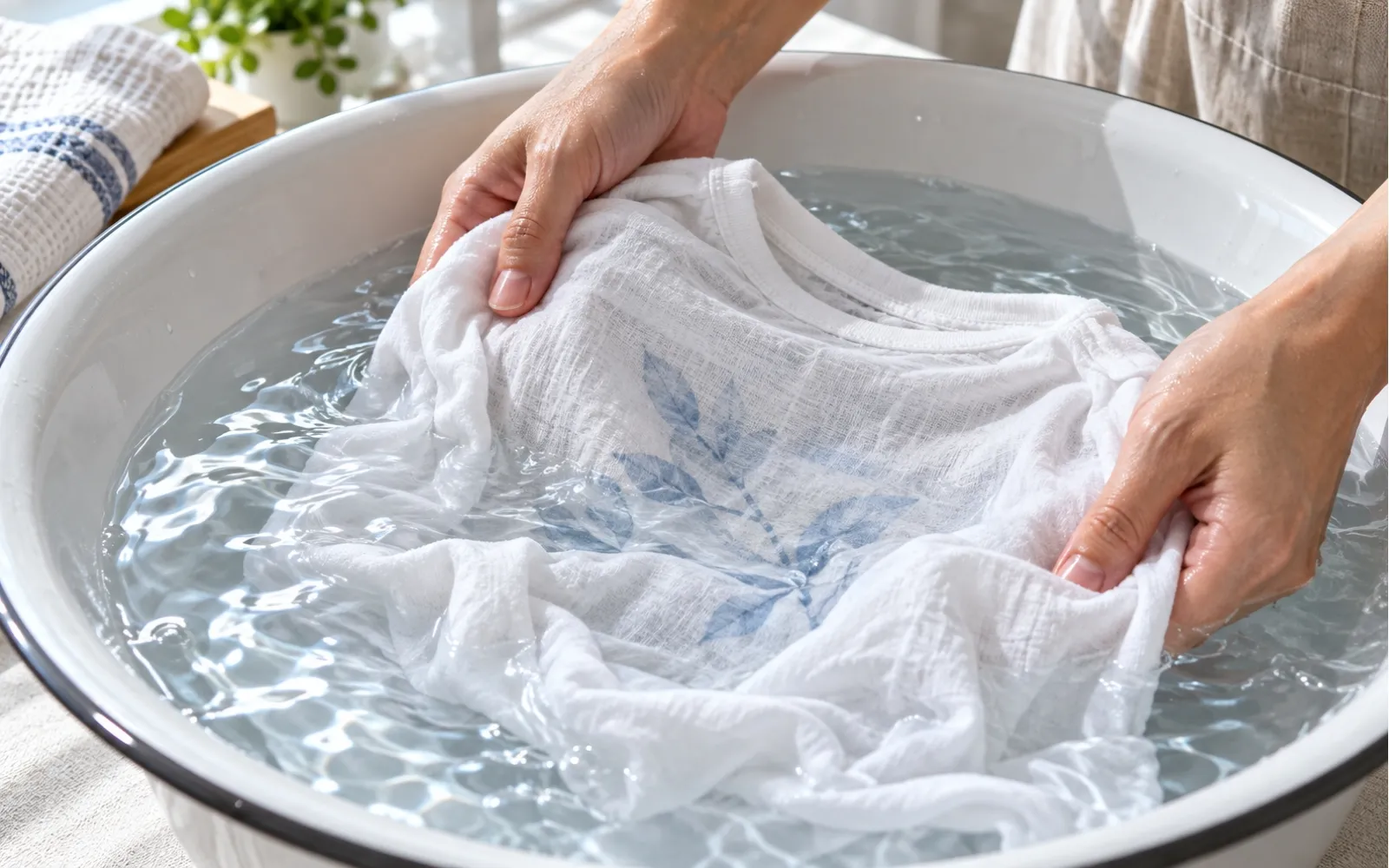
If the paint is still wet, act quickly. Blot excess paint without spreading it, then rinse from the reverse side with cool water. Work liquid laundry detergent into the stain and rinse again. Repeat before drying the garment.
This is the safest starting approach for searches such as how to wash acrylic paint off clothes, how to wash acrylic paint out of clothes, and how to wash out acrylic paint from clothes.
If the acrylic has already dried
Dried acrylic is much harder to remove because the polymer has formed a film around and between fibers. Gently scrape away raised paint without cutting the textile. Before using alcohol, stain removers, or other solvents, check the garment’s care label and test an inconspicuous area because solvents can damage dyes, finishes, acetate, and other sensitive materials.
Do not machine-dry a fresh stain
Heat can make stain removal harder. Keep treating the area while the garment is air-dry until you are satisfied with the result.
Will acrylic paint stay on clothes?
Yes, a properly prepared and cured textile painting can remain on clothing through repeated use. If you are asking does acrylic paint stay on clothes or will acrylic paint stay on clothes, think of it as a finish that needs the right substrate, flexible binder, and care instructions.
How to make acrylic paint stay on fabric is mainly about using a compatible medium, avoiding overly thick paint, curing correctly, and washing gently.
Can you dye fabric with acrylic paint?
Not in the same chemical sense as a true textile dye. Acrylic color can be thinned and used for staining or tie-dye-like visual effects, but it forms a polymer film/binder system rather than becoming a fiber-reactive dye.
How to dye fabric with acrylic paint
If you want a stained effect, use a fluid acrylic system specifically recommended for textile staining, usually with a compatible medium. Pre-wetting can help penetration, but follow the paint maker’s directions.
Can you dye fabric with acrylic paint?
You can create a dye-like look, but expect the hand, wash behavior, and chemistry to differ from fiber-reactive, acid, or disperse dyes.
Best for production?
For large-scale apparel color changes, choose the dye or print chemistry designed for the fiber. Acrylic staining is better treated as a surface-design technique than a replacement for industrial dyeing.
7 common mistakes that make acrylic paint crack or wash poorly
Skipping the prewash
Sizing, starch, oils, or softener can interfere with wetting and adhesion.
Painting too thickly
A thick film becomes stiff and is more likely to crack across folds and stretch zones.
Using the wrong medium
General acrylic gels and pouring mediums are not automatically substitutes for a textile medium.
Over-thinning with water
Too much water can reduce control and color strength without delivering the benefits of fabric medium.
Heat-setting every product
Some systems require heat; others explicitly do not. Follow the exact product instructions.
Washing too soon
Dry-to-the-touch is not always the same as fully cured. Respect the recommended curing window.
Ignoring stretch
A beautiful design can fail if placed across a panel that expands far beyond the paint film’s flexibility.
Fabric painting for samples, custom garments, and production
Hand-painted acrylic is useful for one-off samples, art garments, prototypes, patches, and limited editions. For repeat production, the decoration method should be documented in the tech pack with paint/ink system, artwork dimensions, placement, color references, cure method, wash test, and acceptable hand feel.
If the artwork needs to be repeated across dozens or hundreds of garments, screen printing, DTG, heat transfer, embroidery, sublimation, discharge, or another production method may be more consistent than freehand acrylic painting. The best process depends on fiber content, artwork, order volume, desired texture, and wash target.
Production checklist
Specify the fabric composition and GSM, artwork size, print position, stretch requirement, color standard, curing method, wash test, abrasion test, and approved sample. If the garment is knit or stretch-heavy, test the decoration at the maximum expected extension.
For order planning, see our clothing MOQ guide and clothing cost calculator.
Acrylic paint on fabric FAQs
Short, direct answers to the wording people use most often when searching about acrylic paint, clothing, fabric medium, heat-setting, washing, and permanence.
Can you use acrylic paint on clothes?
Yes. Can you use acrylic paint on clothes, can you use acrylic paint on clothing, can acrylic paint be used on clothes, can acrylic paint be used on clothing, and can I use acrylic paint on clothes all have the same answer: acrylic can work, but a fabric medium usually makes wearable results softer and more durable.
Can you paint clothes with acrylic paint?
Yes. Can you paint clothes with acrylic paint and can you paint clothes with acrylic are practical DIY techniques. Prewash the garment, use thin layers, add textile medium for flexibility, and cure according to the product instructions.
Can I paint fabric with acrylic paint?
Yes. Can I paint fabric with acrylic paint is especially straightforward on cotton, denim, canvas, and many blends. Always test first if the fabric is stretchy, coated, delicate, or synthetic.
Can u use acrylic paint on fabric?
Yes. The search can u use acrylic paint on fabric is simply an informal version of the main question. Acrylic adheres to fabric, but textile medium improves comfort and wash performance on wearable items.
Is acrylic paint for fabric?
Artist acrylic is not necessarily formulated specifically for cloth, so is acrylic paint for fabric is best answered as “it can be used on fabric.” For clothing, fabric paint or acrylic mixed with a compatible textile medium is usually better.
Is acrylic paint good for fabric?
Is acrylic paint good for fabric? It is good for many textile crafts and can be excellent for detailed art, but plain acrylic may feel stiff. For a soft, washable garment, use a fabric-specific system.
Will acrylic paint work on fabric?
Yes. Will acrylic paint work on fabric and does acrylic paint work on fabric are both yes, provided the textile is clean, the paint bonds well, and the cured film can handle the fabric’s movement.
Will acrylic paint wash off?
Will acrylic paint wash off? Wet paint is much easier to remove. Fully dried acrylic becomes water-resistant and difficult to wash out. On intentionally painted garments, correct medium, curing, and care improve durability.
Does acrylic wash off clothes?
Does acrylic wash off clothes? Fresh wet acrylic often can be treated successfully, while dry acrylic can be extremely difficult to remove. Treat accidental spills before they dry.
Will acrylic paint stay on fabric?
Yes. Will acrylic paint stay on fabric if it is properly prepared, applied, cured, and washed. A flexible textile medium generally improves performance on clothing.
Is acrylic paint washable?
Is acrylic paint washable can mean two things. Wet acrylic is water-cleanable; once fully dry, acrylic forms a durable polymer film. A painted garment can be washable when the paint system is designed and cured for textiles.
How do you use fabric paint?
How do you use fabric paint? Prewash the fabric, keep it flat, paint thin controlled layers, let it dry, cure or heat-set if required by the manufacturer, then follow the recommended wash instructions.
What paint to use on fabric?
For wearable fabric, use purpose-made fabric paint or an artist acrylic combined with a compatible textile medium. What paint to use on fabric also depends on fiber type, stretch, desired hand feel, and washing frequency.
How to paint on fabric permanently?
How to paint on fabric permanently means maximizing durability, not making a literally indestructible finish. Prewash, use a fabric-compatible paint system, apply thinly, cure correctly, and wash gently.
How to set fabric paint?
How to set fabric paint depends on the product. Some paints air-cure; some need ironing, a dryer, or a heat press. Never assume one universal temperature.
How to seal acrylic paint on fabric?
For clothing, avoid a rigid clear varnish unless the manufacturer explicitly recommends it. Use the textile medium and curing system as the “seal.” That is also the safest answer to how to seal fabric paint.
Can you paint polyester fabric?
Yes, but polyester is less absorbent and can be heat-sensitive. Use a compatible textile system and test adhesion, color, flexibility, and the exact cure temperature before committing to the final garment.
How to paint a shirt with acrylic?
Prewash the shirt, place a barrier inside, keep the knit relaxed, mix acrylic with textile medium when appropriate, paint thinly, dry fully, cure per instructions, and wash inside out in cool water.
How to make acrylic paint stay on fabric?
Use a clean, compatible textile, fabric medium, thin layers, correct curing, and gentle laundering. Thick paint on a highly stretched area is much more likely to crack or lift.
Does acrylic paint stay on clothes?
Yes. Does acrylic paint stay on clothes when it is properly applied and cured? It can remain durable through repeated wear and washing, but abrasion and flexing will eventually age any surface decoration.
Is fabric paint washable?
Most purpose-made fabric paints are intended to withstand laundering once fully cured, but the exact cycle, temperature, and waiting period vary. Always check the product label.
How do you heat set fabric paint?
Use the exact time and temperature stated by the paint or medium maker and stay within the fabric’s safe heat limit. Some systems require no heat at all.
How to use acrylic paint on fabric without medium?
Choose a stable fabric, apply very thin coats, keep the painted area small, avoid high-stretch zones, and accept that the final hand may be stiffer than with a textile medium.
Can you use acrylic paint as fabric paint?
Yes, especially for crafts and low-flex textile art. For washable clothing, convert the acrylic with a compatible fabric medium or use fabric paint designed for garments.
More wording this guide covers
Searchers may phrase the same topics as how to paint cloth, how to paint fabrics, how to paint a cloth, how to paint a fabric, how to paint clothes, how to paint on fabric, how to paint on fabric with acrylic paint, how to paint on fabric with paint, how to use fabric paint, how to use textile paint, how to use acrylic paint on fabric, how to set paint on fabric, how to set acrylic paint on fabric, how to heat set paint on fabric, how to heat set acrylic paint on fabric, will acrylic paint stay on clothes, and does acrylic paint stay on fabric. The preparation, thin-layer application, correct curing, and gentle-care principles above answer all of them.
Sources and further reading
This guide uses manufacturer instructions for fabric preparation, textile mediums, curing, heat-setting, and laundering rather than assuming that all acrylic systems behave the same way.
Technical sources
- GOLDEN Artist Colors — Fabric Applications: acrylic paint choices, material considerations, heat-setting, and washing.
- GOLDEN Artist Colors — GAC 900 Heat-set Fabric Painting Medium: mixing, curing, heat-setting ranges, and textile considerations.
- Liquitex — Professional Fabric Medium: flexibility, adhesion, washability, mixing guidance, and no-iron setting instructions for this product.
- Liquitex — Surface Preparation: washing washable fabrics before painting to remove sizing or starch.
Need a custom garment rather than a one-off paint project?
Tell us your garment type, fabric composition, decoration method, quantity, and artwork. We can help you plan a production-ready specification for custom apparel.