

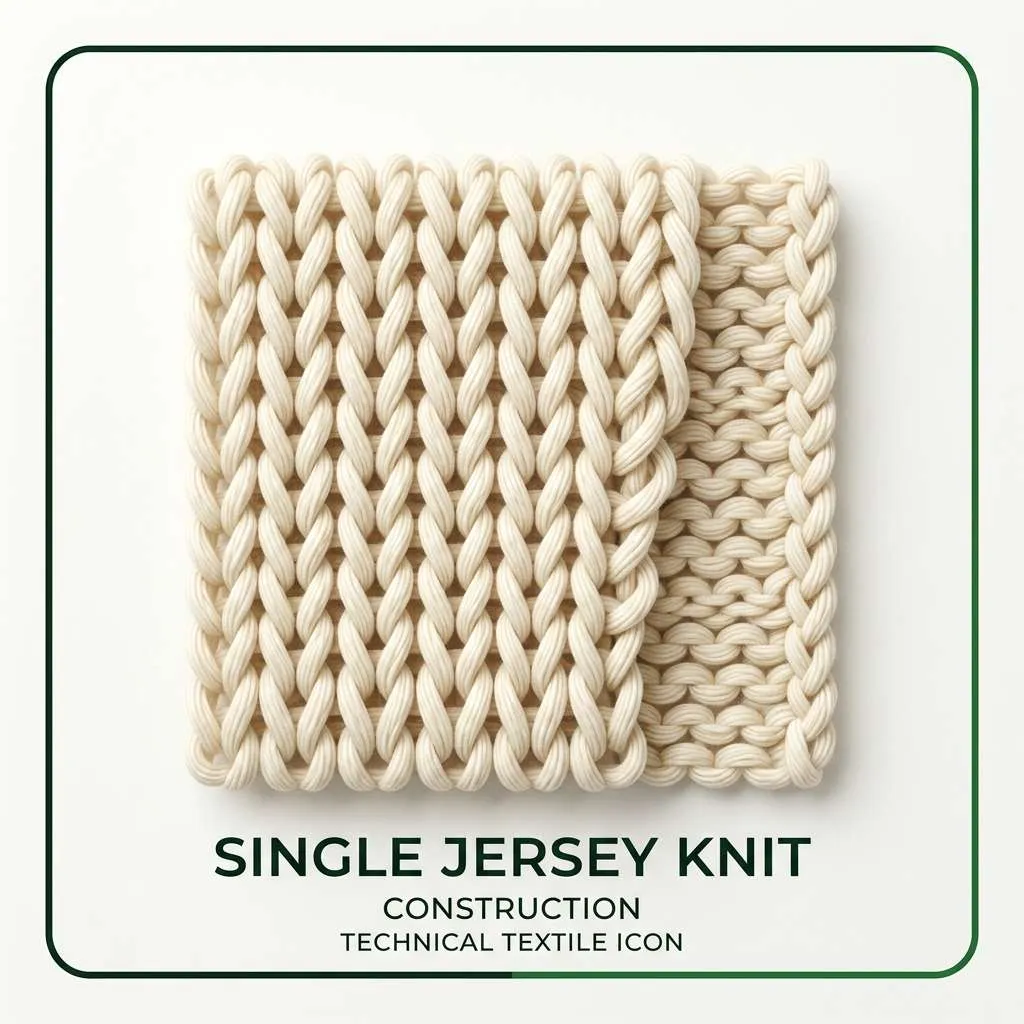
01
Single Jersey
The classic lightweight knit — smooth face, looped back, maximum stretch and drape.
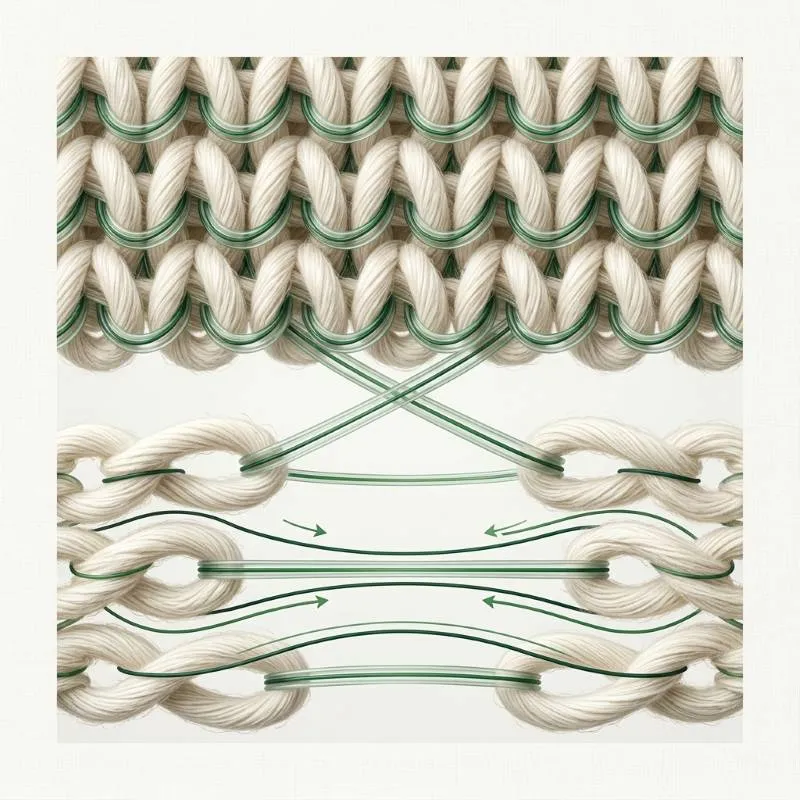
Jersey fabric is a soft, stretchy knit textile made by looping one continuous yarn through itself on a weft-knitting machine, instead of weaving threads over and under each other. That loop structure is what gives jersey its stretch, its smooth face and looped back, and its easy drape — the reason it's the default fabric behind most T-shirts, everyday dresses and knitwear.
Often called jersey knit, jersey material or, when made from cotton, cotton jersey — these all describe the same underlying knit construction.
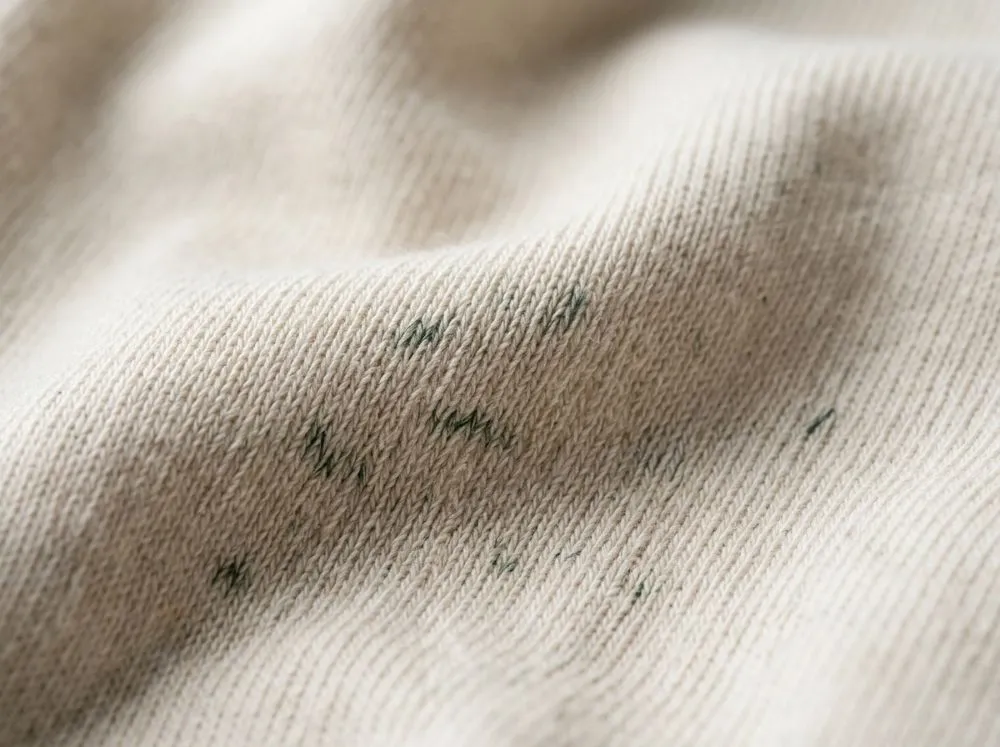
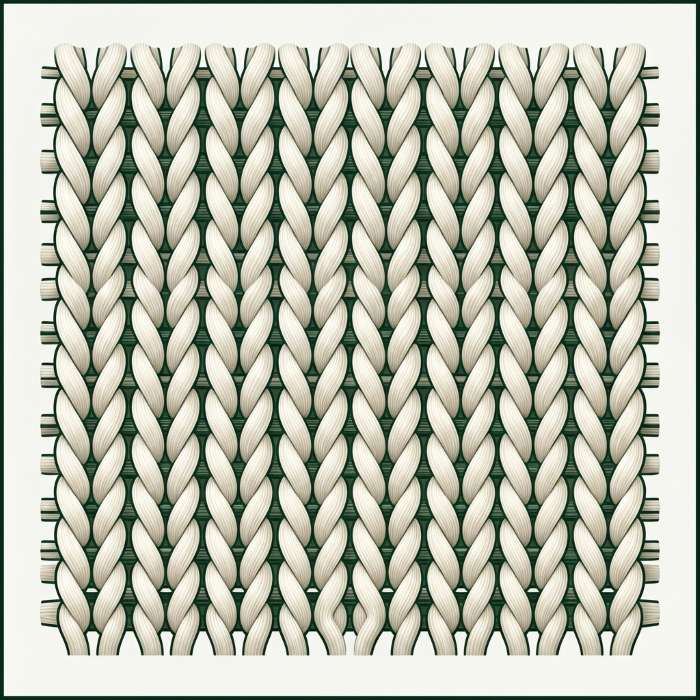
Jersey fabric is a lightweight, stretchy knit textile — not a woven one — made from a single continuous yarn looped through itself on one needle bed. It has a smooth flat-stitch face, a slightly textured looped back, and can be knitted from cotton, polyester, viscose, modal, wool or blends of these fibers.
Jersey describes a knit structure, not a fiber — so almost any yarn can be knitted into it. The fiber you choose changes how the finished fabric feels, breathes, stretches and holds up in production.

The most common jersey fiber — soft, breathable and easy to dye. Plain cotton jersey has less recovery than blends and can shrink slightly if it isn't pre-shrunk.
Adds durability, shape retention and shrink resistance. Common in poly-cotton blends and lower-cost, higher-durability T-shirt programs.

A semi-synthetic cellulose fiber that gives jersey a fluid drape and silky hand — popular for dressier tops and dresses, but needs gentler care.
A refined cellulose fiber prized for exceptional softness and smooth drape, often blended with cotton or spandex in loungewear and fitted basics.
Wool jersey gives natural warmth, breathability and soft drape — used in knitwear, dresses and cooler-weather garments.
Linen adds a light, textured, breathable feel to jersey blends — well suited to warm-weather casualwear.
Even 2–5% elastane dramatically improves stretch recovery, helping garments keep their shape through wear and washing.
Combines cotton's softness with polyester's durability and shrink resistance — one of the most widely used jersey blends for everyday tees.
Jersey belongs to the weft-knit family: loops are formed across the fabric's width, one row at a time, rather than threads being interlaced as in a woven fabric. From there, jersey construction runs in a natural progression from simple to more structured.
Knitted on one needle bed. Smooth face, looped back, lightweight and highly stretchy — the default T-shirt fabric.
Knitted on two needle beds for extra thickness and stability. Looks similar on both sides and holds its shape better than single jersey.
A refined double knit where loops from both beds interlock directly. Smooth on both faces, doesn't curl at cut edges, and drapes with more structure.
Alternating knit and purl columns create visible vertical ribs, with very high crosswise stretch — used for collars, cuffs and fitted trims.
Techniques like scuba, ponte and jacquard build on the same knit family to add body, texture or pattern for more technical or fashion-forward garments.
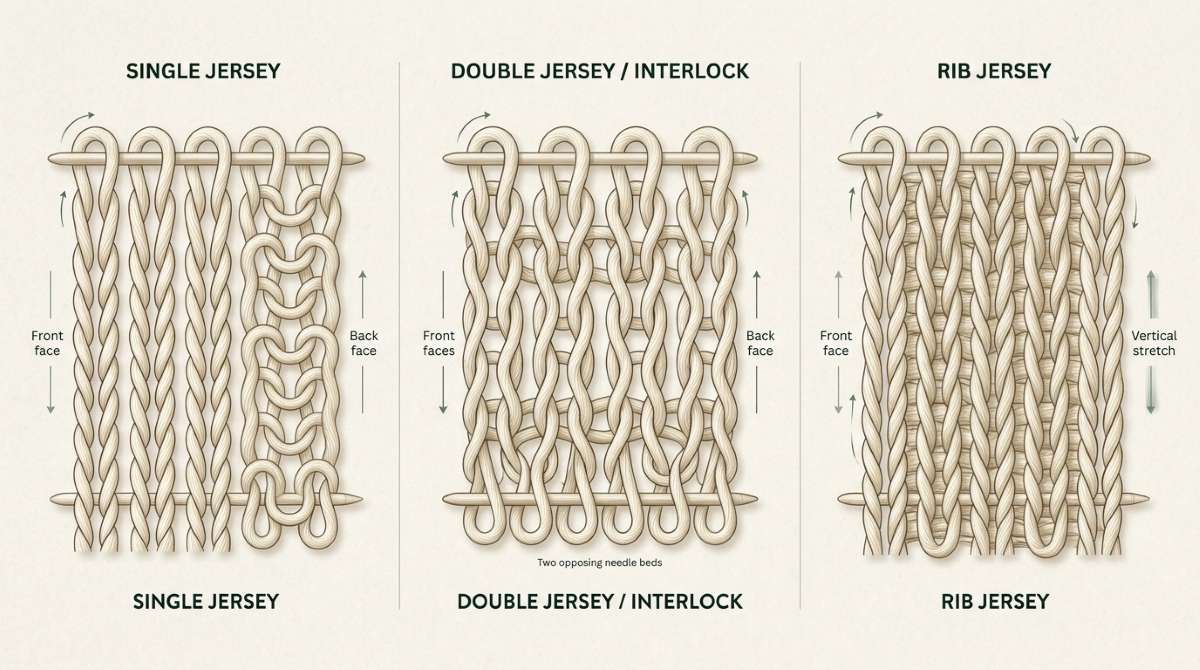
"Jersey" covers a family of knit constructions and fiber combinations. Here are the most common jersey types used in apparel manufacturing.
The classic lightweight knit — smooth face, looped back, maximum stretch and drape.
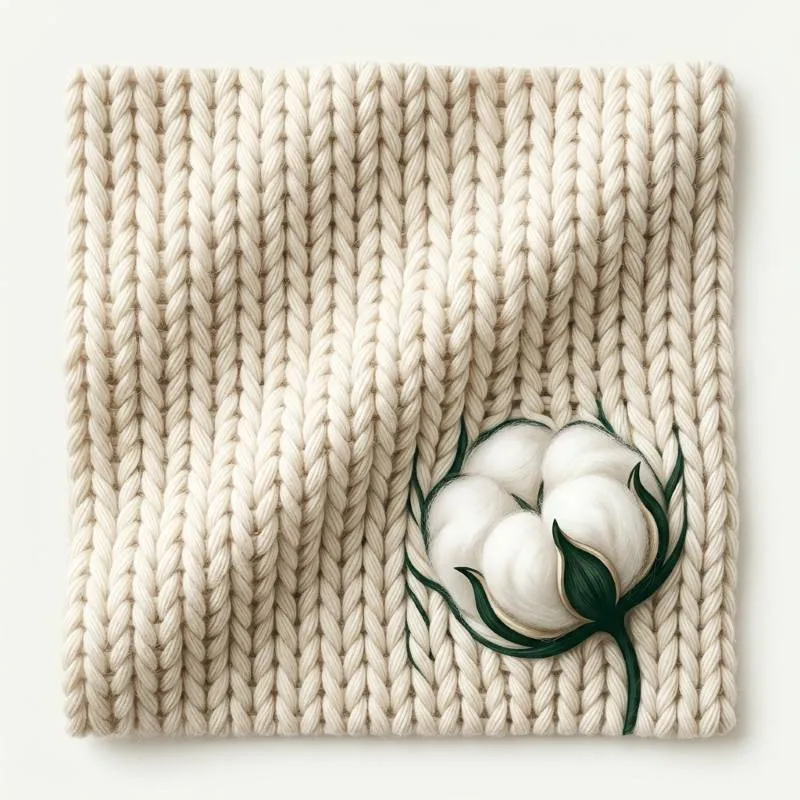
Single or double jersey knitted from 100% or high cotton content, widely used for everyday apparel.
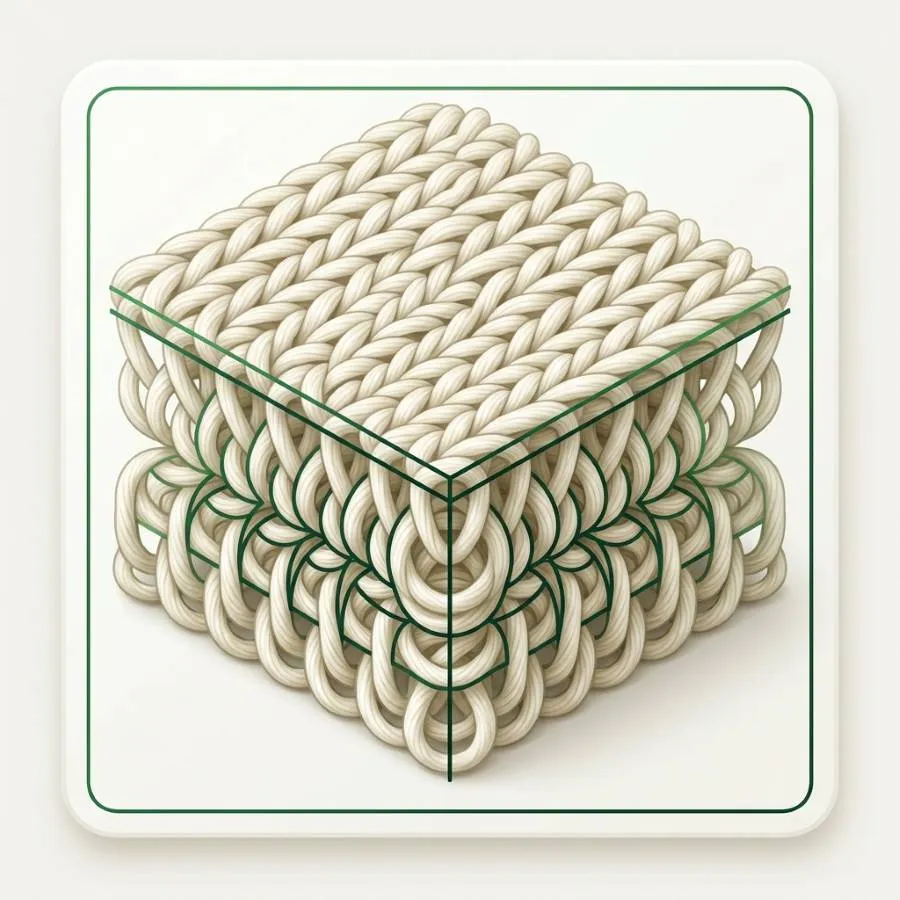
Two-bed construction producing a thicker, more stable, two-sided fabric.
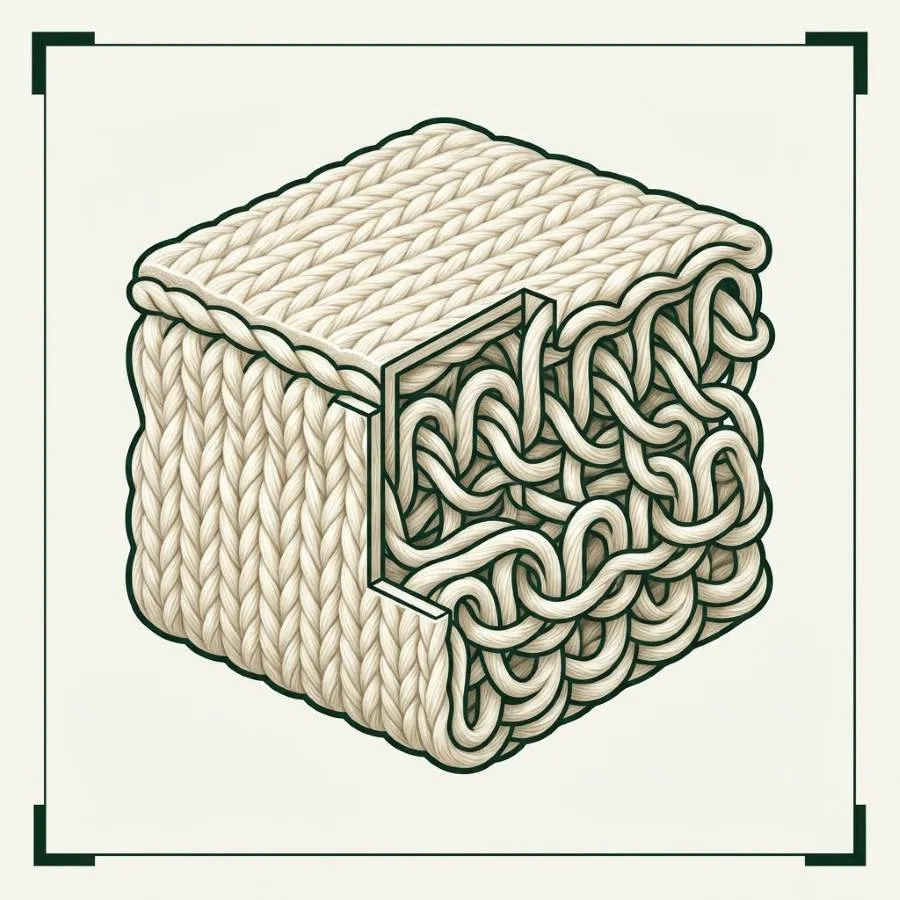
Smooth on both faces and resistant to curling at cut edges — popular for polos and premium tees.
Cotton jersey blended with elastane for improved stretch recovery, ideal for fitted basics and bodycon silhouettes.
Offers better shrink resistance and shape retention than cotton alone.
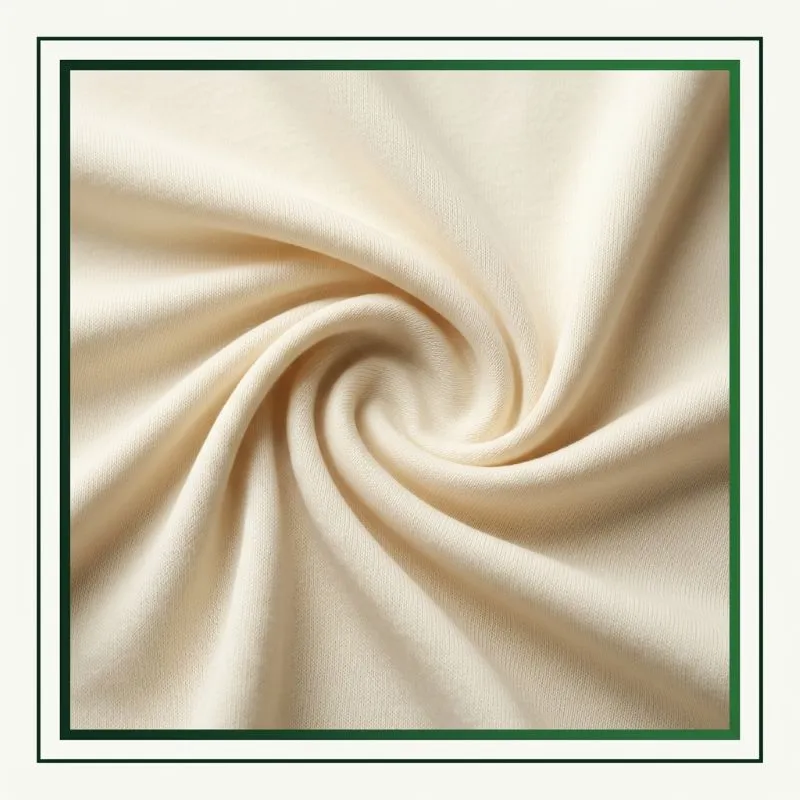
A fine, low-sheen jersey with excellent drape, commonly used for dresses and eveningwear.
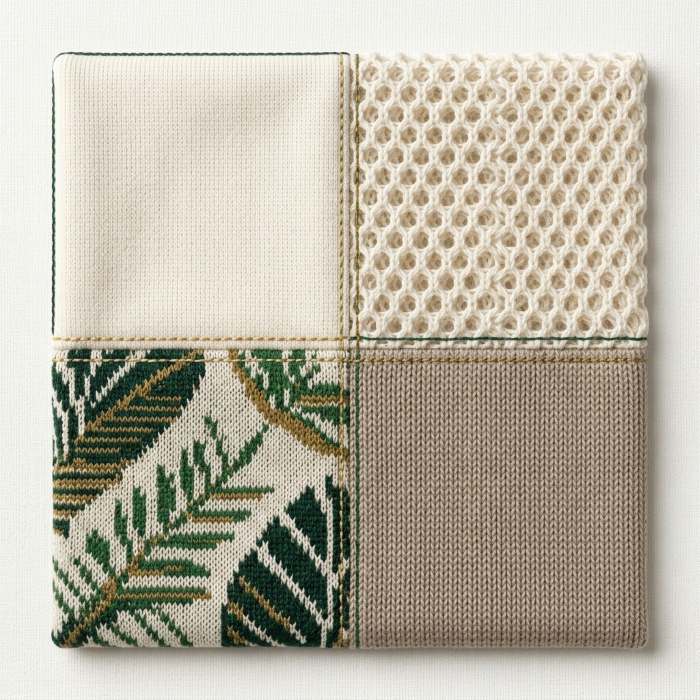
Scuba, ponte, mesh and jacquard constructions extend the jersey family into technical and patterned fabrics.
Yes — jersey's looped structure gives it natural stretch, even before any elastic fiber is added.
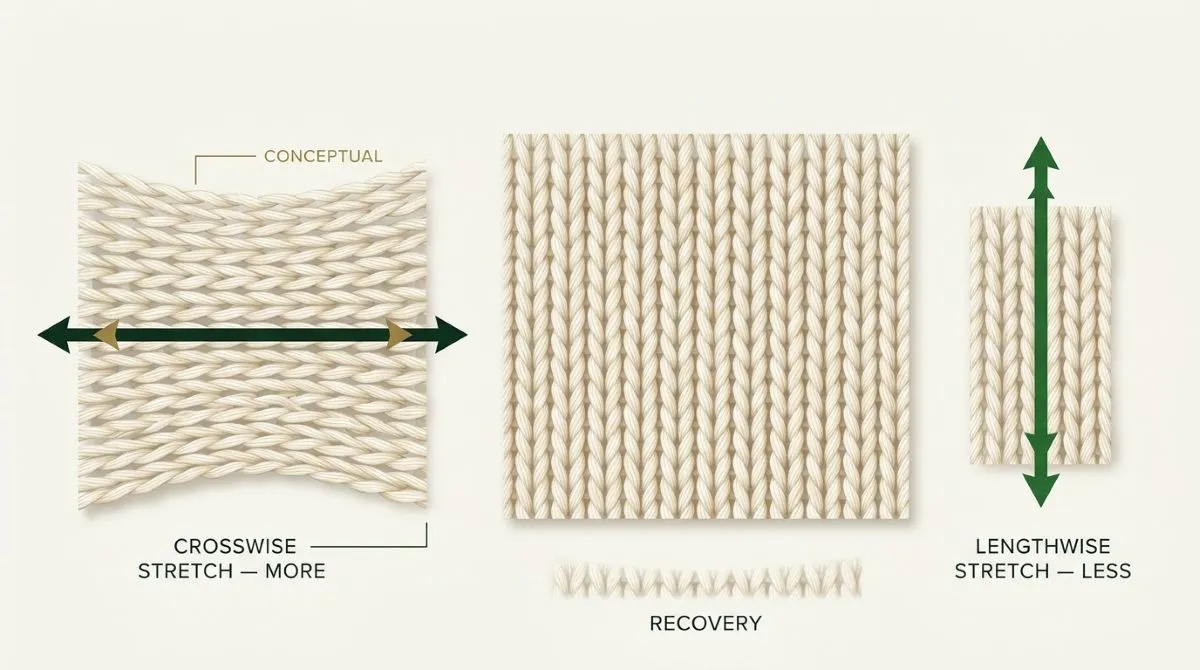
Every loop in a knit fabric can flex and pull open slightly, which is why jersey moves with the body in a way woven fabric can't. It typically stretches more from side to side (crosswise) than from top to bottom (lengthwise), because the loops sit in horizontal rows.
How well the fabric recovers its shape after stretching depends heavily on fiber content: cotton and polyester jersey stretch mechanically but can loosen with repeated wear, while blends with 2–5% elastane snap back far more reliably. Construction matters too — single jersey stretches more but is less stable, while interlock is thicker and holds its shape better with less stretch.
Jersey's combination of softness, stretch and drape makes it the working fabric behind most everyday knitwear categories.
The default fabric for casual and graphic tees.
Soft drape for everyday knit tops.
Skims the body without clinging stiffly.
Soft against skin, stretch for fit and movement.
Comfortable, breathable knit for at-home wear.
Gentle on sensitive skin, easy to move in.
Poly-blend jersey suits casual training and athleisure.
Everyday shirts, polos (interlock) and knitwear.
Breathable and soft enough for all-night comfort.
Thin jersey layers well under jackets and knitwear.
For a clothing brand, "jersey fabric" isn't one fabric — it's a set of specification decisions. Getting them right up front is what separates a garment that holds up through a production run from one that shrinks, pills or loses its shape after a few washes.
Our production team can help you specify the right blend, construction and GSM for your garment — then test it before it goes into full production.
GSM (grams per square meter) measures fabric weight and density. There's no single "correct" GSM for jersey — the right weight depends on the garment, the drape you want and the season it's made for.
| Weight class | Approx. GSM | Typical uses |
|---|---|---|
| Lightweight | 120–160 GSM | Warm-climate tees, linings, sheer layering pieces |
| Standard T-shirt weight | 160–200 GSM | Everyday tees, casualwear, most private-label basics |
| Heavyweight / Premium | 200–240 GSM | Premium tees, structured dresses, streetwear |
| Interlock / Double Jersey | 220–280+ GSM | Polos, joggers, structured knitwear |
Jersey is one of several knit constructions, and it's easy to confuse with its close relatives. Here's how they stack up.
| Fabric | Construction | Stretch | Common uses |
|---|---|---|---|
| Jersey (single knit) | Single needle bed, looped face & back | High, mostly crosswise | Tees, dresses, loungewear |
| Interlock | Double needle bed, interlocked loops | Medium, more stable | Polos, premium tees, structured knitwear |
| Rib knit | Alternating knit/purl columns | Very high crosswise | Collars, cuffs, fitted trims |
| French terry | Knit with a looped, often-brushed underside | Medium | Sweatshirts, casual joggers |
| Piqué | Textured double knit with a small surface pattern | Medium | Polo shirts |
| Woven fabric | Threads interlaced over/under, no loops | Minimal, unless woven with stretch yarns | Shirts, trousers, structured garments |
The questions people ask most often when they're trying to understand — or specify — jersey fabric.
Jersey fabric is a knitted textile made by looping one continuous yarn through itself on a single set of needles, which is why it's also called single knit. It has a smooth, slightly ribbed face, a looped back, natural stretch, and a soft drape that makes it the standard fabric for T-shirts and casual clothing.
"Jersey knit" refers to the same weft-knit construction as jersey fabric — the terms are used interchangeably. It describes how the fabric is built (looped stitches) rather than what it's made from, so you'll see cotton jersey knit, polyester jersey knit and blended jersey knit fabrics.
Jersey material is another common name for jersey fabric, most often used when people are talking about fiber content — for example, "cotton jersey material" or "poly-blend jersey material." Structurally, it's the same single-knit fabric.
Jersey is a knitted fabric, not a woven one. It's built from interlocking loops rather than threads crossing over and under each other, which gives it stretch and a soft hand that most woven fabrics don't have.
Jersey can be knitted from almost any yarn: 100% cotton, polyester, viscose/rayon, modal, wool or linen, and blends of these — often with a small percentage of elastane for extra stretch. The fiber changes how the fabric feels and performs, but not the basic knit structure.
There's no single required material — jersey describes a knit construction that can be made from cotton, polyester, rayon/viscose, modal, wool or blends. Cotton and cotton-blend jersey are the most common for everyday apparel.
Jersey is produced on a circular or flat weft-knitting machine using a single set of needles, which pulls one yarn into a continuous series of interlocking loops. This single-needle-bed process is what gives plain jersey its distinct front and back faces.
Yes. Jersey is one of the most common knit fabrics, specifically a weft knit, as opposed to a woven fabric or a warp knit like tricot.
Single jersey is the most basic jersey construction, knitted on one needle bed, giving a smooth flat-stitch face and a looped, textured back. It's lightweight, stretchy, and the type most people picture when they hear "jersey."
Double jersey is knitted on two sets of needles instead of one, producing a thicker, more stable fabric that looks similar on both sides. It holds its shape better than single jersey and is common in structured knitwear.
Interlock is a type of double jersey where the loops from both needle beds interlock directly with each other, creating a smooth, identical face on both sides with no visible ribs. It's heavier, less prone to curling at the edges, and often used for polos and higher-end T-shirts.
Standard (single) jersey is thinner, more stretchy, and curls at cut edges, while interlock is thicker, more stable, and lies flat. Interlock also tends to feel the same on both sides, whereas single jersey has a distinct front and back.
Yes — the looped knit structure gives jersey natural stretch, usually more from side to side than from top to bottom. How much it stretches, and how well it bounces back, depends on the fiber content and whether elastane has been added.
Generally yes, especially cotton and cotton-blend jersey, because the open loop structure lets air move through more easily than a tightly woven fabric. Breathability drops somewhat with heavier weights or fully synthetic blends.
Cotton and cotton-blend jersey can shrink a few percent after the first wash if it wasn't pre-shrunk during finishing, while polyester and poly-blend jersey are far more shrink-resistant. Washing in cool water and air- or low-heat drying reduces shrinkage significantly.
Jersey is a reliable, versatile fabric for apparel — its quality depends more on fiber content, knit density and GSM than on the fact that it's "jersey." A well-specified cotton or cotton-blend jersey at the right weight performs very well for everyday clothing.
Cotton jersey is jersey knitted from 100% cotton yarn (or very high cotton content), prized for its softness, breathability and natural feel. It's the most widely used jersey type for T-shirts, everyday dresses and baby clothing.
Modal jersey is knitted from modal, a semi-synthetic fiber made from beech tree cellulose, giving it a silky drape, excellent softness and good moisture management. It's often blended with cotton or spandex for loungewear and fitted basics.
Slub jersey is knitted from yarn that has intentional thick-and-thin irregularities (slubs), creating a subtly textured, uneven surface. It's popular for casualwear that wants a relaxed, textured look rather than a perfectly smooth finish.
The main categories are construction types (single jersey, double jersey, interlock, rib) and fiber/finish types (cotton, polyester, modal, viscose/rayon, wool, slub, matte, and stretch/cotton-spandex jersey), plus specialty variants like scuba and ponte. Most garments combine one construction type with one fiber choice.
Jersey is used for T-shirts, casual dresses, loungewear, underwear, baby clothing, sleepwear and lightweight layering pieces — essentially anywhere a soft, stretchy, comfortable fabric is needed. Heavier jersey and interlock are also used for polos and structured knitwear.
Jersey blended with polyester and elastane works well for lighter activewear like training tees and casual athleisure, since it stretches and breathes well. For high-performance activewear, brands often move to specialized moisture-wicking knits rather than plain cotton jersey.
There's no single "correct" GSM — lightweight jersey (roughly 120–160 GSM) suits warm-climate tees and layering, standard tee-weight jersey (roughly 160–200 GSM) covers most everyday apparel, and heavier jersey or interlock (200 GSM and up) suits structured or premium garments. The right weight depends on the garment type, drape and market position.
Start with the garment type and end use, then decide on fiber blend (cotton for softness and breathability, poly blends for durability and shape retention), knit construction (single jersey for stretch, interlock for structure), and GSM. A manufacturing partner can also help you test for shrinkage, pilling and colorfastness before committing to a production run.
From fiber blend to GSM to construction, our team helps clothing brands turn a fabric brief into a production-ready spec.