

What Is Spandex? The Stretch Fiber Behind Modern Clothing
What is spandex? Spandex is a synthetic elastic fiber that can stretch to about five times its resting length and spring back without losing shape. Almost nobody wears it on its own. A small share is blended into cotton, polyester or nylon, which is why leggings, jeans, swimwear and even a plain T-shirt can move with you.
This guide answers the questions people search most: what spandex is made of, how it differs from elastane and Lycra, whether it is safe, and how clothing brands should specify it. It comes from a working garment factory, so you get the production view as well as the textbook one.
What is spandex? Pull it and see.
What is spandex? 9 essential facts at a glance
The short version first. Every point below is explained in full further down the page.
- What it is
- A manufactured elastic fiber made from segmented polyurethane. US federal rules define spandex as a polymer that is at least 85% segmented polyurethane by weight.
- Other names
- Elastane in the UK and Europe. Lycra® is a brand, not a different fiber.
- Invented
- Developed by DuPont chemist Joseph Shivers in the 1950s, with 1958 the year usually cited. Sold as Lycra from 1962.
- Stretch
- Up to about 5 times its resting length, with near-complete recovery. That is why a few percent is enough to change how a whole fabric behaves.
- Typical blend
- 2–5% for comfort stretch, 8–15% for activewear, 15–25% or more for compression and swimwear.
- Natural or synthetic?
- Fully synthetic and petroleum-based. There is no natural spandex.
- Toxic?
- Not considered toxic in normal wear. Certified fabrics, such as OEKO-TEX® tested, add reassurance.
- Breathable?
- Not by itself. Breathability comes from the main fiber and the knit structure.
- Best for
- Leggings, activewear, swimwear, jeans, shapewear, socks and stretch T-shirts.
What is spandex? A plain-English definition
Spandex is a manufactured fiber whose defining trait is elasticity. In the United States, federal labeling rules define it as a long-chain synthetic polymer made of at least 85 percent segmented polyurethane. In everyday terms, it is an engineered plastic thread that behaves like a very strong, very fine rubber band.
The name is a clue. Spandex is an anagram of “expands”. So when someone asks what's spandex, the honest answer is that it is the stretch ingredient, not the whole fabric.
What is spandex fabric, and what is spandex material?
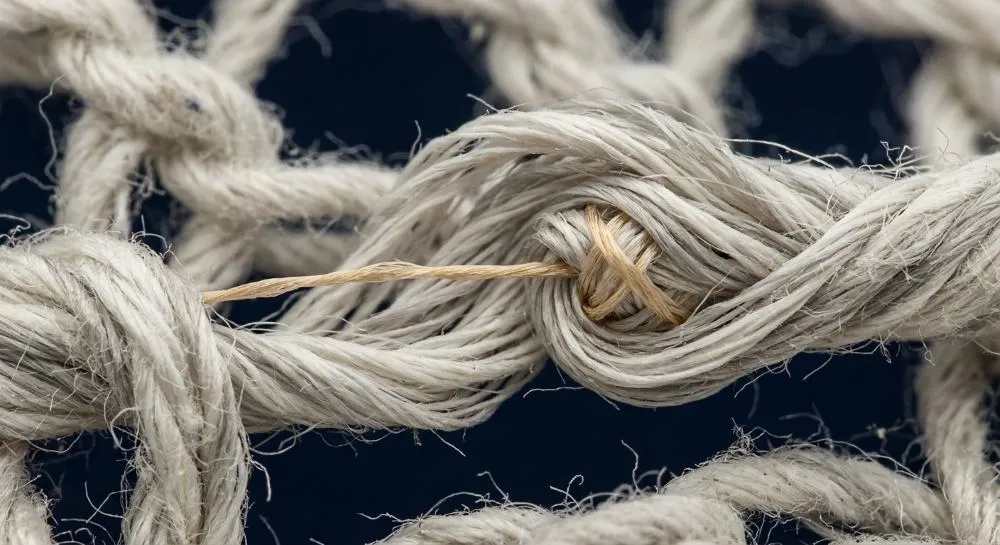
Spandex fabric, also called spandex material, is any textile that contains spandex fibers, usually knitted or woven together with another fiber. A label reading 92% polyester, 8% spandex describes a polyester fabric with a stretch boost. Pure spandex fabric is very rare.
The reason is practical. Spandex alone is too stretchy and too weak in structure to hold a garment together. Its job is stretch and recovery. The partner fiber supplies strength, feel, moisture handling and color.
What is spandex made of?
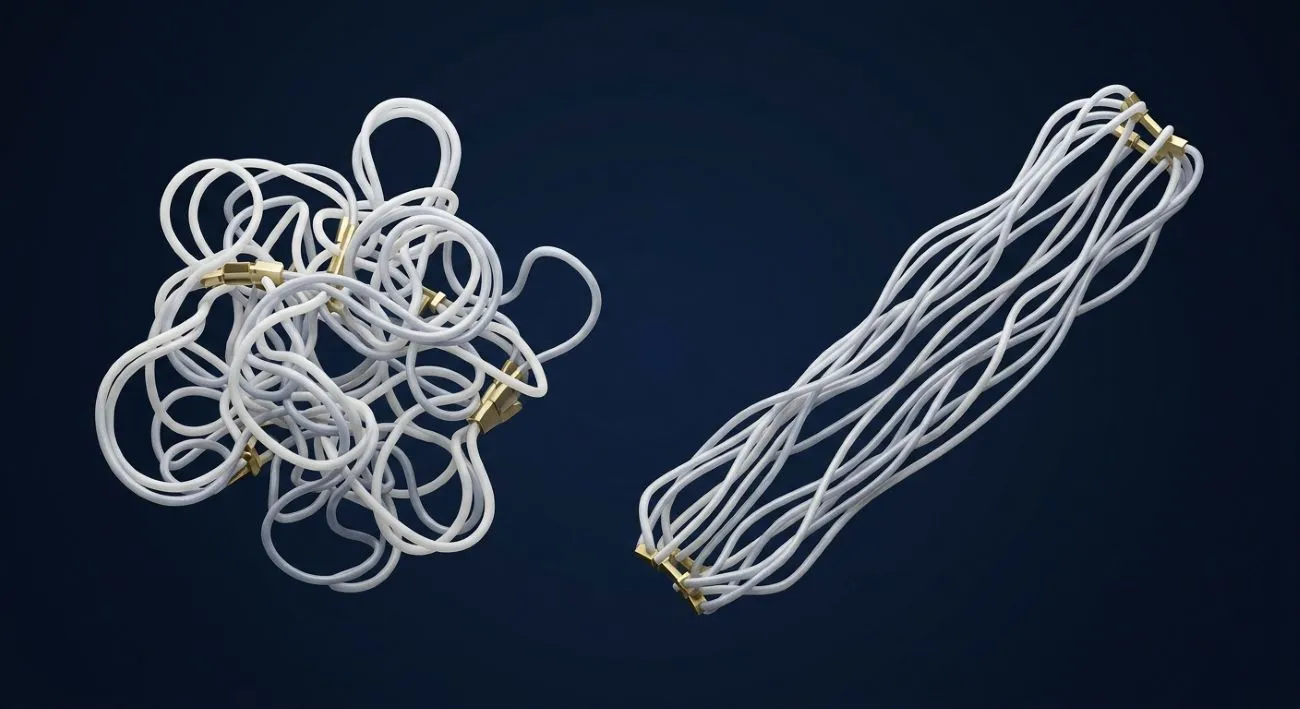
Spandex is made from a polymer called segmented polyurethane, often described as a polyether-polyurethane (or polyether-polyurea) copolymer. If you are wondering what spandex is made from at the raw-material level, the ingredients are petrochemicals: a long, flexible polyether glycol, a diisocyanate, and a short diamine that links the chains together.
Why does spandex stretch so far?
The answer is a two-part molecular design. Soft segments are long, coiled chains that uncoil when you pull. Hard segments are rigid blocks that lock neighboring chains together and act as anchors. Pull, and the soft chains straighten. Let go, and the hard segments draw everything back.
Because these raw materials come from petroleum, spandex is a synthetic fiber. Some producers now offer versions made with recycled or bio-based inputs, but the polymer family stays the same.
- Polymer family
- Segmented polyurethane (polyurethane-urea)
- Soft segments
- Polyether or polyester chains that coil and uncoil
- Hard segments
- Urethane and urea units that act as anchors
- Source
- Petrochemical feedstocks
Spandex vs elastane vs Lycra: are they the same thing?
Yes. Spandex, elastane and Lycra all point to the same kind of fiber, and only the name changes. Spandex is the standard term in the United States and Canada. Elastane is the standard term in the UK and continental Europe. Lycra is a brand, in the same way Kleenex is a brand of tissue.
Spandex
- Where you see it
- United States and Canada
- What it means
- The generic fiber name in US labeling rules.
Elastane
- Where you see it
- UK, EU and most of the world
- What it means
- The international (ISO) generic name. US rules accept it too.
Lycra®
- Where you see it
- Worldwide, on hang tags and labels
- What it means
- A trademark DuPont introduced in 1962. Creora, Roica and Dorlastan are other brands of the same kind of fiber.
What is Lycra?
Lycra is the trademark DuPont introduced in 1962 for its spandex fiber. It became so famous that many people, especially in the UK and Australia, use the word for any stretch fabric. On a US label, a trademark such as Lycra has to appear alongside the generic name, so you will see spandex or elastane next to it.
Is spandex the same as Lycra?
Spandex is the generic fiber and Lycra is one branded version of it. All Lycra fiber is spandex, but not all spandex is Lycra. Branded fibers come with consistent quality control and marketing support, and they can cost more. Unbranded spandex from reputable producers can perform just as well when it is properly specified and tested.
Is elastane the same as spandex? What is the difference?
There is no difference in the fiber. Both words describe the same segmented polyurethane, and the choice is regional. The US Federal Trade Commission lists spandex, but its labeling guidance says the ISO name elastane may be used on US labels too. So elastane fabric is simply fabric that contains elastane fibers.
How is spandex made?
Making spandex is chemistry first and textiles second. Most spandex is made by dry spinning, although wet spinning, melt spinning and reaction spinning are also used. Here is how spandex is produced in the most common process.
Build the prepolymer
A flexible polyether glycol reacts with a diisocyanate. The result is a prepolymer that will become the soft, stretchy backbone.
Extend the chain
A short diamine links prepolymer chains into a long segmented polymer. This step creates the hard segments that give spandex its snap-back.
Dissolve it
The polymer is dissolved in a solvent, producing a thick, honey-like spinning solution.
Spin the filaments
The solution is pushed through the tiny holes of a spinneret into a heated chamber. Warm air evaporates the solvent and the strands solidify into fine filaments.
Bundle, finish and wind
Several filaments are joined into one thread and coated with a finish so it runs smoothly through knitting machines. The yarn is then wound onto bobbins.

From there, the elastic thread is usually covered or blended. It may be wrapped in polyester or nylon to make a covered yarn, or fed alongside another yarn on a knitting machine. The finished fabric is dyed and heat-set before it reaches the cutting table. For the garment stages that follow, see our clothing manufacturing process.
Polyester spandex, cotton spandex and nylon spandex: how the blends differ
Spandex is almost always blended, so the label tells the real story. Here is how the common combinations behave, and roughly how much spandex each one usually contains.
| Blend | Typical spandex | Feels like | Common uses |
|---|---|---|---|
| Polyester spandex (poly spandex) | 5–20% | Smooth, light, quick-drying, holds color well | Activewear, leggings, team kits, printed sportswear |
| Nylon spandex | 10–25% | Silky, soft, strong and very smooth | Leggings, swimwear, shapewear, lingerie |
| Cotton spandex | 2–8% | Soft, breathable, natural-feeling | T-shirts, jeans, joggers, ribbed knits |
| Viscose (rayon) spandex | 3–8% | Drapey and very soft | Fashion tops, dresses, lounge sets |
Is spandex polyester?
No. Polyester and spandex are different polymers with different jobs. Polyester is a firm fiber that adds strength and moisture wicking. Spandex is the elastic one. They are blended so often that the two names sit side by side on labels, but a polyester-spandex fabric is a mix, not one material.
What is polyester spandex fabric (poly spandex)?
Polyester spandex, often shortened to poly spandex by fabric suppliers, is a knit made mainly of polyester with a small share of spandex. It is the workhorse of modern activewear. When a supplier lists lycra polyester spandex, it simply means the spandex portion is a branded fiber.
What is cotton spandex, and what is nylon spandex?
Cotton spandex keeps the comfort and breathability of cotton and adds shape retention, which is why it dominates stretch T-shirts and jeans. Nylon spandex is smoother and stronger, so it is the usual choice for high-stretch leggings and swimwear.
What percentage of spandex is needed to make fabric stretchy?
Less than most people expect. As little as 2 to 5 percent gives comfortable everyday stretch. Knit structure matters too: a jersey knit with 5 percent spandex can feel stretchier than a tight woven with 10. The three tiers below show where most garments land.
Comfort stretch
2–5%
Jeans, everyday T-shirts, polo shirts and ribbed cuffs. You feel give, not compression.
Active stretch
8–15%
Leggings, sports tees, athleisure and joggers. Full range of movement with good shape recovery.
Power stretch
15–25%+
Compression wear, swimwear and shapewear. Firm support and controlled stretch.
Is spandex toxic? Safety, health and what to check
Short answer
For normal wear, spandex is not considered toxic. The finished fiber is a stable polymer. What matters more is what was added to the fabric, such as dyes and finishes, and how the garment is worn.
This is general information, not medical advice. If you have a skin condition or a diagnosed allergy, ask your doctor.
Is spandex bad for you?
For most people, no. When skin problems do happen, the usual causes are tight, damp, unbreathable clothing, dyes or finishes, or a specific allergy, rather than the spandex itself. If your skin is sensitive, choose cotton-rich blends, wash new clothes before wearing them, and look for certified fabrics.
Is spandex underwear bad for you?
Underwear with a little spandex, often 5 to 10 percent in a cotton knit, suits most people. Trouble usually comes from very tight, non-breathable fabric held against damp skin for hours. Choose breathable linings and change out of sweaty clothes promptly.
Is spandex plastic? Is spandex made of plastic?
In the material sense, yes. Spandex is a synthetic polymer, and polyurethane is a type of plastic, like polyester, nylon and acrylic. Synthetic fabrics can shed microfibers in the wash, so a cooler cycle and a laundry filter bag help.
Is spandex latex?
No. Spandex contains no natural rubber latex, which is why it is a common choice for people with latex allergies. Check the trims, though. A separate elastic waistband or cuff can contain latex, and the manufacturer can confirm what is in the garment.
Is spandex natural or synthetic?
Synthetic. Spandex is not a natural fiber in any form. It is made from petroleum-derived chemicals, which is why it is so often blended with natural fibers such as cotton to add comfort.
Is spandex as bad as polyester? Is Lycra toxic?
Spandex and polyester share the same big-picture drawbacks: they are petroleum-based, they do not biodegrade, and they shed microfibers. Neither is automatically worse for skin. Lycra is simply a brand of spandex, so the same logic applies. A blend is only as safe as its dyes, finishes and testing.
How to buy safer stretch fabric
- Ask for OEKO-TEX® STANDARD 100 certification, which tests every component of a textile for harmful substances. (opens in a new tab)
- Request test reports for the market you sell in, such as CPSIA for children's clothing in the US or REACH compliance in the UK and EU.
- Wash new garments before the first wear.
- Choose cotton-rich blends for sensitive skin and everyday underwear.
- Change out of wet or sweaty stretch wear soon after training.
Is spandex breathable? Is spandex stretchy? Properties, pros and cons
Is spandex stretchy?
Extremely. Spandex fibers can stretch to roughly five times their resting length and recover almost completely, far beyond what other clothing fibers manage. For pattern makers, this means garments are cut smaller than the body they fit (called negative ease), so the fabric hugs rather than hangs.
Is spandex breathable?
Not on its own. The fiber absorbs almost no moisture, so breathability depends on the main fiber and the knit. A cotton-spandex jersey breathes comfortably. A dense nylon-spandex compression knit does not, but it dries fast and stays supportive.
Strengths
- Stretches far and springs back to shape
- Small percentages make a big difference
- Lightweight, adds little bulk
- Takes dye well, so colors stay vivid
- Keeps garments fitted through repeated wear
Watch-outs
- Hot dryers and irons damage the fibers
- Chlorine slowly breaks it down
- Absorbs almost no moisture
- Stretch fades with age and heat
- Synthetic and petroleum-based
How to care for spandex
Wash in cool or warm water with mild detergent, skip chlorine bleach, and dry flat or on low heat. Rinse swimwear after the pool. Treat heat as the enemy and your stretch garments will keep their shape far longer.
Who invented spandex? A short history
Spandex was invented at DuPont by chemist Joseph Shivers, who was searching for something better than rubber for women's foundation garments. He developed the fiber in the 1950s by modifying Dacron polyester, and 1958 is the year most often cited for the invention. So, when was spandex invented, and by whom? Shivers, at DuPont, in 1958. DuPont launched it commercially as Lycra in 1962.
- 1950s
Joseph Shivers modifies Dacron polyester and produces a heat-resistant elastic fiber.
- 1958
Spandex is first developed. DuPont's early internal name for it is Fiber K.
- 1962
DuPont introduces the fiber commercially as Lycra. Girdles, hosiery and swimwear lead the way.
- 1970s–80s
The fitness boom brings stretch into leotards, cycling shorts and leggings.
- Today
A few percent of spandex sits in jeans, T-shirts and athleisure. It is a multi-billion-dollar global market.
Where does spandex come from?
Spandex began in DuPont's US laboratories. Today most of the world's spandex is spun in Asia, with China as the largest producer, and it is sold under both generic and brand names.
Who made spandex first?
Joseph Shivers led the breakthrough at DuPont. You can read his story at the National Inventors Hall of Fame. (opens in a new tab)
What is spandex used for?
Anywhere a garment has to stretch and recover. Here is where spandex shows up most, and how much of it those garments usually contain.
Activewear and leggings
8–15%Supports running, lifting, yoga and cycling without bagging at the knees. For production examples, see our custom leggings manufacturing page.
Swimwear
15–25%+Usually paired with nylon or polyester. Chlorine-resistant spandex grades exist for pool wear.
T-shirts, hoodies and joggers
3–5%Body fabrics use a little. Ribbed cuffs and hems often use spandex to keep their shape. See our T-shirt manufacturing, hoodie manufacturing and jogger manufacturing pages.
Shapewear and compression
15–25%+High spandex shares deliver firm support and controlled stretch.
Socks, hosiery and medical textiles
Varies by productSocks, tights and compression stockings rely on spandex for grip and graded pressure.
What is spandex used for in clothing? What are spandex shorts and pants made for?
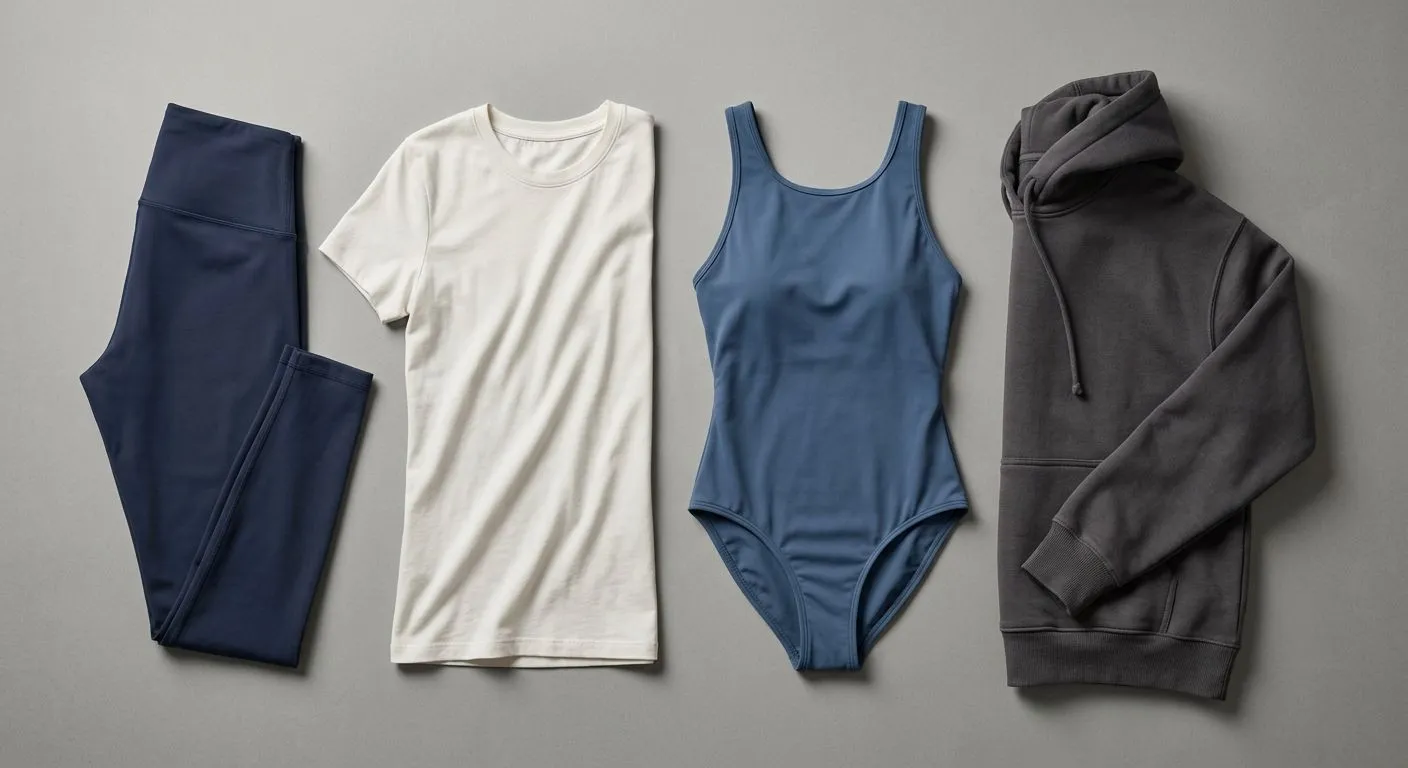
Spandex shorts and pants, such as biker shorts, compression tights and leggings, are made for close-fitting movement. The stretch lets them hug the body through running, cycling, lifting and dance, then recover. They carry more spandex, often 15 to 25 percent, than casual cotton trousers, which only need a little give.
Where can you buy spandex material?
Fabric shops and online fabric sellers sell spandex material by the yard, which suits sewing projects and one-off costumes. For a clothing line, buying yardage is rarely efficient. A factory sources the fabric, tests it and cuts it for you. Start with our fabric guide and jersey fabric guide before production. Our minimum is 10 pieces per style, and you can ask for a quote here.
Specifying spandex on your tech pack
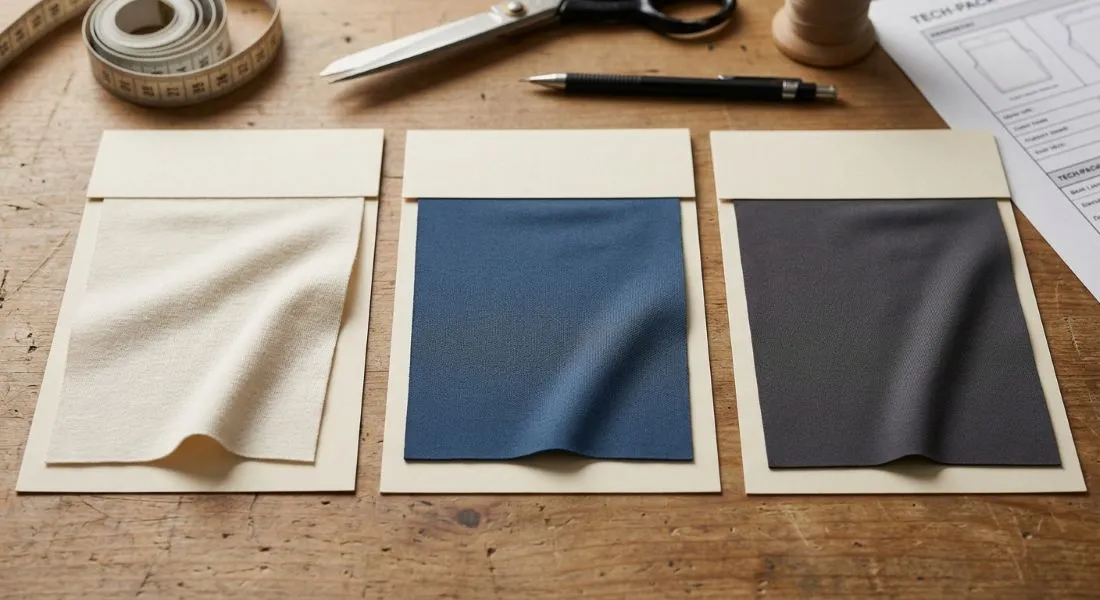
If you are developing a garment, “what is spandex?” is only the first question. The next ones decide whether the product feels right and still holds its shape after fifty washes. A clear tech pack keeps those specifications consistent from sampling through bulk. Our clothing manufacturing process uses these same specifications during sampling and bulk production. Here is what we ask every brand to define.
- Write the full composition. For example, 92% cotton, 8% spandex. If you are preparing your first specification sheet, our tech pack guide explains what to include. A fiber under 5 percent can still be named when it has a clear function, such as stretch. US labels use spandex or elastane, and UK and EU labels use elastane.
- State the stretch direction. Two-way stretch pulls across the width. Four-way stretch pulls across and along the length.
- Set the weight and hand feel. We work with T-shirt fabrics from 180 to 320 GSM and hoodie fabrics from 280 to 450 GSM.
- Ask for stretch, recovery and shrinkage data. Recovery shows how well fabric returns to size. Growth, the permanent bagging after stretching, shows how a garment will look after a long day of wear.
- Approve a pre-production sample and wash-test it. Check fit, stretch and shape retention before you release bulk.
Need a starting template? Use our tech pack generator. If order size is your main concern, compare our clothing MOQ guide and low-MOQ manufacturing options.
What working with us looks like
- Minimum order
- 10 pieces per style
- Samples
- 7–10 business days
- Bulk production
- 2–4 weeks after sample approval
- Shipping
- Worldwide DDP to the USA, UK and Europe
Spandex FAQ: the questions people ask most
Clear answers on composition, Lycra and elastane, safety, breathability, production, blends and the percentages clothing brands commonly use.
Basics & composition
9What is spandex?
Spandex is a manufactured elastic fiber valued for stretch and shape recovery. It is usually blended in small percentages with cotton, polyester or nylon rather than used by itself.
What is spandex made of?
Spandex is made of segmented polyurethane, a synthetic polymer built from flexible and rigid molecular segments. Under the U.S. textile definition, the fiber is at least 85% segmented polyurethane by weight.
What is spandex made from?
At the raw-material level, spandex is made from petrochemical feedstocks that are reacted into a polyurethane-based polymer. Typical chemistry uses a flexible glycol, a diisocyanate and a chain extender before the polymer is spun into fine elastic filaments.
Is spandex plastic?
Broadly, yes. Spandex is a synthetic polymer in the polyurethane family, so it is a plastic-based fiber even though it is engineered to behave very differently from rigid plastics.
Is spandex made of plastic?
Yes. The fiber is made from a polyurethane-based synthetic polymer. Its molecular structure is designed to stretch and recover, which is why it feels and behaves differently from hard plastic products.
Is spandex latex?
No. Spandex and latex are different materials: spandex is a synthetic polyurethane fiber, while latex is a rubber material. A garment can contain both in separate components, so people avoiding latex should still check the product specification.
Is spandex a natural or synthetic fiber?
Spandex is fully synthetic. It is manufactured from chemical feedstocks rather than harvested from a plant or animal source.
What is spandex fabric?
Spandex fabric is a textile that contains spandex fibers blended or knitted with another main fiber. For example, a 92% polyester / 8% spandex jersey is primarily polyester with spandex added for stretch and recovery.
What is spandex material?
“Spandex material” is a general retail term for fabric containing spandex. The feel and performance depend mostly on the main fiber, fabric construction, GSM and the percentage of spandex in the blend.
Spandex, elastane & Lycra
6What is lycra?
Lycra® is a trademarked brand of elastane/spandex fiber, not a separate fiber category. In the same way a brand can identify one maker’s product, Lycra identifies a branded form of the same general elastic fiber.
Is elastane the same as spandex?
Yes. Elastane and spandex refer to the same generic fiber type. “Spandex” is the common U.S. term, while “elastane” is widely used in the UK, Europe and international labeling.
Is lycra the same as spandex?
Lycra is a branded type of spandex/elastane. All Lycra fiber is in the spandex/elastane family, but not every spandex fiber is Lycra-branded.
What's the difference between spandex and elastane?
There is no practical fiber difference. The terms are regional names for the same elastic polyurethane-based fiber, so the performance depends on the grade, yarn, fabric construction and percentage used rather than the word on the label.
What's the difference between spandex and lycra?
Spandex is the generic fiber name; Lycra® is a trademarked brand of that fiber. A fabric can perform well with either branded or unbranded spandex when the yarn specification and fabric quality are appropriate.
Is spandex the same as lycra?
They refer to the same type of elastic fiber, but the names are not identical in meaning. Spandex is generic, while Lycra® is a brand name used for a particular branded spandex/elastane fiber.
Safety, comfort & breathability
5Is spandex toxic?
Spandex is generally used safely in normal clothing wear. If skin sensitivity is a concern, the more useful checks are the finished fabric, dyes, chemical finishes and certifications such as OEKO-TEX®, because irritation can come from more than the fiber itself.
Is spandex bad for you?
For most people, wearing spandex-blend clothing is not inherently harmful. Very tight garments, trapped heat, sweat, detergents, dyes or finishes can irritate some skin, so comfort, fit and fabric finishing matter.
Is spandex breathable?
Spandex itself is not especially breathable. The breathability of a finished garment comes mainly from the primary fiber, yarn size, knit or weave structure, fabric weight and finishing.
Is spandex underwear bad for you?
Spandex in underwear is commonly used for fit and recovery and is not automatically a problem. If a garment feels too tight, traps moisture or causes irritation, choose a looser fit or a more breathable blend and stop using anything that repeatedly irritates your skin.
Is spandex as bad as polyester?
They are different synthetic fibers, so there is no single useful “better or worse” answer. Both are generally petroleum-derived, while spandex is usually used in much smaller amounts; blended stretch fabrics can also be harder to recycle than single-fiber fabrics.
Stretch, production & history
7Is spandex stretchy?
Yes. Extreme elasticity is its defining property. Depending on the grade and construction, spandex fiber can stretch several times its resting length and recover toward its original shape.
How is spandex made?
Most spandex is made by dry spinning. Manufacturers create the polyurethane-based polymer, dissolve it into a spinning solution, push it through a spinneret, evaporate the solvent in a heated chamber, then bundle and wind the solid elastic filaments.
How is spandex produced?
Commercial production usually follows a polymerization-and-spinning process: build the polymer, form a spinning solution, extrude fine filaments, dry them, combine the filaments, apply a finish and wind the yarn onto packages for textile production.
Who invented spandex?
DuPont chemist Joseph C. Shivers Jr. is widely credited with developing the breakthrough elastic fiber that became commercially successful as Lycra.
When was spandex invented?
The key development took place in the 1950s, with 1958 commonly cited for Shivers’ successful spandex fiber. DuPont later commercialized its branded version under the Lycra name in the early 1960s.
Where does spandex come from?
Chemically, spandex comes from manufactured polyurethane-based polymers rather than a natural crop. Historically, the modern fiber was developed in DuPont laboratories in the United States; today it is manufactured by textile-chemical producers around the world.
What percentage of spandex is needed to make fabric stretchy?
It depends on the construction, but common ranges are about 2–5% for comfort stretch, 8–15% for active stretch and 15–25% or more for high-stretch compression or swim applications. Knit structure and yarn choice can make two fabrics with the same percentage feel very different.
Blends, garments & end uses
8What is spandex used for?
Spandex is used wherever a textile needs stretch, recovery or a closer fit. Common applications include activewear, leggings, swimwear, jeans, shapewear, underwear, socks, stretch T-shirts and rib trims.
Is spandex polyester?
No. Polyester and spandex are different synthetic fibers with different jobs. Polyester usually provides the main body, durability and moisture-handling properties, while spandex supplies elasticity and recovery.
What is polyester spandex fabric?
Polyester-spandex fabric is a blend made mainly from polyester with a smaller share of spandex. It is widely used for activewear because it can combine durability, quick drying, color retention and stretch.
What is cotton spandex?
Cotton-spandex is cotton fabric with a small percentage of spandex added for flexibility and shape recovery. Many stretch T-shirts, jeans, joggers and rib knits use roughly 2–8% spandex, depending on the required fit.
What is nylon spandex?
Nylon-spandex combines nylon’s smooth, strong hand with spandex elasticity. It is common in leggings, swimwear, shapewear and performance garments that need a soft surface and high stretch.
What is poly spandex?
“Poly spandex” is shorthand for polyester-spandex fabric. The exact feel depends on the polyester yarn, spandex percentage, knit structure, GSM and finishing treatment.
What is spandex used for in clothing?
In clothing, spandex helps garments move with the body and return to shape. It can improve comfort in casualwear, hold leggings close to the body, keep ribbed cuffs from bagging and provide controlled compression in technical garments.
What are spandex shorts/pants made for?
Spandex shorts and pants are made for close-fitting movement and recovery. Depending on the design, they may be intended for running, cycling, gym training, yoga, dance, compression, uniforms or everyday stretch comfort.
Sources and further reading
Primary regulations, technical references and independent background used to support this guide.
- US Federal Trade Commission: textile labeling requirementsHow fiber names, percentages and trademarks must appear on US labels.
- eCFR: 16 CFR Part 303The legal text, including the official definition of spandex.
- Britannica: SpandexA general encyclopedia overview of the fiber.
- National Inventors Hall of Fame: Joseph ShiversThe chemist behind Lycra and spandex.
- CAMEO, Museum of Fine Arts Boston: Spandex fiberTechnical notes on properties, durability and chlorine exposure.
- OEKO-TEX: STANDARD 100What the certification tests and how to check a label.
Important: Fiber percentages on this page are typical industry ranges, not fixed rules. Always confirm the exact composition and test data with your fabric supplier.
Making a stretch garment? Get a free quote in 24 hours
Tell us the garment, the fabric blend and your quantity, and we will reply with an itemized quote within 24 hours. You can also use our clothing cost calculator before contacting us. We are a factory-direct clothing manufacturer in Sialkot, Pakistan, serving brands in the USA, UK and Europe.