

Black Zip Up Hoodie: Fabric, Fit & Zipper Guide
A black zip up hoodie looks simple, but the finished result depends on more than colour and fabric weight. Zipper type, black shade consistency, rib, hood balance, pockets, fit and decoration all affect how the garment looks when worn open or closed.
This guide focuses specifically on developing the black version of the product: how to choose fabric, plan GSM, match zipper tape and rib, control shade differences, select the fit and prepare a clear tech pack before sampling.
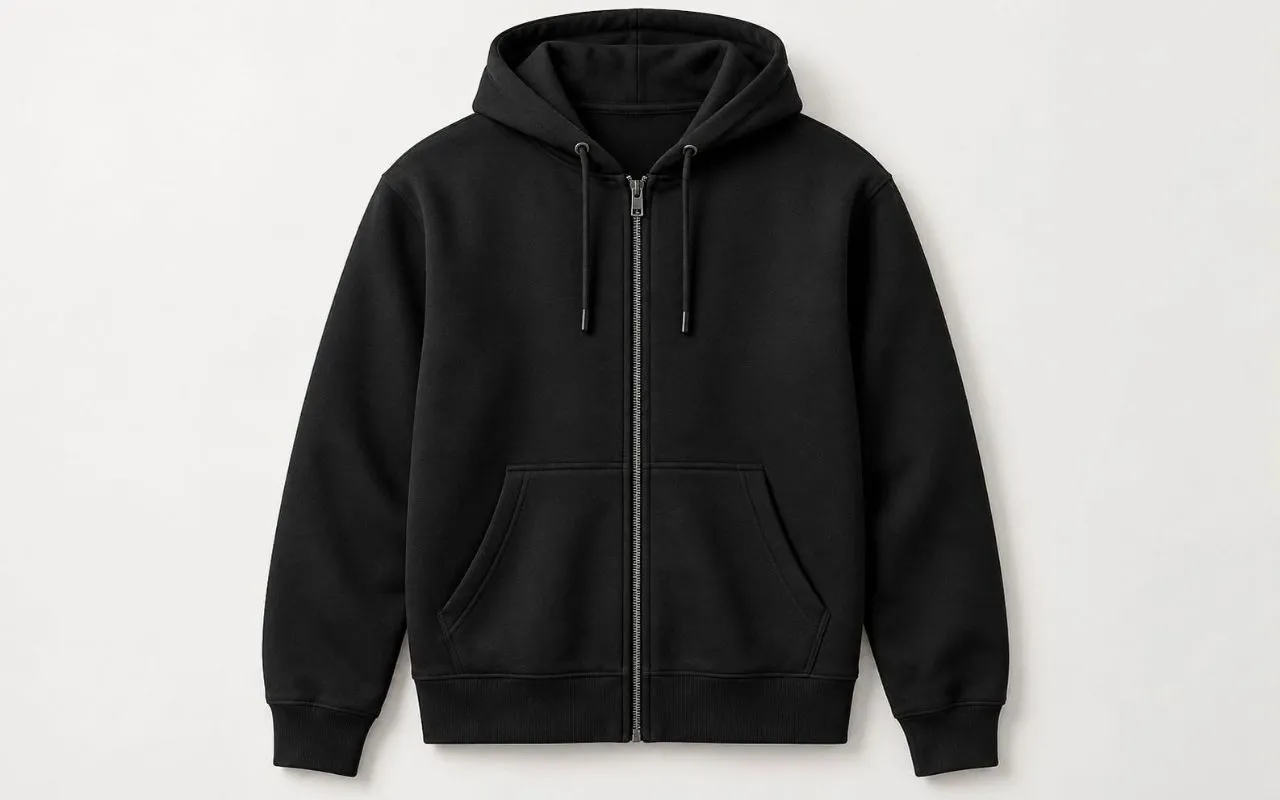
What Is a Black Zip Up Hoodie?
A black zip up hoodie is a hooded sweatshirt with a zipper running from the hem to the neckline. The zipper splits the front body, which changes how the garment hangs, how pockets are constructed and how graphics or embroidery can be placed compared with a pullover hoodie.
For product development, the important decisions are the black colour standard, fabric construction, target GSM, zipper specification, front-edge stability, hood shape, rib, pockets and fit. Those variables determine whether the garment reads as a lightweight layering piece, a clean everyday basic or a more structured streetwear product.
Front Opening Changes the Fit
The zipper adds structure and weight to the centre front, so body length, hem balance and pocket placement should be reviewed with the hoodie open and closed.
Black Requires Component Matching
Body fabric, rib, zipper tape, drawcord and labels can all read as different shades of black when they use different fibres or suppliers.
Decoration Needs Planning
The centre-front zipper interrupts chest artwork, so decoration size and placement should be planned around the opening rather than copied from a pullover hoodie.
Why Black Needs More Production Control Than It Looks
Black is versatile, but it is also unforgiving. A small shade difference between the body fabric, rib, zipper tape or drawcord can be obvious because those components sit directly next to each other.
For a cleaner result, approve the visible black components together rather than treating each one as a separate sourcing decision. If the product uses garment dye, pigment dye, washed black or another special finish, the development sample should use the intended process so the final shade and contrast can be evaluated before bulk production.
Fabric and GSM Planning for a Black Zip Up Hoodie
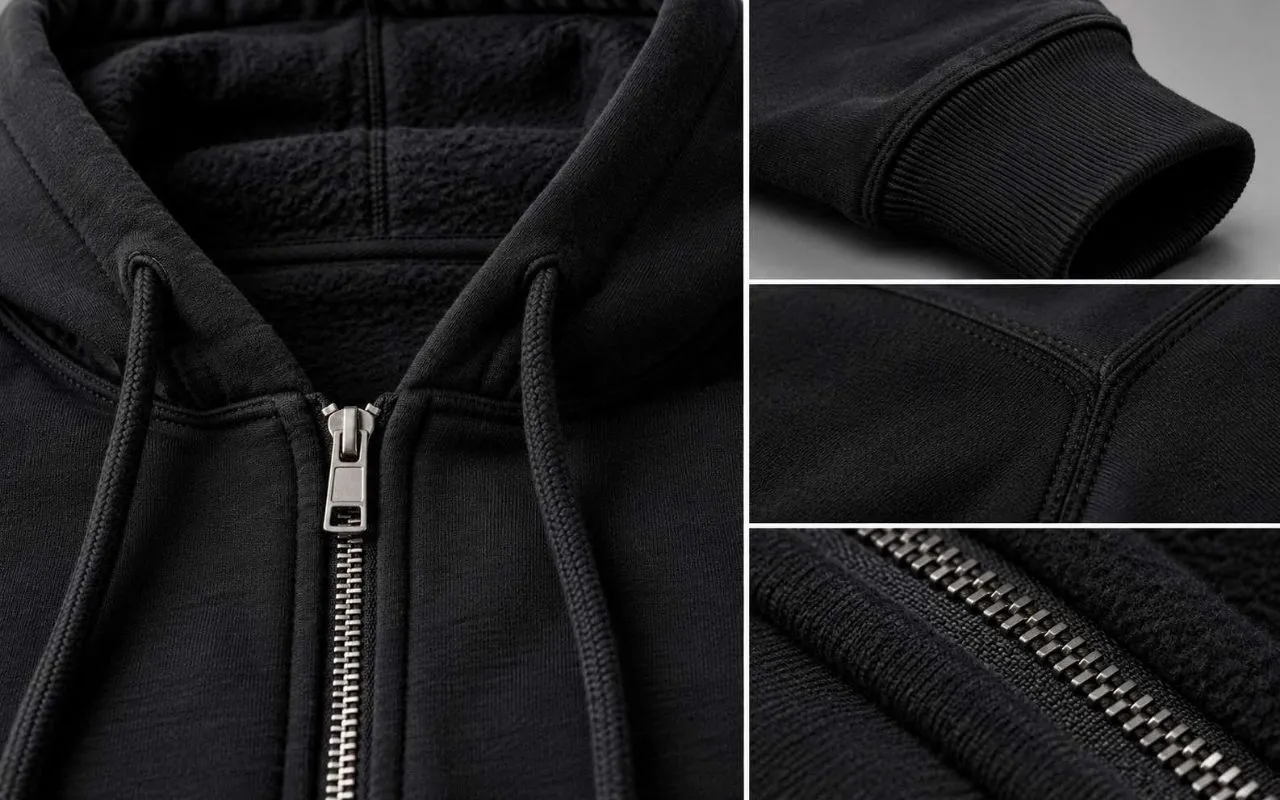
Fabric determines drape, warmth, structure and how much support the front zipper needs. GSM—grams per square metre—measures fabric weight, but it should be evaluated together with fibre content, knit construction, finishing and fit.
| Fabric option | Typical use | How it feels | What to confirm |
|---|---|---|---|
| Cotton-rich fleece | Everyday and cooler-season builds | Soft, warmer interior | Review shrinkage, surface finish and zipper-front stability on the actual fabric. |
| French terry | Layering and transitional-season builds | Unbrushed loopback interior | Useful when you want less nap than fleece. Confirm actual GSM, hand feel and recovery. |
| Cotton-poly blend | Programs needing added stability or faster drying | Depends on blend and finishing | Confirm recovery, dimensional behaviour and black shade on the selected fabric. |
| Heavy fleece | Dense streetwear and colder-season programs | Structured and substantial | Check zipper gauge, hood weight, seam bulk and finished-garment balance. |
For material-level detail, use the French terry fabric guide. If the product brief calls for a very dense build, use the heavyweight hoodie manufacturer page for the specialist commercial route.
Fit Choices for a Black Zip Up Hoodie
Fit should be defined by measurements and silhouette rather than by search labels. A regular, cropped, relaxed or oversized block can all use the same black fabric family, but each needs its own body length, chest width, shoulder, sleeve and hood balance.
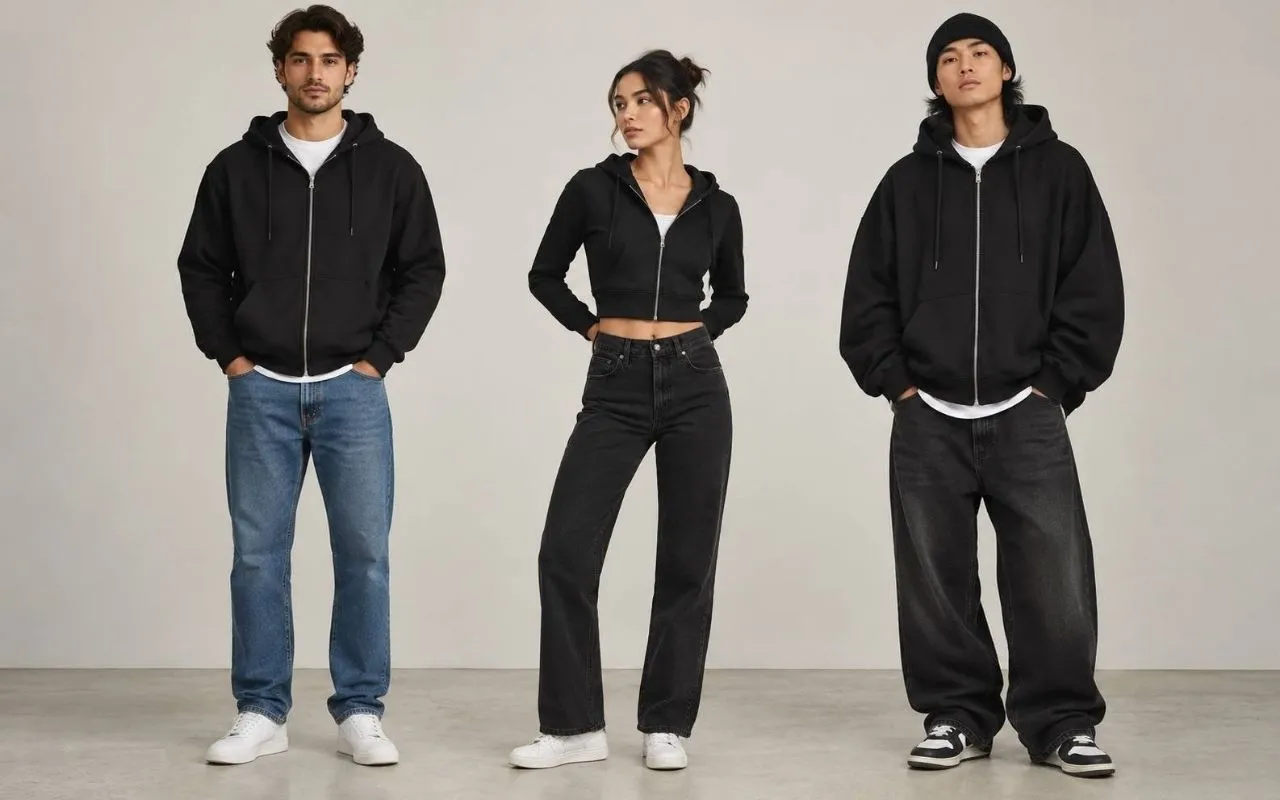
Regular / Unisex
A straighter body and conventional length work well for a general-purpose block. Review the centre-front length so the zipper does not pull or wave.
Cropped / Shaped
A shorter or shaped block changes pocket position, zipper length and hem tension. These details should be developed together rather than shortened after the pattern is finished.
Oversized
An oversized block uses intentional chest width, shoulder drop and sleeve volume. The zipper and hood should still sit cleanly so the garment looks designed rather than simply over-sized.
Do not rely on fit labels alone. Compare chest width, body length, shoulder position, sleeve length, hood depth, rib height and finished zipper length in the tech pack and sample.
Zipper, Hood and Construction Details That Matter
The front zipper is the defining construction feature, so zipper quality, front-edge stability, hood shape, pocket placement, rib recovery and seam finishing should be approved as one system.
| Component | What to specify | Why it matters |
|---|---|---|
| Front zipper | Type, gauge, tape colour, puller, length, smooth operation | Affects centre-front weight, opening shape and perceived quality. |
| Hood | Panel shape, depth, lining, drawcord and eyelets | Changes balance and appearance when the hoodie is worn open or zipped. |
| Pockets | Split kangaroo, welt or other construction | Placement must work around the centre-front opening and fit. |
| Rib | Composition, cuff/hem height, stretch and recovery | Supports shape retention and visual consistency with the body fabric. |
| Front edge | Facing, tape, interfacing or other stabilisation where needed | Helps reduce zipper waviness and distortion. |
| Seams | Overlock, coverstitch, topstitch and reinforcement | Controls bulk, durability and presentation. |
How to Keep the Black Fabric, Rib and Zipper Looking Consistent
A black hoodie can show component mismatch more clearly than many colours. Body fabric, rib, zipper tape, drawcord and thread may use different fibre compositions and dye systems, so “black” does not automatically mean the same visual shade.
Approve One Colour Standard
Use a defined black standard—such as an approved swatch, lab dip or production reference—rather than accepting unrelated supplier blacks.
Match Visible Components Together
Review body fabric, rib and zipper tape next to each other under the same lighting. A component can look acceptable alone and still appear mismatched in the finished garment.
Decide Whether Contrast Is Intentional
If you want gunmetal hardware, washed-black body fabric or tonal-but-not-identical rib, write that contrast into the specification.
Black Zip Up Hoodie Tech-Pack & Sampling Checklist
A useful specification separates the product decisions that affect the finished garment. This keeps the page focused on developing a black zip-up style rather than duplicating the broader hoodie manufacturing service.
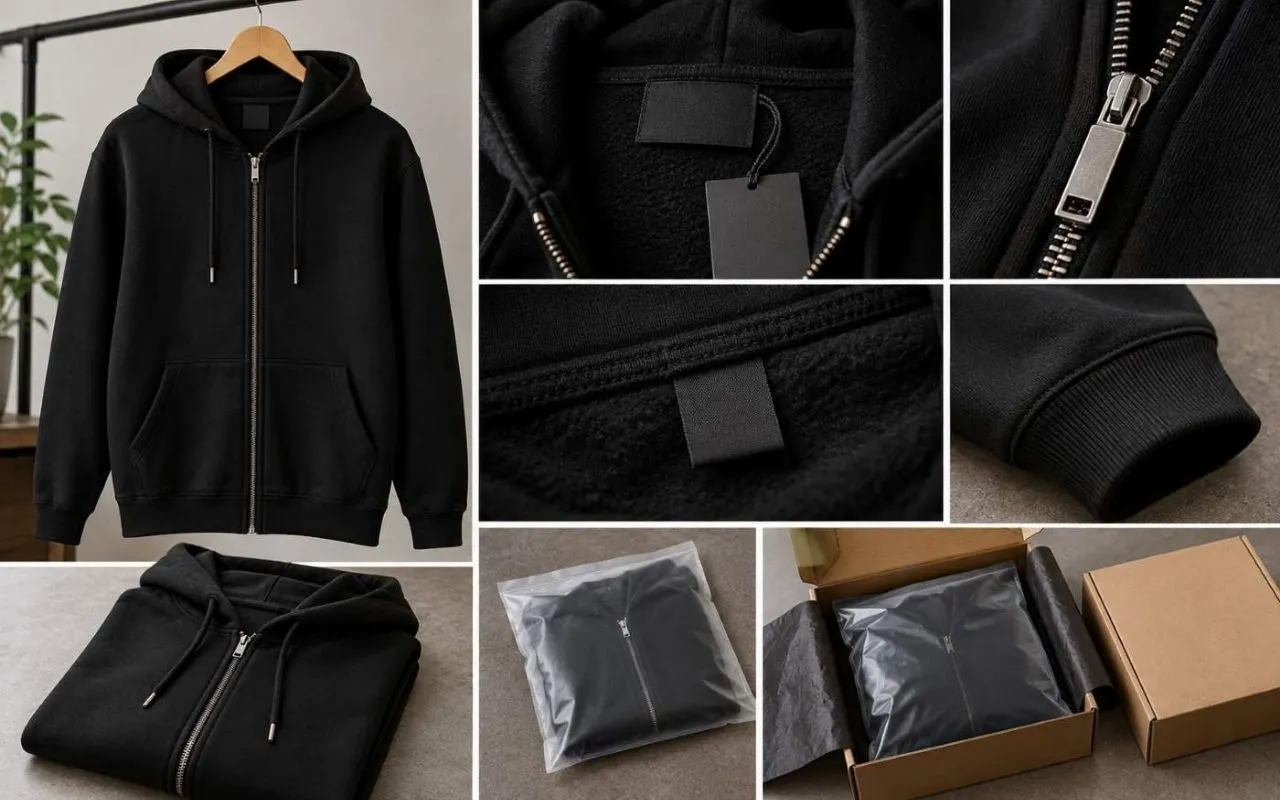
Ready to Manufacture the Approved Black Zip-Up Specification?
Use the main hoodie manufacturing page for sampling, production, MOQ and shipping information. This guide remains focused on the black zip-up product specification.
Black Zip Up Hoodie FAQs
These questions stay focused on the black zip-up product itself rather than trying to rank this page for every generic hoodie variation.
What is a black zip up hoodie?
A black zip up hoodie is a hooded sweatshirt with a full front zipper, usually made from fleece, French terry or another sweatshirt knit.
What GSM works well for a black zip up hoodie?
There is no single best GSM. Lighter ranges suit layering, while heavier fabrics create more structure. Fabric construction, fibre content, fit, zipper weight and season should be considered together.
Is fleece or French terry better for a black zip up hoodie?
Fleece usually provides a softer, more insulated interior, while French terry keeps an unbrushed loopback interior that is useful for layering. The better choice depends on climate, hand feel and product positioning.
What zipper should a black zip up hoodie use?
Coil, moulded and metal zippers can all be used. Define zipper type, gauge, tape colour, puller, length and whether the hoodie uses a one-way or two-way opening.
How do brands keep black hoodie components visually consistent?
Approve the body fabric, rib, zipper tape, drawcord and other visible components together because different fibres and suppliers can produce slightly different black shades.
What should be included in a black zip up hoodie tech pack?
Include measurements, fabric composition, target GSM, black colour standard, zipper specification, hood and pocket construction, rib details, decoration, labels, packaging and any required testing or wash instructions.
Can a black zip up hoodie use private-label branding?
Yes. Private-label options such as neck labels, care labels, hang tags and packaging can be included in an approved bulk order when they are part of the quotation.
What should be checked before bulk production?
Review measurements, black colour consistency, zipper operation, rib recovery, seam construction, decoration, branding and the approved wash or care requirement before bulk production.