Factory-Direct MOQ from 10 Samples in 7–10 Days Worldwide DDP Shipping
Get a Quote →

Natural Fibre · Apparel Development

Cotton Fabric for Clothing: Types, GSM & Manufacturing Guide

Cotton fabric is not one single specification. Fibre quality, yarn system, knit or weave, GSM, finishing and shrinkage control decide whether a cotton garment feels like a lightweight promotional tee, a smooth premium basic or a heavyweight streetwear piece.

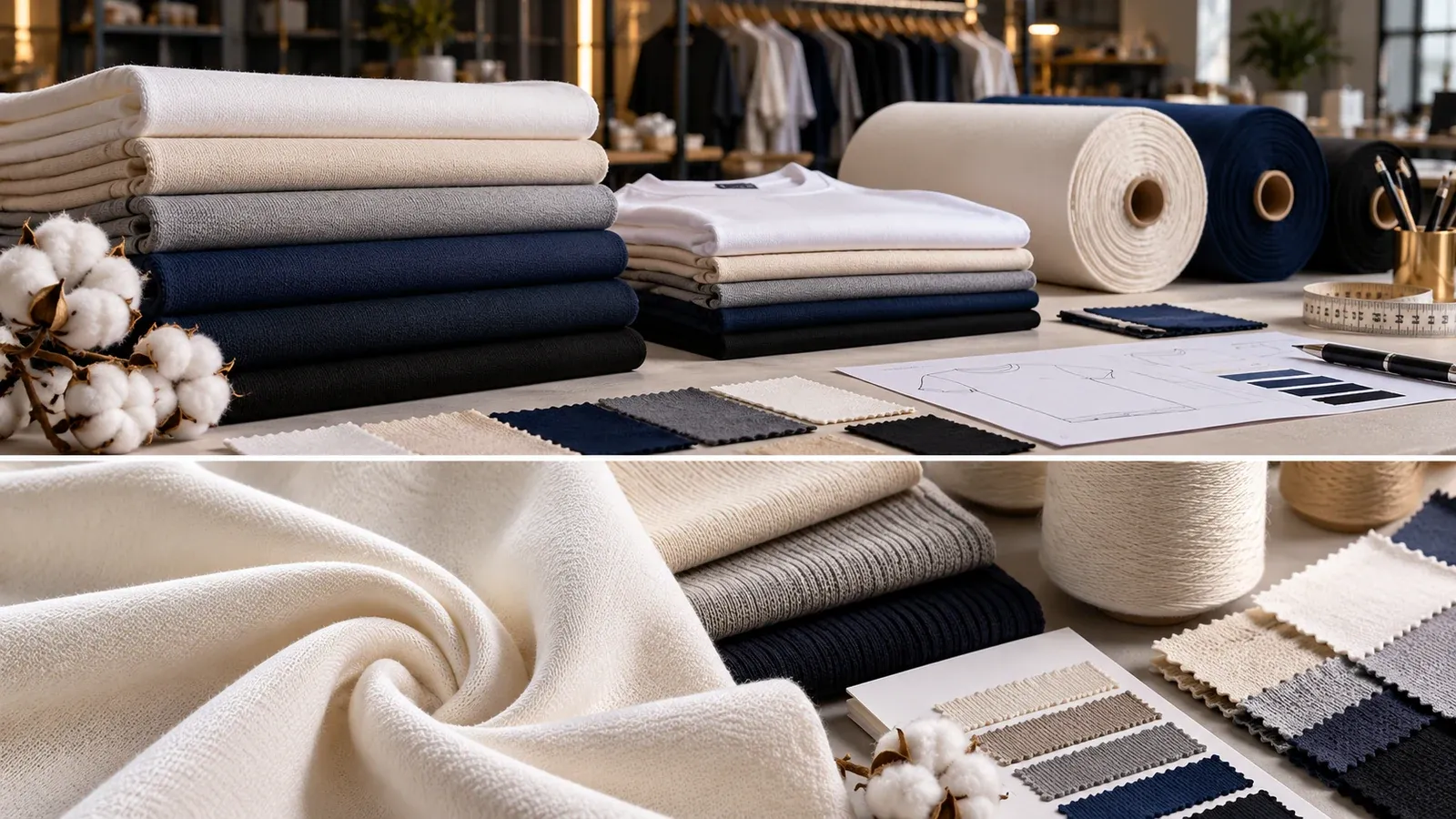
Cotton fabric for clothing manufacturing with knit rolls, t-shirt samples and cotton swatches
Typical apparel weights140–300+ GSM
Common constructionsJersey · Interlock · Piqué · Fleece
Best known forSoftness · Breathability · Printability
Key factory checksShrinkage · Spirality · Shade · GSM

Direct answer

What Is Cotton Fabric?

Cotton fabric is textile material made primarily from cotton cellulose fibre and converted into yarn before being knitted or woven into cloth. In clothing manufacturing, the word “cotton” only tells you the fibre. It does not tell a factory whether you want single jersey, interlock, piqué, French terry, fleece, twill or another construction.

For product development, brands should specify cotton as a system: fibre type + yarn type + construction + finished GSM + finish + colour + performance requirement. A 180 GSM combed ring-spun single jersey T-shirt and a 400 GSM cotton-rich brushed fleece hoodie can both be described as “cotton”, yet they behave, cost and manufacture very differently.

That distinction is why this guide focuses on cotton from a clothing-production viewpoint: what changes the hand feel, how common cotton constructions are used, what to put in a tech pack, how cotton responds to printing and washing, and what should be approved before bulk cutting.
Factory rule: Never approve a fabric by fibre name and GSM alone. Record construction, finished weight, colour, finish, performance requirements and an approved physical swatch.
Material options

Types & Constructions Brands Should Know

The same search term can describe several different commercial fabrics. Choose the version that matches the garment, decoration and wear conditions.

Combed cotton

Short fibres and impurities are removed before spinning, helping create a cleaner, smoother yarn surface. It is commonly selected for premium T-shirts and garments where print clarity and hand feel matter.

Ring-spun cotton

Ring spinning creates a finer, more compact yarn than typical open-end yarn. It is widely used for retail-quality jersey, interlock and other knit garments.

Open-end cotton

Open-end yarn can give a drier, slightly more rugged hand and is useful when cost, weight and a more substantial casual feel are priorities. It is common in heavier basic and streetwear programs.

Organic cotton

Organic cotton is a sourcing claim, not a knit structure. If a brand needs an organic claim, the required certification and chain-of-custody documentation should be agreed before fabric purchasing—not added after production.

Cotton-elastane

A small elastane percentage can add recovery for fitted T-shirts, tanks, rib garments and body-conscious basics. The exact percentage and stretch target should be specified.

Cotton/polyester blends

Blends can improve dimensional stability, drying time and durability while reducing the all-cotton hand. CVC cotton-rich blends are common in fleece, polos and everyday knitwear.

Weight planning

GSM Guide for Cotton Fabric

GSM is a useful control point, not a quality grade. Compare it with fibre, yarn, structure and finish. Learn more in our GSM fabric guide or use the GSM Calculator.

Finished GSMTypical positionCommon product direction
130–160 GSMLightweight jerseyPromotional tees, warm-climate basics, layering pieces
160–190 GSMCore T-shirt rangeRetail tees, uniforms, everyday basics
190–240 GSMPremium / structured jerseyBoxier tees, premium basics, polos depending on construction
240–320 GSMHeavy knit / terry territoryHeavy tees, sweatshirts, some interlock and French terry programs
320 GSM+Heavyweight programsStreetwear tees, sweatshirt and fleece constructions; confirm construction rather than selecting GSM alone

Ranges are practical development guides, not universal standards. Mill construction, yarn, gauge, finishing and end use can move the appropriate weight.

Product development

What Can Be Manufactured in This Fabric?

Fabric selection should start from the finished product. The cards below connect material decisions with the garment programs buyers actually order.

T-shirts & oversized tees

Single jersey remains the most common route. Combed ring-spun cotton suits smoother premium tees; open-end yarn can suit a drier heavyweight streetwear hand.

Polos

Cotton piqué provides the classic textured polo structure, while cotton interlock gives a smoother, denser face. Collar and cuff construction must be developed with the body fabric.

Hoodies & sweatshirts

Cotton-rich French terry and fleece are common. The brushed or loopback back face, GSM, shrinkage and rib recovery matter more than the fibre name alone.

Loungewear & basics

Cotton jersey and cotton-elastane knits work well where softness, breathability and wash comfort are priorities.

Uniforms & work basics

Cotton or cotton-rich blends may be selected for comfort, but abrasion, shrinkage and wash-cycle requirements should be tested for the actual end use.

Fashion cut-and-sew

Cotton twill, canvas, poplin, jersey and knit structures allow very different silhouettes. Woven and knitted cotton should be specified separately.

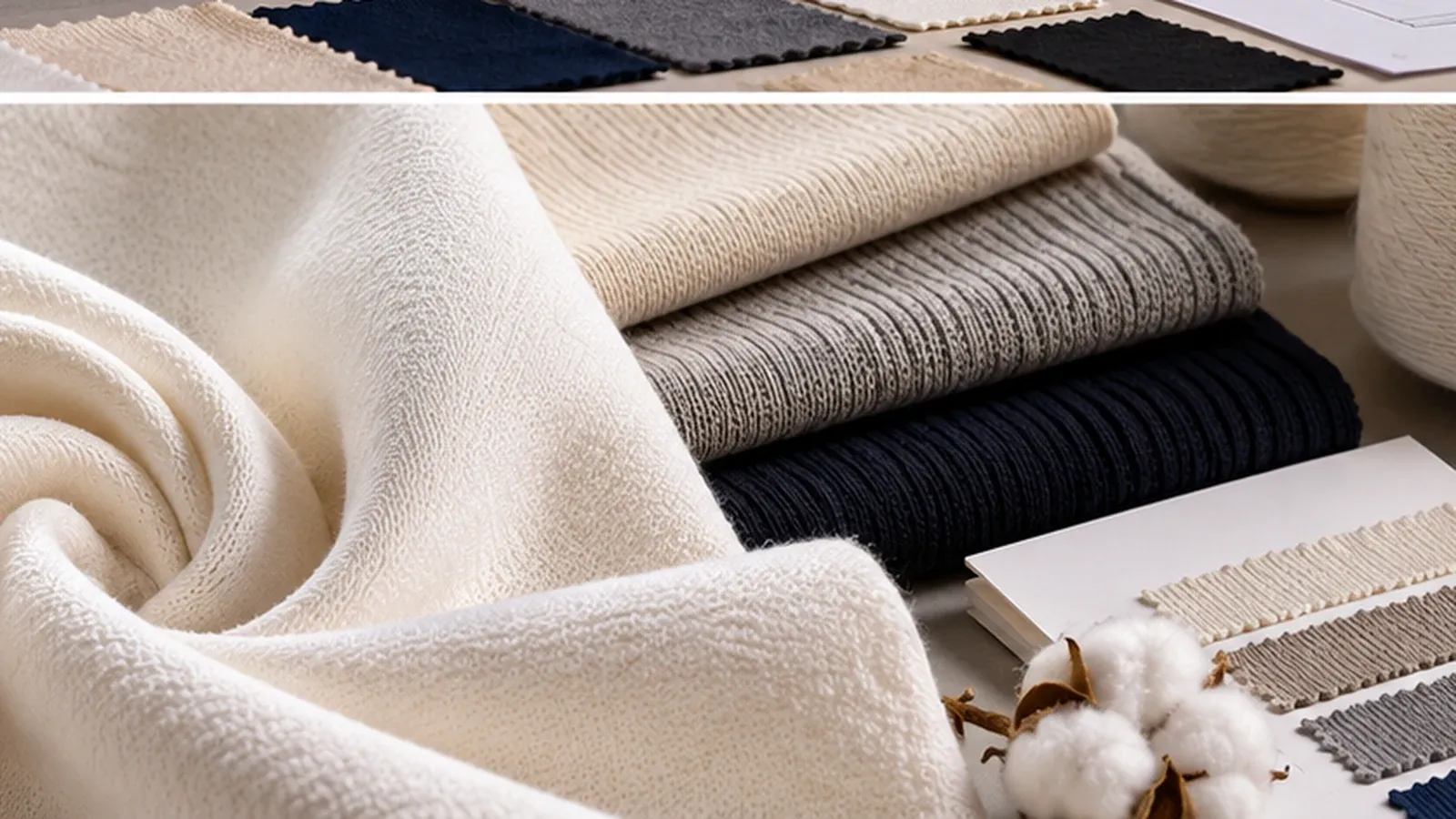
Cotton knit fabric texture showing combed and ring-spun apparel swatches
Macro material view for structure, surface and trim planning.
Factory specification

How to Brief a Manufacturer

A useful fabric brief makes the material repeatable. Reference swatches help, but the factory also needs measurable information that can survive a reorder months later.

Start with fibre content and construction. Then lock finished GSM, colour standard, width, surface/finish, stretch if relevant, dimensional-stability expectations and the intended decoration method. If the garment will be washed after sewing, approve measurements after the actual wash process.

Also state which properties are critical to the product: opacity for white uniforms, pilling for fleece, recovery for rib, dye migration for polyester, collar stability for piqué or spirality for single jersey. This turns a visual idea into a production specification.

Example tech-pack wording

Write the Fabric Line Like This

100% combed ring-spun cotton · single jersey · 200 GSM finished ± agreed tolerance · compacted / pre-shrunk · reactive dyed to approved Pantone / lab dip · target shrinkage and spirality limits confirmed on bulk fabric · width and usable width recorded before cutting.

Decoration compatibility

Printing, Embroidery & Finishing

Decoration must be sampled on production-equivalent fabric. Surface texture, fibre chemistry, stretch and heat history can change print and embroidery results.

Screen printing

Cotton is one of the most forgiving apparel bases for screen printing. Surface smoothness, pretreatment/finish and garment colour still influence ink choice and cure settings.

DTG printing

High-cotton surfaces are generally preferred for DTG because pigment pretreatment and ink interact well with cellulose fibres. Combed, smooth jersey normally produces cleaner detail than fuzzy or heavily textured cloth.

DTF / heat transfer

Works across many cotton garments. The transfer, adhesive, temperature and pressure should be strike-off tested on the actual bulk fabric before production.

Embroidery

Cotton polos, sweatshirts and heavier jerseys can embroider well, but lightweight jersey may need backing/stabilisation to prevent puckering.

Garment dye & wash

Cotton responds strongly to garment dye, enzyme wash, pigment dye and vintage finishing. Every wash process can move measurements, shade and hand, so finished-garment measurements must be approved after wash.

See our clothing printing hub for screen printing, DTF, DTG, sublimation, puff, water-based and reflective methods.

Bulk control

Quality Checks Before Cutting

Approve fabric before it becomes hundreds of garments. These checks reduce shade, fit, wash and decoration surprises in bulk production.

Finished GSMMeasure finished fabric rather than relying only on mill greige targets.
Dimensional stabilityWash-test length and width shrinkage before grading or bulk cutting.
Spirality / torqueEspecially important on single jersey so side seams do not twist after laundering.
Shade consistencyApprove lab dips and check roll-to-roll shade before cutting mixed panels.
Pilling & abrasionMatch testing to garment end use and surface finish.
Width & usable widthConfirm usable width because it changes marker efficiency and consumption.
Material decisions

How It Compares With Other Fabrics

Comparison queries are useful because brands rarely choose a fabric in isolation. The correct answer depends on product, climate, fit, decoration and target price.

ComparisonManufacturing takeaway
Cotton vs polyesterCotton generally offers a natural hand and high moisture absorbency; polyester absorbs less moisture and can dry faster. Construction and finishing still determine real garment performance.
Cotton jersey vs interlockJersey is lighter and more fluid; interlock is a denser double knit with a smoother appearance on both sides and better edge stability.
Combed vs open-end cottonCombed/ring-spun routes usually feel smoother and cleaner; open-end can feel drier and more substantial at comparable weights and may suit cost-sensitive heavyweight programs.
Cotton vs cotton/poly blendA blend can improve dimensional stability and drying behaviour, while 100% cotton gives a more natural fibre story and hand.
Commercial planning

Sourcing, MOQ & Cost Factors

Fabric cost is part of garment cost, but it is also one of the biggest quality levers. Approve the material system before chasing the lowest per-piece quote.

The biggest cotton sourcing mistake is approving only colour and GSM. Two mills can supply “200 GSM cotton jersey” that feels completely different because yarn count, staple quality, twist, gauge, compaction and finishing differ. For repeatability, approve a physical swatch and record the construction details that matter to your product.

Cost is affected by cotton grade, yarn system, GSM, width, dye method, finish, quantity, colour, testing and wastage. A heavier GSM does not automatically mean better cotton. A lower-GSM fabric made from better yarn with controlled shrinkage can outperform a heavier low-grade knit.

For clothingmanufacturer.us/ orders: our standing production MOQ is 10 MOQ per color per style and up to 3 sizes. Fabric availability, custom dyeing, custom knitting and special trims can create separate material minimums, so we confirm them during quotation and sampling.
Claims & responsibility

Sustainability, Certification & Material Claims

Only claim what the order can document. Fibre composition, recycled content and certified sourcing are separate from the visual name of a fabric.

For sustainability claims, separate the fibre story from the product claim. “Organic”, “recycled”, “BCI/Better Cotton” or other sourcing statements should only be used when the supply chain can provide documentation applicable to the specific material and order. Do not treat a generic supplier certificate as proof for every batch.

If the goal is lower impact rather than a label claim, useful development questions include fabric yield, dye route, wash chemistry, durability, expected garment life and whether the selected weight is appropriate for the actual product rather than overbuilt.

For industry testing concepts and textile methods, see AATCC. Certification availability should always be verified for the specific fabric/order before marketing a claim.

Buyer questions

Frequently Asked Questions

Short answers for product developers, sourcing teams and clothing brands comparing fabric options.

What is the best cotton fabric for premium T-shirts?

A common premium starting point is combed ring-spun cotton single jersey, but the best specification depends on fit, target GSM, surface, print method and price point.

What GSM cotton is good for T-shirts?

Many everyday T-shirts sit roughly in the 160–220 GSM range. Lightweight, heavyweight and streetwear programs can fall outside that range, so choose GSM with knit construction and fit.

Is 100% cotton always better than a blend?

No. 100% cotton gives a natural hand and fibre story; cotton/poly blends can improve drying, dimensional stability and durability. The better choice depends on the garment.

What is the difference between ring-spun and open-end cotton?

Ring-spun yarn is generally finer and smoother; open-end yarn is faster to produce and often gives a drier, more rugged hand. Both can be useful when specified intentionally.

Does cotton shrink?

Cotton can shrink, especially if fabric is not compacted or pre-shrunk. Bulk approval should include a wash test and agreed dimensional-stability tolerance.

Can cotton be used for DTG printing?

Yes. Cotton-rich, smooth surfaces are commonly selected for DTG. Pretreatment, colour, finish and print settings should be tested on the actual fabric.

What should I put in a cotton fabric tech pack?

Include fibre percentage, yarn/quality requirement where relevant, knit or weave, finished GSM, width, colour, finish, stretch if any, shrinkage target and decoration requirements.

Can clothingmanufacturer.us/ develop cotton garments?

Yes. We develop cotton-based T-shirts, polos, sweatshirts, hoodies and other cut-and-sew garments to approved fabric, fit, branding and packaging specifications.

Continue researching

Related Fabric Resources

Use the fabric hub to compare neighbouring materials before you lock a production specification.

Develop your product

Turn the Fabric Specification Into a Finished Garment.

Send your tech pack, reference garment or product idea. We can help confirm a practical fabric construction, GSM, fit, decoration route, labels and packaging before bulk production.