Factory-Direct MOQ from 10 Samples in 7–10 Days Worldwide DDP Shipping
Get a Quote →

Textured Knit · Polo Shirt Development

Piqué Fabric for Polo Shirts: GSM, Types & Manufacturing Guide

Piqué fabric is the classic textured knit behind many polo shirts. Its raised structure gives more body than flat jersey, creates airflow between the fabric and skin, and provides a strong base for collars, plackets and embroidered branding.

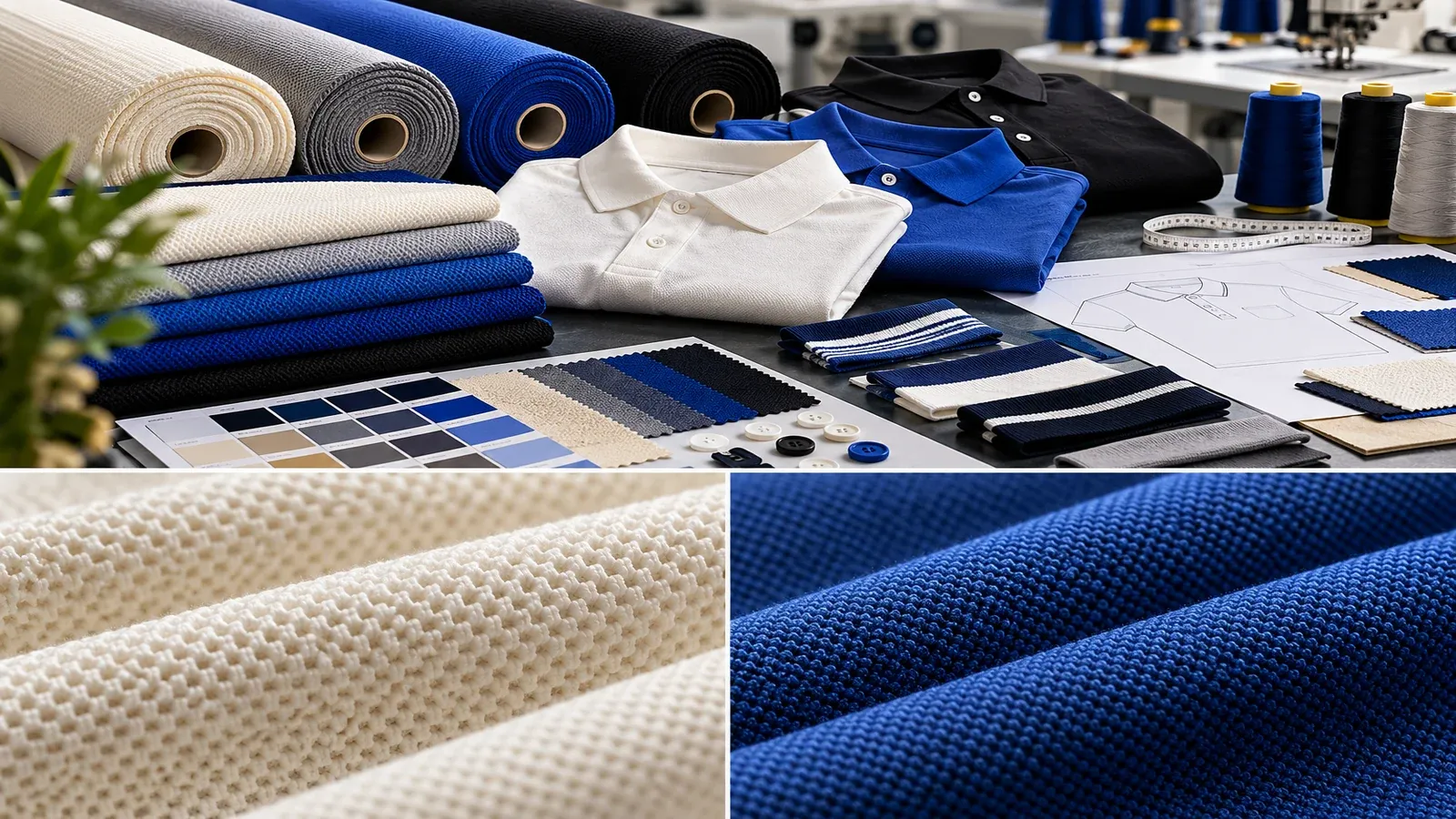
Pique fabric for polo shirt manufacturing with cotton knit rolls, polo samples, collars and swatches
Typical polo range180–240 GSM
Common fibresCotton · CVC · Polyester · Stretch blends
Best known forTexture · Breathability · Collar support
Key factory checksShrinkage · Collar match · Pilling · Embroidery

Direct answer

What Is Pique Fabric?

Piqué fabric is a knitted fabric with a raised textured surface, often described as honeycomb, waffle or “Lacoste” piqué. The texture is created through the knit structure rather than by printing or embossing, and it gives the fabric more visual depth and body than plain single jersey.

Piqué is strongly associated with polo shirts because it balances breathability, structure and decoration. The textured face helps a polo look less like a T-shirt, while the fabric still retains the flexibility of a knit. Cotton piqué is traditional, but cotton/poly blends and polyester performance piqué are also widely used.

For manufacturing, a complete piqué specification should include fibre content + piqué construction + finished GSM + yarn quality + colour + finish + collar/cuff specification + decoration method. The collar, placket and sleeve finish are part of the fabric system—not separate afterthoughts.
Factory rule: Never approve a fabric by fibre name and GSM alone. Record construction, finished weight, colour, finish, performance requirements and an approved physical swatch.
Material options

Types & Constructions Brands Should Know

The same search term can describe several different commercial fabrics. Choose the version that matches the garment, decoration and wear conditions.

100% cotton piqué

Classic retail and corporate polo fabric with natural hand and good embroidery compatibility. Combed yarn can produce a cleaner premium surface.

CVC cotton-rich piqué

Cotton-rich blends balance comfort with dimensional stability and durability for uniforms and repeated washing.

Polyester piqué

Useful for performance polos, golf shirts and uniforms where quick drying, colour retention and easy care are priorities.

Stretch piqué

Cotton/elastane or poly/elastane constructions add mobility and recovery for fitted fashion polos.

Micro piqué

A finer texture can create a cleaner, more technical look for performance or modern corporate polos.

Heavyweight piqué

Higher GSM provides more body for premium polos but can feel warmer; collar and placket must be balanced to the heavier fabric.

Weight planning

GSM Guide for Pique Fabric

GSM is a useful control point, not a quality grade. Compare it with fibre, yarn, structure and finish. Learn more in our GSM fabric guide or use the GSM Calculator.

Finished GSMTypical positionCommon product direction
150–180 GSMLight / performance piquéGolf, hot-weather polos, promotional performance programs
180–200 GSMLight classic piquéWarm-climate cotton polos, school/corporate basics
200–220 GSMCore premium rangeRetail polos, corporate uniforms, embroidered branding
220–240 GSMStructured premiumHeavier retail polos, premium uniforms, substantial hand
240 GSM+Heavy piquéSpecialty heavyweight polos; sample drape, collar balance and heat comfort

Ranges are practical development guides, not universal standards. Mill construction, yarn, gauge, finishing and end use can move the appropriate weight.

Product development

What Can Be Manufactured in This Fabric?

Fabric selection should start from the finished product. The cards below connect material decisions with the garment programs buyers actually order.

Retail polo shirts

Cotton piqué around the midweight range gives the familiar textured premium polo look.

Corporate uniforms

CVC or polyester/cotton piqué can balance comfort, durability and repeated-laundering needs.

Golf & performance polos

Polyester or stretch micro-piqué supports quick drying and movement, often with moisture-management finishes.

School polos

Durability, colour fastness and easy care can be more important than ultra-soft hand; blends are common.

Hospitality polos

Piqué works well for embroidered staff uniforms where a structured collar and breathable knit are useful.

Fashion polos

Oversized, cropped, tipped, contrast-collar and long-sleeve designs can all use piqué when fit and trim are developed intentionally.

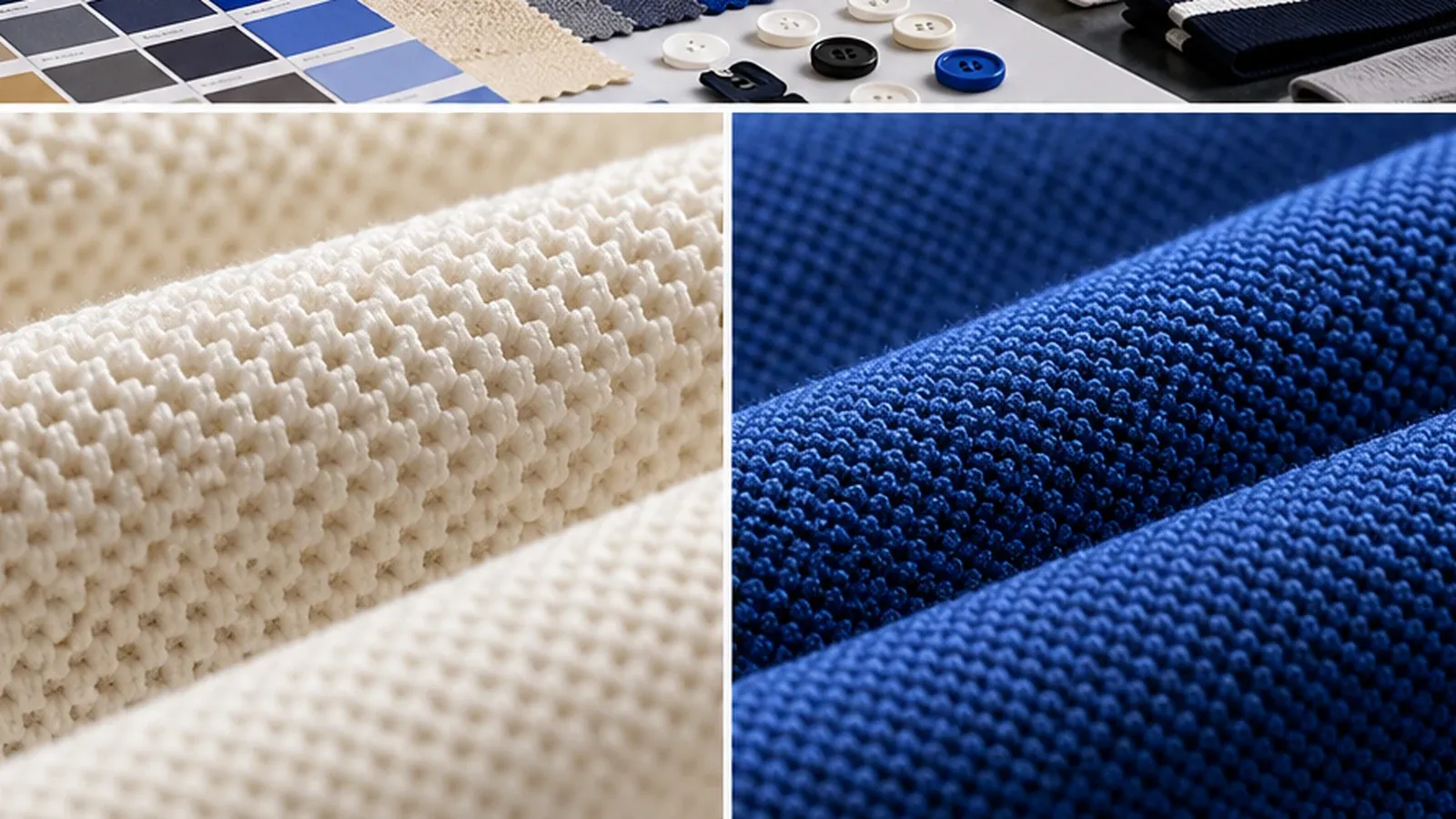
Pique knit honeycomb texture in cream and royal blue polo shirt fabric
Macro material view for structure, surface and trim planning.
Factory specification

How to Brief a Manufacturer

A useful fabric brief makes the material repeatable. Reference swatches help, but the factory also needs measurable information that can survive a reorder months later.

Start with fibre content and construction. Then lock finished GSM, colour standard, width, surface/finish, stretch if relevant, dimensional-stability expectations and the intended decoration method. If the garment will be washed after sewing, approve measurements after the actual wash process.

Also state which properties are critical to the product: opacity for white uniforms, pilling for fleece, recovery for rib, dye migration for polyester, collar stability for piqué or spirality for single jersey. This turns a visual idea into a production specification.

Example tech-pack wording

Write the Fabric Line Like This

100% combed cotton piqué · classic Lacoste / honeycomb knit · 220 GSM finished ± agreed tolerance · reactive dyed to approved lab dip · pre-shrunk / compacted · flat-knit collar and cuffs matched to body · two-button placket · shrinkage and colour fastness approved · embroidery sew-out on bulk-equivalent fabric.

Decoration compatibility

Printing, Embroidery & Finishing

Decoration must be sampled on production-equivalent fabric. Surface texture, fibre chemistry, stretch and heat history can change print and embroidery results.

Embroidery

One of piqué’s strongest decoration routes. The textured, structured surface supports chest logos well when digitising and backing are matched to GSM.

Screen printing

Possible, but the raised texture can interrupt fine detail compared with smooth jersey. Use suitable mesh/ink deposit and approve a strike-off.

DTF / transfer

Useful for multicolour logos and names. Texture can influence edge contact, so test adhesion and wash durability.

Sublimation

Performance polyester piqué can be sublimated when prepared for the process.

Tipping / knitted collars

Contrast tipping is often knitted directly into flat-knit collars and cuffs. Stripe width and placement should be specified in millimetres.

See our clothing printing hub for screen printing, DTF, DTG, sublimation, puff, water-based and reflective methods.

Bulk control

Quality Checks Before Cutting

Approve fabric before it becomes hundreds of garments. These checks reduce shade, fit, wash and decoration surprises in bulk production.

Texture consistencyCheck honeycomb/waffle definition and surface uniformity across rolls.
GSM and widthVerify finished weight and usable width after dyeing/finishing.
ShrinkageCotton piqué should be wash-tested before bulk cutting and collar grading.
Collar/cuff matchApprove body, collar and cuff together for colour, shrinkage and hand.
Embroidery appearanceTest the real logo on production-equivalent piqué to check puckering and coverage.
Placket stabilityButtonholes, placket fusing/interfacing and fabric weight must work together.
Material decisions

How It Compares With Other Fabrics

Comparison queries are useful because brands rarely choose a fabric in isolation. The correct answer depends on product, climate, fit, decoration and target price.

ComparisonManufacturing takeaway
Piqué vs jerseyPiqué is textured and more structured; jersey is smoother, softer and usually better for fine prints.
Piqué vs interlockPiqué has a raised honeycomb surface; interlock is smooth and dense. Both can make polos, but they create different visual identities.
Cotton vs polyester piquéCotton emphasises natural hand and absorbency; polyester emphasises quick drying, easy care and sublimation compatibility.
180 vs 240 GSM piqué180 GSM feels lighter and cooler; 220–240 GSM gives a more substantial premium hand but adds warmth and fabric consumption.
Commercial planning

Sourcing, MOQ & Cost Factors

Fabric cost is part of garment cost, but it is also one of the biggest quality levers. Approve the material system before chasing the lowest per-piece quote.

Piqué cost varies with cotton quality, yarn count, GSM, knit structure, colour, finish and whether custom flat-knit collars/cuffs are required. Custom tipping and exact Pantone colours can introduce separate knitting/dyeing minimums, so they should be confirmed early in sampling.

For polo manufacturing, do not approve body fabric in isolation. The collar, cuff, placket, buttons and decoration determine whether the finished polo looks premium. A good piqué body with a weak curling collar still produces a poor garment.

For clothingmanufacturer.us/ orders: our standing production MOQ is 10 MOQ per color per style and up to 3 sizes. Fabric availability, custom dyeing, custom knitting and special trims can create separate material minimums, so we confirm them during quotation and sampling.
Claims & responsibility

Sustainability, Certification & Material Claims

Only claim what the order can document. Fibre composition, recycled content and certified sourcing are separate from the visual name of a fabric.

Piqué can be produced with organic cotton, recycled polyester or conventional fibres. Sustainability claims should be tied to the actual fibre and documented supply chain, not to the piqué construction itself.

For uniform programs, long service life is particularly important. Stable collars, colour fastness, pilling resistance and repeat-order shade consistency can reduce premature replacement.

For industry testing concepts and textile methods, see AATCC. Certification availability should always be verified for the specific fabric/order before marketing a claim.

Buyer questions

Frequently Asked Questions

Short answers for product developers, sourcing teams and clothing brands comparing fabric options.

What is piqué fabric?

Piqué is a textured knit, often with a honeycomb or waffle surface, widely used for polo shirts.

What GSM is best for polo shirts?

Around 180–240 GSM covers many cotton piqué polos. 200–220 GSM is a versatile premium starting point, but climate and end use matter.

Is piqué cotton or polyester?

Piqué is a knit structure and can be made from cotton, polyester, blends or stretch compositions.

What is Lacoste piqué?

Lacoste is a common trade description for classic textured piqué knit used in polo shirts.

Is piqué good for embroidery?

Yes. Its structured surface is widely used for embroidered chest logos, though backing and digitising should match the actual fabric.

Can piqué be screen printed?

Yes, but its raised texture can reduce very fine print detail compared with smooth jersey. Approve a print strike-off first.

What is the difference between piqué and interlock polo fabric?

Piqué is textured and classic; interlock is smooth, denser and often more modern or performance-oriented.

Can clothingmanufacturer.us/ manufacture custom piqué polos?

Yes. We develop custom polos with piqué body fabric, collars, cuffs, plackets, embroidery/printing, private labels and packaging to the approved specification.

Continue researching

Related Fabric Resources

Use the fabric hub to compare neighbouring materials before you lock a production specification.

Develop your product

Turn the Fabric Specification Into a Finished Garment.

Send your tech pack, reference garment or product idea. We can help confirm a practical fabric construction, GSM, fit, decoration route, labels and packaging before bulk production.